Hard mornings… A Trail Tip

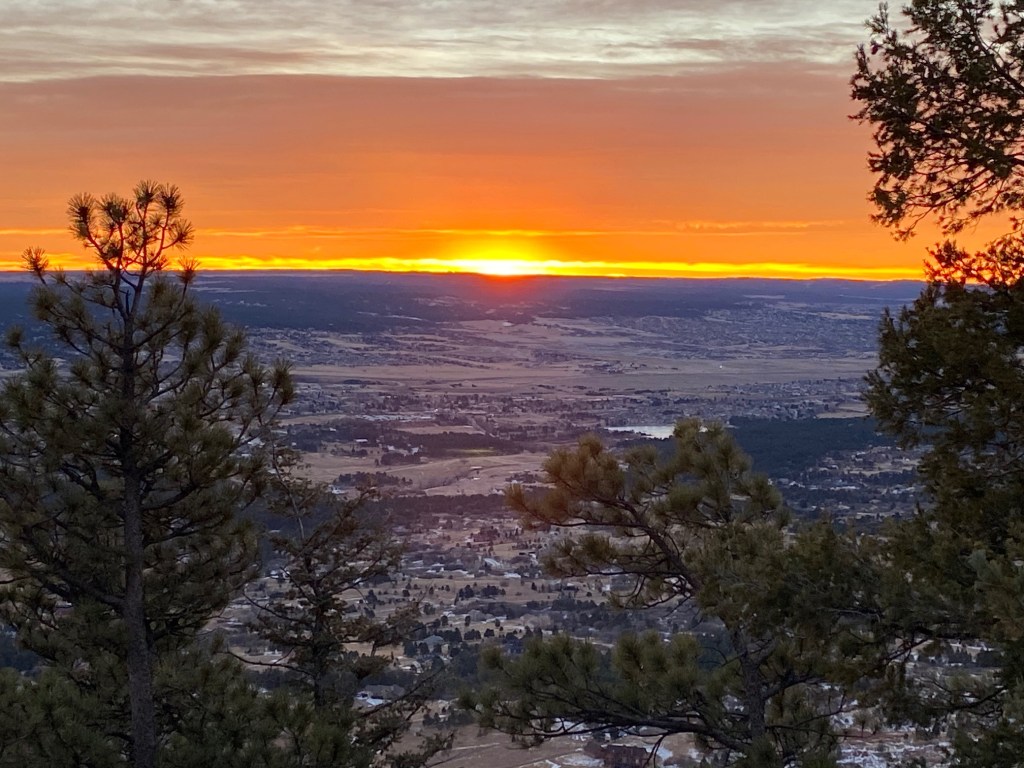
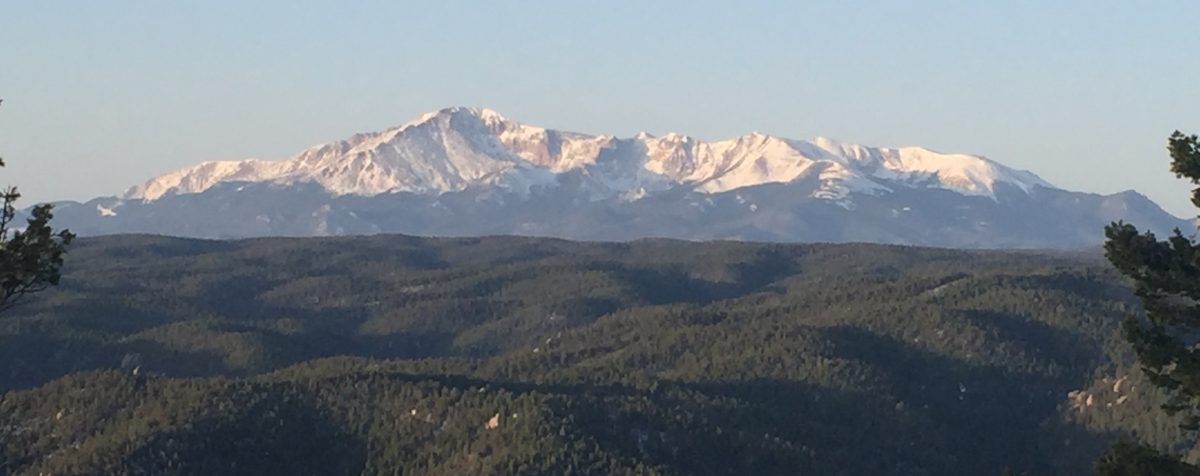
The internal alarm clock starts to stir me at 4:45 am and I contemplate why my body gets me up this early.  It’s a Tuesday -you know the drill; get up, get the trash out, grab something frozen for breakfast/lunch, grab the hiking gear and get out of the house by 5:15 without waking the dog or anyone in the house.  The car temp says it’s 27 degrees outside.  Not bad for a morning hike.  I’m at the High Drive trail head at 5:40. Temp is now 20 degrees and with no moon, it’s completely dark, and I’m doing this hike by myself.  Put on the micro spikes and turn on the headlamp.  It’s time to start the 3.75-mile climb with 1,700 feet vert to the top of Mt. Buckhorn in the dark for the first 40 minutes.  And now I’m wondering why I’m doing this in the first place.  I hate hard mornings.  And there seems to be A LOT of them lately.  Like wanting to pull the covers over my head and go back to bed, I want to go back in time to not make the decisions that have created pain and hardship in my life.  But I can’t go there.  I’m at the trail head and it’s time to start climbing.  The trail is 90 percent ice covered, it’s dark and cold.  But I have the headlamp, micro spikes, and hat/gloves/jacket -tools of the trade.  I know I will be cold for the first 15 minutes, but will warm up as I move.  The same holds true for the other hard mornings.  It’s dark and cold, but God has given us the tools, resources, and friends to get through these hard mornings -but do I use them?  After hiking in the ice-covered valley trail along the side of the mountain for 2.5 miles, the horizon starts to appear, the darkness starts to fade away and it hits me that this is the beginning of a new day.  As I continue to climb, the eastern sky starts to light up with the sun and the mountains to the west reflect the morning sunrise sun.  I am in awe of the beauty of the new day with the sun coming up.  And as I stop at the top of Mt. Buckhorn to take it all in, God starts to speaks to me in a quiet voice.

“Al you are only seeing this with Me on this mountain because you went through the hard morning of getting up at 4:45 and starting a hike in 20 degrees in total darkness.  Al, do you want to trade these hard mornings and miss what I want to show you and have you experience?  And do we need to talk about the hard times you are having with your kids and the other areas in your life?”  Al, I’ve got a sunrise and new day just waiting for you as you climb these mountains in your life.  The sun will always come up, new beginnings are just waiting for you to grab, and I am never going to leave you.”

With the micro spikes on, I’m now running down the mountain on the ice, full of a new freshness for what the day is going to bring.  At work, I’m asked about the hike.  I share the 20 degrees, the darkness, but I spend most of the time showing the pictures of the incredible sunrise and its beauty.  The beginning of a new and great day.

What are the hard mornings you are facing in your life right now?  Are they family/relationships, work or in other areas?  Who is helping you get going in the mornings?  Just like laying out the gear and doing prep work for an early morning hike, what are you doing the evening before to prepare for your hard morning?


Is this a Chicago Thing?   A Trail Tip

Have you ever had the opportunity to do one of those “once in a life time experiences” and didn’t do it? This happened to my wife (Arlene) and me as we were driving home from Nashville to Colorado Springs last fall. We stayed overnight in a hotel in Topeka, KS. and at breakfast met a couple a few years older than us who were also staying there to go to the “Chicago” concert that night. And low and behold, they had an extra pair of tickets and wanted to know if we would be their guests. We thought about it for a minute; thinking about missing another day at work, needing to get home to obligations, getting the dog from the kennel a day later etc, etc, etc. So we said “Thanks for the offer, but “we have to get home”. Starting our drive home, we got to the Colorado/Kansas border 360 miles later; then looked at each other and said, “Now why didn’t we take them up on going to the concert with them?”

Since then, we have had a few opportunities to do some last-minute things and we have started evaluating them by asking; “Is this a Chicago Thing that we will regret if we don’t do it. So, what are the “Chicago Things” you have done or regretted not doing in your life.


In hiking, I’ve missed out on a few “Chicago Things” hikes because I thought chores -which could be postponed a day- were more important. To avoid missing out on these rare hiking opportunities, I’ve made a list of the high priority hikes I’ve want to do. With this list in mind and including some done over the past years, I’ve been able to knock off: Ring the Peak, Dixon Trail, the C-49 crash site, Cap Rock, Grand Canyon Rim2Rim, and the B-17 crash site west of Larkspur. Still on my list (which does grow) is: Crystal Mills, the Colorado Trail, and Everest Base Camp Trek.


In my personal life, the “Chicago Things” I’ve missed mostly center around places with People. Three-day tuna fishing excursions with my brothers Wayne and Sam (now deceased), Road trip (Chicago to Washington DC) with Arlene to pay last respects to President Reagan, and the Inaugural Ball (we had tickets) for President George W. Bush. But there are the things we haven’t missed. Road trips: to St. John’s Newfoundland, Florida, and California.


In my work life, “Chicago Things” missed include: watching a live Shuttle Launch in Florida while at a sales training convention because I thought I had to get home 24 hours sooner, not offering to help co-workers when my “plate” was overflowing with work that “I had to get done immediately”. On the flip side there are the “Chicago Things” we didn’t miss, which include: a business trip to Washington DC where I was able to bring my family and get a private tour of the White House, several other business meetings in different locations where I was able to bring Arlene, and projects I was able to work on because I stretched myself.


“Chicago Things” typically come up at the last minute, are from sources we don’t expect, and they involve work as we need to change our “set” plans on the fly. They may be part of our bucket list or things we never thought of doing. The question for Arlene and me has become: Is this a Chicago Thing we will regret if we don’t do it? If yes, it will likely require some last minute changing to our plans and there could be some extra costs involved, but it will create new memories that will last a life time. We need to cherish the “Chicago Things” we were able to do in the past, let go of the ones we missed, and anticipate the ones yet to come.

Pine Beatle Bugs and Fertilizer stakes… A Trail Tip

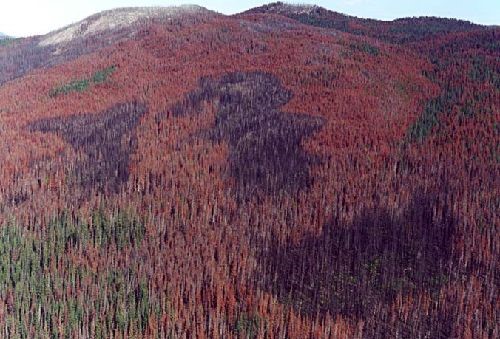
Driving through Rocky Mountain National Forest last summer, my wife and I were saddened to see the damage being caused by Pine Beatle bugs.  It was shocking to see how such a little bug can destroy such a large tree and a group of them can destroy a large area of a forest.

Which got me thinking about what are the little bugs in my daily routine that are destroying my productivity and as a group; are damaging my entire organization and reputation.  Here are some of the Pine Beatle Bugs I’ve seen at in my life.

  • Multitasking during meetings.
  • Being late for appointments and meetings.
  • Not accepting or declining meeting invites, so others are left wondering if you will attend.
  • Not responding to emails and text messages
  • Not responding to phone calls
  • Not backing up the files on your computer on a regular basis
  • Not taking the time for training classes
  • Keeping quiet during meetings to avoid issues that need to be addressed
  • And the list can go on…

And while something small like a Pine Beatle Bug can destroy a tree, small fertilizer stakes can add growth, life to a tree, and over time help build up an entire organization and my reputation.  Here are some of the fertilizer stakes I’ve seen at work in my life:

  • Taking time to write an email thank you to someone when they do a job well done.
  • Paying attention to training sessions and actively contributing.
  • Taking 10-minute power walks after long meetings to re-energize.
  • Helping others outside your organization.
  • Making the effort to meet in person with others.
  • Attending meetings in person in conference rooms with others instead of staying in your office (can you say multitasking).
  • Connecting with team members (who work in other locations) on Facebook to help build stronger virtual teams.

Here is a quote (from the TV show Elementary) that I’ve used in previous Trail Tips and bears worth repeating.  “The world is full of obvious things which no one by any chance has [initially] observed.”  So, what are the small things (Pine Beatle Bugs) that you need to start observing in your life and get rid?  And on the flip side, what are the fertilizer stake that need to plant in your life to cause long term consistent growth?

What Don’t I See…? A Trail Tip

Joe Burrow, a college football quarterback for LSU in the 2019/2020 season led his team to win the National Championship.  Along the way; he won the Heiman Trophy, and set numerous records at a school, conference, and national level.  One of the things that is often mentioned about him, is how he wanted to play football for Nebraska, but he was turned down because he wasn’t good enough”.  He went on to play for Ohio State as a backup quarterback for three years, and seeing he would not be starting, he transferred to LSU for his final two years.  And the rest is history.  Thus, it begs the question of:  What did LSU see in him that Nebraska and Ohio State overlooked?  And what am I overlooking in my hiking, personal, and work life?

In Hiking, what trails have I overlooked?  Am I skipping them because I’m judging them on their initial appearance and not what lies ahead on them?  Taking High Drive to get to Mount Buckhorn (3.5 miles one way) is prime example.  High Drive doesn’t look interesting because it’s a 2.5-mile hike on a Forest Service Road that is a continuous climb with [no] views.  But then the last mile to the top of Buckhorn offers 360-degree views and going down High Drive offers great views to the west and north.  Which also brings up a side tip, that often we just need to stop, turn around, and take in the view behind us; to see the beauty of a trail that we are on. 

In my personal life, what filters do I use to judge others?  At social events, do I decide to sit at certain tables or try to start conversations with others based on their “looks” or “position”?  How can I get beyond that “first impression” and really get to know a person; their strengths, talents, and who they are?

At work, how do I select projects when given a choice?  Do I take them on that first impression or do I try to take an initial long-term view?  And for the team members: how am I judging the people I want to have on the team with me?  Am I picking the loud flamboyant people or do I look across at everyone to see those hidden talents they can bring to the project?

The story of Joe Burrow with Nebraska, Ohio State, and LSU; challenges me to stop and look at trails, people, and work in a new way.  It’s pausing to take off the “First Impression” blinders and look at the overall picture/scope of the choices I’m making.  What are the filters you are using to decide on the trails, people, and work in your life?  What are the filters you should be using to decide on the trails, people, and work in your life?

Taking time to enjoy the hard times… A trail tip

I don’t like going through hard times, I just want to get to the solution.  Job searches, recovering from an injury, family difficulties; all are just some of the problems that I just want to get past and move onto the solution.  Like Bruce Willis in the movie, “The Kid”, when he goes to the psychiatrist and says “Just give me two pills to make the problem go away”.  I just want to get to the solution.  I want to stay in bed until it’s light outside and pretend the hard time isn’t there.  But I’m learning there is a beauty we can see in the hard times; as I was reminded of this on a recent hike I led when we started at 6 am, in the dark, and a temperature in the 30s, so we could catch a sunrise.  Like a hard time; it’s dark, uncomfortable, the path isn’t clear, and I just want to walk in the full sunshine.  The beauty comes when I begin to embrace the journey.  Paying attention to path I’m taking in the dark, feeling the coldness change, and seeing the horizon change (45 miles away) with the sunrise.  We stop to watch the sunrise with its beauty reflected in the clouds and sun begin to break the horizon.  All things we would miss if we didn’t take time to embrace the beauty of a hard time.

In hiking, am I more concerned about how fast I can do a hike, pushing others on to met my goals, or do I embrace their pace and enjoy the conversation with them as I hike?  When I’m doing a hard hike, do I take time to stop and enjoy the beauty of where I’m at or am I so focused on just getting it done.  The Manitou Incline is a great example.  Am I focused just on getting up the 2700+ steps or do I make stops along the way to turn around and see the beauty of the climb?

In my personal life; many of my hard times come from relationships: family, close friends and organizations (church, professional originations, etc.).  Do I ignore problems by “wanting to stay in bed until it’s light outside and pretend the hard time isn’t there?” Or do I embrace the hard time and have the difficult (hard) discussions with those around me.  And as I do this, I begin to see the change (beauty) taking place in me as I take the time to work on the necessary restoration.  As Timothy Ferriss says in the 4-Hour work week book; “I believe success can be measured in the number of un-comfortable conversations I’m willing to have.”

At work, examples of hard times for me have been being unemployed, needing to take classes to improve my skill set, and working with difficult people.  In all these cases the beauty can come by taking time to embrace the journey and see what is taking place around me.  For unemployment: what are the different ways I can expand my network, relooking at what do I really want to be doing, or asking myself am I matching a potential job with my strengths and career goals.  Do I see classes as something I just want to get through or do I see the beauty in what I can learn along the way?  For difficult people, it’s taking the time to observe them.  What are their styles and how do I adjust to meet them where they are at in life?

There is a beauty in the hard times we go through if we take the time and effort to see them for what they are. Climbing up a mountain with 1400 vertical feet to see a sunrise 45 miles away on the horizon is the daily reminder I need to remember right now as I’m in my job search.  It’s time for me to stop each day to take in the beauty of my job search.  What are the hard times you are going through right now and what are you going to change, so you can see the beauty in them?

Obligations: From the Head or the Heart??? A trail tip

An Obligation can be defined as “an act or course of action to which a person is morally or legally bound; a duty or commitment:”  I think it can become a burden we allow others to place on us and one we also place on others.  ” I have an Obligation to look after them”. “You know you will get in trouble if you don’t do _____”.  “What will they think of you if you don’t attend this wedding, that party, this event, or Holiday X”.  Yet, Obligations are important in the times we live In.  I think how we respond to Obligations is the crux of the issue.  Is my response to meet an Obligation, coming from my Head or my Heart?  If it’s coming from my Head, I’m going to expand the minimal amount of effort to meet the Obligation.  If it’s coming from my Heart, I’m all in going above and beyond the effort needed to meet the Obligation.

In hiking I’m now seeing I place Obligations on other when I’m organizing a hike and try to get all my buddies to join me.  Just today, I was talking to my friend Dominick Gonzalez about a hike I’m leading to Cap Rock.  He said he had a lot on his plate for tomorrow and didn’t think he could join us.  Did I ask him what he had going on?  NO…  I just bugged him about not going with us.  If people meet my Obligations, I feel important, empowered and in control.  My needs are more important than yours…  But if I look at hiking Obligations from the Heart, it changes the way I ask people to go on hikes with me.  It becomes: “Hey Dominick It’s been a few months since we have gotten together, let’s go for a hike and catch-up with life, one on one.

In our personal life, Obligations often explode during family and holiday get togethers.  You become obligated to “know your place”, so live in it and don’t raise subjects that need to be addressed. Or we keep quiet and don’t share what is going on in our lives, because of the pain that is there.  The Head Obligation is focused around discussing -before we get there: “How long will we stay? “, “If so and so comes, I’m not going to talk to them”, “I hope there is a football game on TV, so I don’t have to engage with anyone”.  Oh, and we were told to bring a food item, so let’s stop at the store and buy those generic cookies that don’t taste that bad… The Heart Obligation response is: Let’s bring our box of games and use games to engage with others.  It’s “I hope so and so shows up because it been a long time since we talked”.  It’s “I’m glad they asked us to bring a food item two weeks ago, so I had time to make the special ______ that everyone loves.”

At work, Head Obligations are meetings to attend (I hope I can call in, so I can work on other things during the meeting), charities to give to (Can I just put in 2 bucks and get them off my back), or after hour work parties (Don’t they know I’m already spending 60 hours a week at work.  I’ll show up and make an excuse to leave as soon as I can).  Or do I make it a Heart Obligation. “I’m going to turn on my video feed for the meeting and stay engaged.  Let’s find other ways to support the company charity.  I going to use the work party to show “Heart” interest in those I only work with on the peripheral.

Head verses Heart only has a few differences in the letters, but they are worlds apart when you start to make it a Heart verses a Head Obligation.  As we enter into this new year, start taking time to examine how you are in responding to Obligations: Head or Heart???  And what kind of Obligations are you putting on others, is your Obligation request coming across as a Head or Heart item?

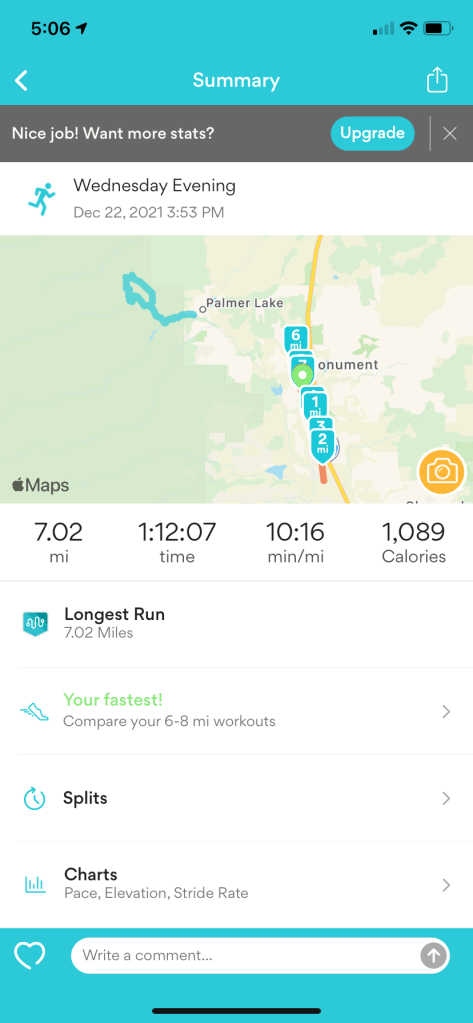
Oh, and one last thing about making things a Heart Obligation.  Obligations done from the Heart, will take you to levels you have never experienced before.  I’m training for a half marathon in two months.  And I started a training run this week with a Head Obligation feeling: “I hate running, I’m not going to make it, I’ll just walk most of it this time, can I stop after 4 miles, etc.”  Then one mile into the run, I stopped looking at my distance/time app and made the decision to make it a Heart Obligation run: “I’m running to get in better health, to challenge myself to new goal, to learn about enduring in hard physical times, etc.”  I quit looking at my app for the next 6 miles, finished the route, and found out I just did my longest and fastest run.  The power of a Heart Obligation fulfilled…

Growing in hard places… A trail tip

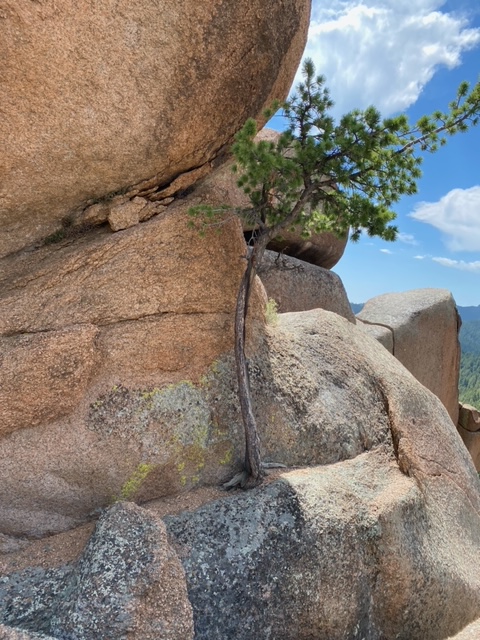
I hate hard places.  We think of them as places of no growth, desolate, dry and where we are all alone.  Places where things don’t change and are barren.  On a recent hike, I came across this tree growing in a hard place.  A place where there is no water, hardly any soil, and exposed to the elements on three sides.  And yet there is growth taking place there.  Granted, it’s likely slow growth; growth that is taking a long time compared to growth that would happen in more ideal conditions, but there is growth never the less.  But how often do we consider the growth happening in the hard places in our lives?  And I would say for me, I don’t most of the time because I’m so caught up in the desolate, dry, and loneliness of the hard places I’m in.

In hiking there are the hard places of accidents, missed opportunities, weather events, closed trails, performance set-backs, etc. that can create the hard times in our lives.  We tend to focus on the hard place and don’t stop to really look around for the growth that can be taking place.  Like the tree growing in the rock.  It’s so easy to hike right past and miss the areas of growth and beauty taking place in our own lives on the trail.  Like going up the Manitou Incline, we can be so focused on trying to get up it, we don’t pause, stop, turn around to catch a morning sunrise or beauty of being above the clouds.

In our personal lives, we have all gone through this past year of COVID and the hard places it has put us in.  Then there are the hard places we create in our lives when we compare our reality to the false expectations, we tend to set on ourselves.  We all want the perfect family, holiday times, health, home, friends, etc. and we when don’t have them; we can go down the hole of thinking things aren’t going to get better and thus we see ourselves being stuck in hard places in our life.  We think of everything as being bad and hard; so we miss the beauty and growth taking place.  Like the slow growth of the tree in the rock; there is growth to be seen when we stop and look for it. 

At work, the hardest places for me have been the periods of unemployment.  And I let it get worse when I compare myself to others who also are unemployed, because “they seem” to land jobs faster and get the better jobs.  I get consumed with the job search and don’t think about anything or anyone else.  Growth can take place when I stop to take classes, attend seminars, build my network, explore new opportunities, and use this “extra” time to help others.

We all have and all will experience hard places in our lives.  We want them to end and be over with fast; like the 5K race, when we are really in a marathon, or worse (more growth) the Leadville 100-mile race that is between 9,200 to 12,600 feet elevation.  Growth in hard places happens when we quiet and stop ourselves to see everything taking place in our lives.  And like sharing this picture of growth in a hard place, our growth take place when we allow others to come along side of us to walk with us in our hard places.  We are not meant to walk this journey of life alone; especially during the hard places we find ourselves in.  Who are you letting take this journey with you?

Speaking a Word into someone’s Life… A trail tip

Have you ever had a “Word” you thought you were supposed to speak into someone’s life and you didn’t because of excuses you were making in your mind?  This has happened to me twice -both at funerals- where I felt the leading to say something but I didn’t.  The first time was at the funeral for the father of Bob Hess in Glen Ellyn, IL. over 20 years ago.  I was going to say something like: “I didn’t know Bob’s dad, but I could tell the kind of man he was because of the traits I see in his son Bob Hess.”  The second time was last Saturday at the funeral for Bill Callen, where I was should have stood up and said “It’s been said that 99% of the people in the world don’t think they can achieve greatness, so they aim for mediocrity; and just to let you know: Bill is not in that 99%.  Rather he is in the 1% of the top 1%, as he has impacted generations with the all the music bands he formed and led over his life.”  But because of battles in my mind, I just sat there and didn’t say anything.  And just like remembering the events at the funeral for Bob’s Dad, I’m sure I’m going to remember not saying anything at Bill’s funeral for years to come.  Going forward, I’m going to use these past events to as a reminder that there are always words of encouragement that I can speak into the lives of others as I go about my Hiking, Personal, and Work life.

In hiking, there are opportunities to speak words of encouragement every time we cross paths with someone.  Be it; a group of Fort Carson soldiers running through Red Rocks Open Space, where I can stop to cheer them on as a group; to the person struggling on the incline, where they need a personal word of support or drink/snack to help them on their way.  I don’t think anyone has ever said, “Thanks but I don’t need your encouraging words.”  We are all driven to new heights or helped across the finish line by the words of life, we can speak into others on the trail.

In our personal life, like the words our parents hammered in our head “If you can’t say something nice to a person, don’t say anything at all.”  These words are as true today, as they have ever been.  Our words need to be giving life to others.  And unfortunately, I tend to miss saying these words to those closest to us, because the closer we are to people, the more faults we tend to see.  But it’s those closest to us, who need the supporting words the most.  And it extends outward from our inner circle. To our neighbors, friends, relatives, and people we see during our day-to-day business transactions.  Everyone appreciates a “Thank You for doing ___, You really did a great job on _____, or words of encouragement during a difficult time.”

At work, words of encouragement can breathe life into a difficult day or a struggling project.  It’s easy to start doubting our capabilities and skills when things aren’t going right.  Having co-workers who are encouraging can often make the difference between the failure and success of a project.  And it’s not just our co-workers; support staff and our upper management chain need words of encouragement just as much as anyone.

We need to remember that our words spoken to others need to come not from our head, but from our HEART.  Our body language, eye contact, tone of voice, inflection, etc. all speak volumes on how others will hear what we are saying to them and the genuineness of the words spoken.  Take time to assess what encouraging words you may have for those you will be interacting with during a given activity/event.  Ask yourself “who will you be seeing today and what can I say that will breathe new life into them and lift their spirit?”

Old Man My A**… A trail tip

Currently I’m reading “Secrets of Aging Well, Get Outside, the Fitness you can’t get in a Gym, by Martin Pazzani.  I was struck by the data on page 30 (see picture above) as it reminded me that I’m letting the age factor start to limit my possibilities.  I let the buzz words of RETIREMENT, SENIOR CITIZEN, OLD, OVER THE HILL AT 60, etc., creep in to define me and what is still possible in my life.  Even in a previous Trail Tip, I limited what is possible when I said “I may not be able to climb all the 14ers in Colorado.”  And now I have to ask myself, why can’t I set a goal now to climb all the 14ers in Colorado in the next 5 to 8 years?  As I’ll still be a “Young Old” person.  As I take this journey -with many friends- into the end of “middle age” and starting to be “Young Old”; it’s time to drop these buzz words about being old and start to live in the world of what is possible.

In hiking, it’s time to start dreaming and planning for what is possible.  Gone is the limited dream of doing “some 14ers” and replacing it with starting a plan to do all the 14ers (58 of them in Colorado).  And just to make it a stretch goal, I may add in some of the 13ers (584 of them) and 12ers (676 of them).  This with having the goal of putting these Trail Tips into a book, once I get 100 of them done (this is number 89.)

In our personal life, what should be the dreams, plans, and goals for our lives that will take us into the “oldest old” stage in life.  What are the adventures and ministries to be planned with my wife, Arlene?  In the past, it was get the kids launched, quit work, move into retirement, get on Social Security/Medicare, and slow down.  Instead, it’s time to relook at our dreams and passions; taking time to turn them into realities for the calling and ministry that God wants to do in our lives as a couple.  As an example, one goal we already have is to start taking piano lessons.

In work, I’ve fallen into that trap of the “December 2025 date”, where I can claim Social Security at full retirement age.  Why do I think I need to stop at this age, when I’m just starting to peak?  Why would I want to throw away all these skills I’ve developed over 40+ years?  The mind set should be on how do I pass these skills onto the younger generations.  I may not need to work full time at this age, but I can use my work talents to have a positive impact on others.  And even learn new skills myself.

It’s time to reset our frame of reference for what we think is possible as we age.  It’s easy to let labels, titles, and views we have of our parents/grandparents define how we should live when we get to “their age”.  It’s time to revisit our dreams, goals, and plans for our hiking, personal, and work lives with those closest to us.  It’s time to have that mindset of Bruce Willis in the movie RED (Retired, Extremely Dangerous), who after beating up the bad guy, -half his age- told him, “Old Man, My A**”

The Strength of Weak ties … A trail tip

“… when it comes to finding out about new jobs – or, for that matter, new information or new ideas – “weak ties” are always more important than strong ties.  Your friends, after all, occupy the same world that you do.  They might work with you, or live near you, or go to the same church, schools, or parties.  How much then, would they know that you wouldn’t know?  Your acquaintances, on the other hand, by definition occupy a very different world than you.  They are much more likely to know something that you don’t.  To capture this apparent paradox, Mark Granovetter coined a marvelous phase: the strength of weak ties.  Acquaintances, in short, represent a source of social power, and the more acquaintances you have the more powerful you are. Connecters like Lois Weisberg and Roger Horchow – who are masters of the weak tie – are extraordinarily powerful.  We rely on them to give us access to opportunities and worlds to which we don’t belong.” Malcolm Gladwell, The Tipping Point, page 54.

So, who are our acquaintances in our Hiking, Personal, and Work lives? And we also need to ask, who am I considered as an acquaintance to?

In Hiking, I think acquaintances can be social Facebook pages such as “The Manitou Incline, Everything’s better on Incline” or “14ers.com”.  Places (people) I can tap into when I need advice on a something about the incline or a given 14er outside the scope of my friends.  And there are the people as well, like Brian Ratterree.  An acquaintance I may only see a few times a year, but someone who I will make an effort to see and connect with, when I’m at the Manitou Incline base.  And that is where our effort comes into play.  We can have others as acquaintances, but we also need to be acquaintances to others.  Be it posting helpful information on a Facebook page or being sincerely available when someone reaches out to us.

In our Personal life, I think of acquaintances as the businesses I use for car repairs, aka “JJ Tracks” and “Facinelli Motors”.  Places I not only take my cars to, but they are also places I can call or visit for answers to questions.  And then there is Debbie in the paint department at The Home Depot, who I had gotten to know as an acquaintance. And when I realized I needed 50 bottle openers for sparkling grape juice at my daughter’s’ wedding reception, she gave me a box of paint can openers and said just bring them back when you are done.  They are people I can reach out to; to get help outside of the scope of my friends.

At work, I think of acquaintances as my LinkedIn connections. And how one contact can open up a whole new word of opportunities.  I recently attended a Dallas-Fort Worth Project Management Institute seminar on LinkedIn and connected with Brandy Patton.  After sharing our stories (becoming acquaintances), she told me about the Lake Pointe Church Job Connection ministry, which I’m now using to help me in my job search.  Co-workers (current and previous) can also become acquaintances.  People I’m likely not having over for a BBQ, but they are people I can reach out to and tap into their circle when I need help.

Amy Rees Anderson in a 2013 Forbes article wrote “I once read a quote by the ever so brilliant writer known as Anonymous. It states, “People will forget what you said. People will forget what you did. But people will never forget how you made them feel.”  The most powerful tool you have in creating success [acquaintances} in your life is to appreciate other people. When you appreciate others you will find that your relationships are stronger, your circle of friends will grow wider, your career and business will succeed beyond your expectations, and your life will simply be happier.” The Power of having acquaintances….