What will be your Legacy… a trail tip

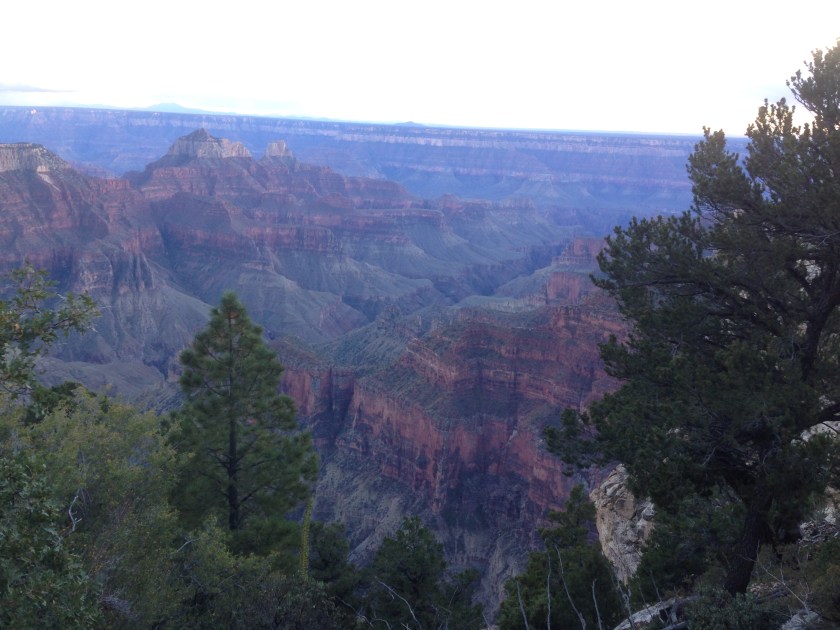
IMG_5965

Legacy – The Merriam-Webster dictionary defines it as “something transmitted by or received from an ancestor or predecessor or from the past.”  It’s how we want to be remembered.


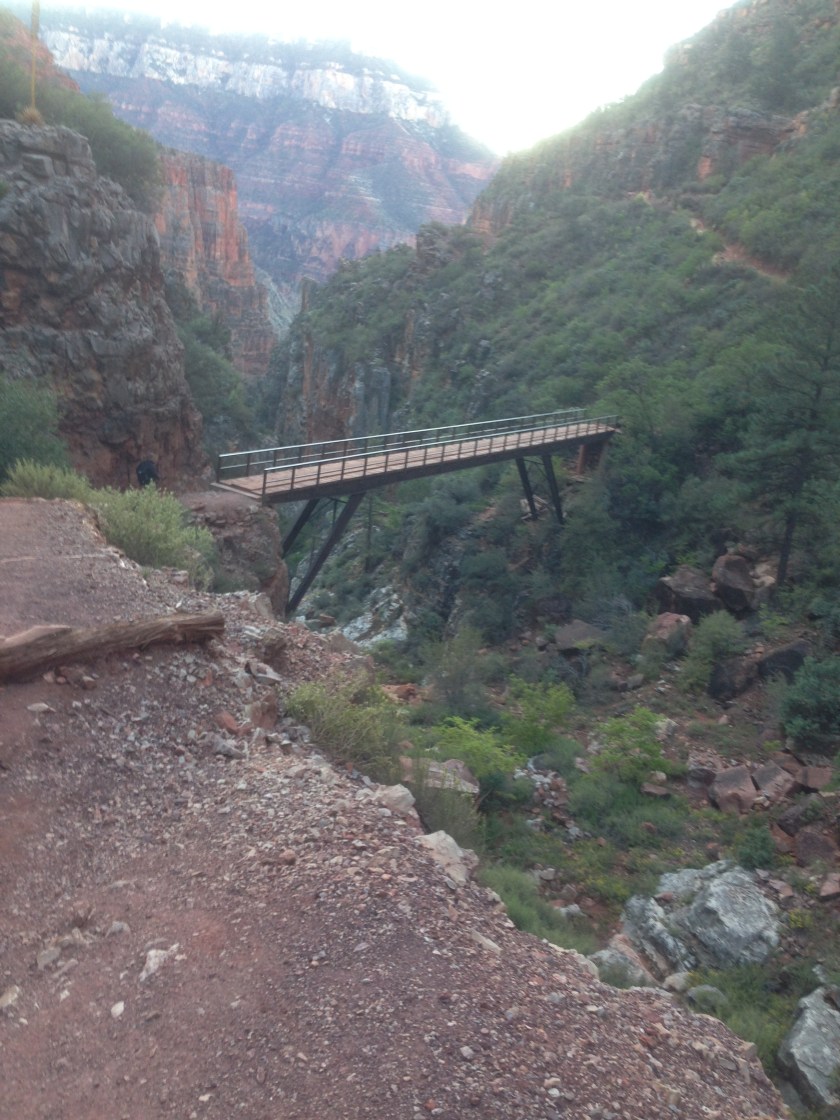
In 2016 I had the opportunity to hike the Grand Canyon from Rim to Rim in one day.  As I descended into the North Kaibab canyon trial, crossed over the Colorado River and up the South Kaibab trail; legacy shouted out to me; filling my mind the entire time with thoughts about what it must have been like for the people who did all this work.  Bridges that were built, buildings erected, trails laid out, campgrounds created; with many of them now being there for almost 100 years.  Their work has passed the test of time and remain there for people to use every day.  Going down the North Kaibab trail, there were several bridges built and once in a while, there would be a newer bridge; which we found out later were rebuilt because flooding had taken out the original bridge.  So, while “structures” we see may get damaged or destroyed over time, the foundation of the legacy remains and can be rebuilt.


Thus, what is the legacy I’m going to leave my kids and grandkids.  What lessons and memories am I passing on to them.  How will I be remembered by them and others?  And just as some of the bridges on North Kaibab trail have been damaged and repaired; we can do things now to repair relationships and other things that will affect our legacy.  What do I need to start changing today?
In hiking we create a legacy with the knowledge of trails we pass onto others and how we respect the trails.  Do I take time to greet people I see out hiking?  Do I offer advice or show people new trails?  Do I stay on the trails and avoid cutting across switchbacks?  [We are out there for exercise; so why would I cut across a switchback to save distance in the first place?]

In our personal life, as we get older we begin to see the legacy we are passing onto immediate and extended family members.  What habits are my kids picking up from me?  Are people responding to me in the negative ways that I have initially responded to them.  This has really hit home with me as my first grandchild was born six months ago.  What will I be passing onto my grandchildren that will impact generations beyond my grave?   What impressions am I making with my neighbors and those around me in my community?

 In business, there is also a legacy that we are creating.  Having recently been unemployed for 7+ months, I’m now asking myself what did I learn going through this journey and how am I going to pass these lessons onto others?  In preparing myself to start a new role I’m starting soon, I’m already thinking about the impression and legacy I’ll be creating and leaving others?

I recently heard about the story of the father who named his son “Odd”.  “Odd” never liked his name or knew why his dad named him “Odd”.   Yet out of respect for his father “Odd” kept his name, but grew to resent it more and more as he grew older.  “Odd” went through life, having a career, getting married, having kids, and growing old.  As part of his will, he stated that he didn’t want his name “Odd” put on his tombstone, because he didn’t want to be remember by his name.  So “Odd” passed away and a very nice granite tombstone was placed on his grave with just the date “Odd” was born and died. No indication of his name “Odd” anywhere.  Yet as time went on, people would come to the cemetery, pass his tombstone, only see the dates and say “That’s ___”.

 We will leave a legacy with our hiking, personal, and work lives.  The question is what is the legacy you want to leave and are you on the path to create the legacy you want to be remembered by?

What dreams want to come alive in you … a trail tip

IMG_6238

Have you ever noticed that when we dream, it’s never full of text on a paper describing something? Rather dreams are as real as the reality we live in daily: full of life, color, vivid, and bursting with energy; like a picture worth 10,000 words. They seem so real at the time and then they fade from our life. Yet they are still back there, waiting and wanting to come to life. And that is how a lot of the dreams are that we hope to achieve. They seem so real in the moment, like we can almost reach out and touch them. Then life hits with all the concerns and we lose track of them as we get into our daily grind.
A key to moving toward living our dreams is to keep ourselves aware of them and not let them fade from our memory. My friend, Ken Radtke is a dreamer. He starts each year by painting a picture of the dreams he wants to achieve and live. Sometime it’s more a collage of pictures verse hand drawn. But in both cases, he puts them on a 9 by 11, or 11 by 18 piece of paper and hangs them in his home office. Something he sees everyday that reminds him of the dreams he is pursuing.
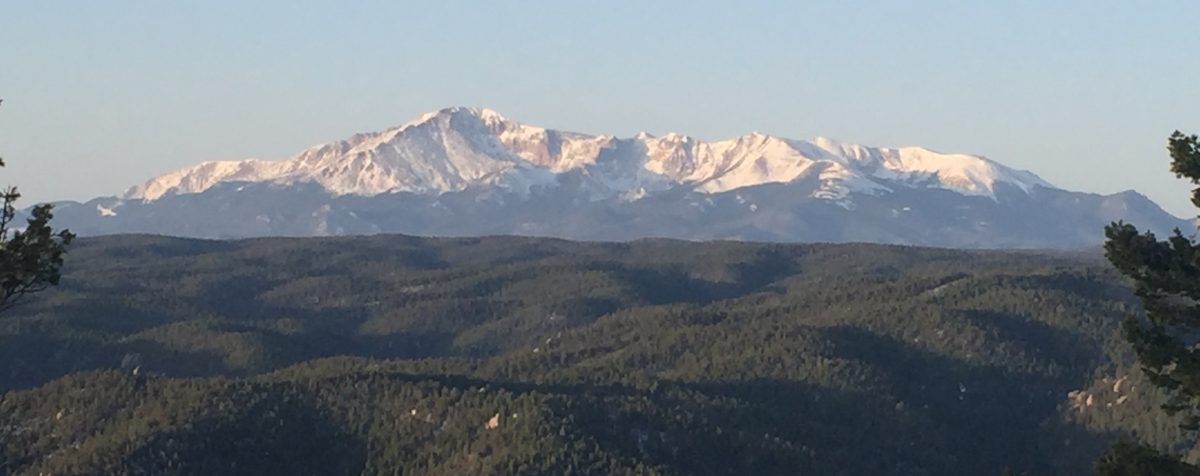
In other cases, it can be a dream you see everyday when you are outside. Which for me is my hiking dreams calling to me as I drive down the front range from Monument to Colorado Springs and see the peaks/mountains/trails of: Sundance, Cap Rock, Chautauqua, Raspberry, Herman, Blodgett, Bottomless Pit, Rosa, and others. And my dreams aren’t the same as other people have because everyone else on I-25 is seeing these same mountains, but not in the way I’m seeing them. So keep in mind that your dreams are your dreams. You may become a part of helping someone else fulfill their dream, but it’s still their dream. Seek to live out the dream(s) that you have in your heart, mind and soul.
We need to keep our dreams alive as some of them may take years to achieve. For me it was hiking the Grand Canyon Rim to Rim. I first saw the Grand Canyon from the South Rim in 1981 when doing a bicycle ride from the Grand Canyons to Salt Lake City with Russ Brown. I remember staring across that vast chasm, wondering what it would be like to hike across it. The dream faded from reality as time went on with the responsibilities of “life” taking over. Occasionally the dream would come back as we did family vacation visits to the Grand Canyon and over time and it really began to have roots when I realized the Grand Canyon is only a one-day drive from our home. So I went from staring across the Grand Canyon in 1981, to hiking it from the north rim to the south rim in one day in 2016 with Ovi Truta and Erik Lane. Almost 35 years later to the day I first saw the canyon.
What are the dream(s), that have been dormant in your life that you need to starting making plans for this year or in the next few years? And don’t limit the size of your dreams. As Mark Batterson says in the title of his book “Chase the Lion: If your dream doesn’t scare you, it’s too small.” What dreams do you have in your hiking, personal, and professional life that you need to re-awaken? It’s time to start dreaming with your eyes wide open and vividly see where your dreams want to take you. Or as the words say in the song “Come Alive” from recent hit musical “The Greatest Showman”:
And you’re more than you could ever be
Cause you’re dreaming with your eyes wide open
And you know you can’t go back again
to the world that you were livin’ in
Cause you’re dreaming with your eyes wide open
So Come alive
Start coming alive and dare to live the dreams in your life. You will never go back, once you start living them.

Dreaming BIG in 2018 (aka Back to the Grand Canyon) … a trail tip

Grand Canyon IMG_5918

As we set goals for a New Year (aka 2018), we often think we have to have several different goals.  And in doing that, we tend to get discouraged because it’s hard to keep them prioritized and so we vacillate between them and in the end, most of them never get achieved at all.  I propose a different approach would be to look at setting one BIG Goal/Dream that can transcend many different areas and can become a foundational goal that easily allows for many other goals can be built on it through the year.

In my case for 2018, it going to be “Hiking the Grand Canyon Rim 2 Rim (R2R) in one day in late September.”  A simply stated goal that will have a ripple effect on many different areas in my life including: Sleep, Health, Weight Loss, Meditation, Focus. And here are some examples of how this goal can affect these different areas.

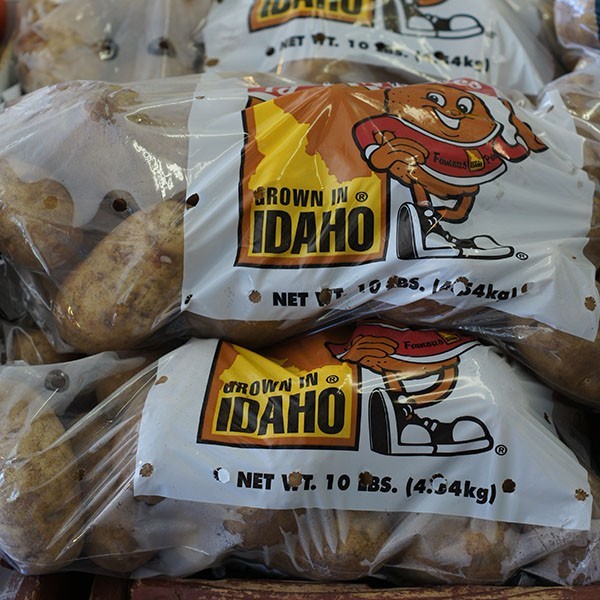
Sleep – doing a hike like this with the longer training hikes, will require me to sleep more each night. Health – I’ll get in better overall health as I become more fit with my training hikes.  Weight Loss.  I’m going to take two ten-pound bags of potatoes and put them next to my hiking gear with the sign that says.  “Al, do you really want to carry this extra weight 9.6 miles and up 4,500 feet out of the Grand Canyon.”  [If that isn’t a visual reminder, I don’t know what is.]  Meditation – I’ll be the first person to tell you I like to do hikes with others, but nothing clears your head like going out by yourself for a 6 to 8 mile hike with about 2,000 feet elevation gain.  Focus – when you have that one main goal for the year, it becomes easier to stay focused on it.  And a main goal like this also can cut across your Hiking, Personal, and Professional life.

10-lb-bag-of-russet-potatoes

With hiking, there are going to be longer (20+ miles in 10 to 12 hour) training hikes that will need to be done over the summer.  It will be a great way to explore the Ring the Peak and other trails around Pikes Peak and provide the opportunity for others to do these hikes with me, even if they are not doing the R2R hike.

In our personal life, a goal like this will have a lasting impact on your overall health.  Sleep, Weight Loss, Mediation; Eating better; all important things that come from having this one BIG goal, but not something we need to think about as separate goals.  They become an automatic part of the larger goal.

There is also the impact to our professional life.  It’s developing the discipline that comes with having BIG Goals and staying focused on them during the course of the year.  And as you succeed in that goal, it gives you the confidence to take on major goals at work. 

What can be that one Big Goal/Dream you have for 2018?  It doesn’t have to be doing the Grand Canyon R2R in one day, but it can still be BIG!!!  Think about and visualize what it will be like in 10 to 12 months as you look back at 2018 and say: “Wow, I did it, I got ______ done and it impacted my life in these _____ specific ways.”  What is that ONE THING above EVERTHING else you want to do in 2018?  Have you put it on paper?  Have you shared it with others?  Do you have a time frame to get it done?  What resources do you need to accomplish it?  Who is going to help you do it?  Are you willing to share it in response to this post?

About those New Year Resolutions … a trail tip

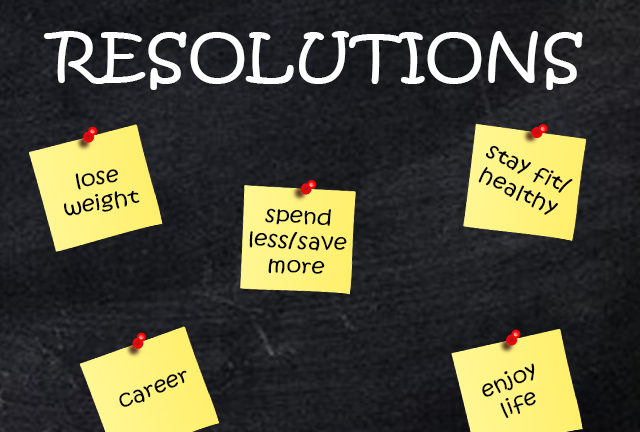
new year resolutions

Here we go again. A new year and a new resolve to keep those New Year Resolutions (new habits) that most of us will give up on by the middle of the month. As I’ve written about in my last two Trail Tips, we need to begin our understanding of our habits by understanding the science of them; which Charles Duhigg, explains it in his book, “The Power of Habit – Why we do what we do in life and business”. Charles defines a habit as a Loop: When I see a CUE, I will do a ROUTINE, In order to get a REWARD. The QUE and REWARD become intertwined and creates a sense of anticipation and Craving: “I see this, I want this REWARD”. I propose that the key to making headway for lasting New Year Resolutions is thus to focus on the QUE that kicks off the automatic habit, knowing ahead of time when you may expect that QUE, and having a new ROUTINE prepared to implement.
Exercise (aka hiking, running, walking) is always a big New Year Resolution area. “But it’s cold and dark outside at 6 am, so I’d rather go back to bed”. Here is how we can create a new QUE for our hiking. Start by looking at the rolling 10-day weather forecast. Note the best days out of that block and mark the time for each day you will go hiking. Then for each of those days, lay out your gear the night before. Thus, starting to mentally have that Craving in your mind for the reward of the hike. This is where having a hiking buddy is key to get you out. Knowing that a CUE can be someone is going to be waiting to hike with you, provides that extra motivation go also get you into the ROUTINE (action of hiking). It’s worth noting that when we still had our Golden Retriever, Ava; she would see the hiking clothes laid out and then sleep on them because that was her CUE that good times are about to happen with a hike the next morning. If you wait to get your gear ready the day of your hike, you are much more likely to not have that CUE ready to trigger your hike for the day.
Eating (aka our personal life) is that next New Year Resolution area. Drinking Dr. Pepper and eating Rocky Road ice cream are the resolves I’ve been trying to change for the past several years. Again, changes here need to start with the CUEs. For Dr. Pepper, I know the CUEs of where every convenience store is and how much they charge for a XL refill. I can’t avoid driving past them, but I can anticipate them and have a new ROUTINE ready. Leave the house with a full water bottle and start a new ROUTINE by drinking from it every time I go past one of those convenience stores. It’s 9 pm, I’ve made it another day, I see the TV so the CUE is triggered and I’m looking for that ice cream for my reward. I can change that by having a book out to read, so that becomes my CUE. I might have to go extreme here and put duct tape around the ice cream and have the book sitting on top of it in the freezer.
Personal Growth (Our professional life), is where we want to make those changes with learning new skills, hobbies, and other creative areas (arts, music, writing, etc.) This is where time comes in, because it takes time to do these things. And what is the thing that is sucking so much of our time. For me, I know it’s my “smart phone”, which I think is making me dumber by the day because of all the time I spend on it. Put the phone in another room and have it on silence, so you don’t have the CUE of seeing or hearing it. And as mentioned above, put out the books you are reading around the house to trigger the routine of reading whenever you see them.
“All our life, so far it as it has definite form, is but a mass of habits – practical, emotional, and intellectual – systematically organized for our weal or woe, and bearing us irresistibly toward our destiny, whatever the latter be.” William James, 1892. What do you want your legacy and destiny to be in 2018? What are the habits you are going to change in 2018 to get you there?

Reading the habits of others … a trail tip

habits of others

The last Trail Tip discussed the bad habits we have picked up in 2017 and how to change them. The flip side of this is reading the habits of those around us. As a leader, parent, friend, spouse, co-worker, manager; it’s important to have a baseline of the habits of those around us, so we know how and when to offer support to them. Because a change in a habit is often tied to a change in a life event taking place. Which is why retail stores have those customer loyalty cards that they want you to swipe every time you make a purchase, because they are creating a baseline of your buying habits and looking for changes. And what do you think is the “Holy Grail” of life event changes they want to know about you??? It is: are you pregnant? Because your purchasing patterns change -like nothing else- when you are pregnant and they want to capture your future purchases. And now that we have covered that tangent and gotten you completely paranoid about swiping your loyalty cards, let’s discuss how being able to read the habits of others can help in our hiking, personal, and work journeys.

 
In hiking, what are the habits of those you hike with? What is their baseline: How often are they getting out?, Has their hiking time changed?, Are they doing the same trails all the time?, What are their hiking goals? Once you know these things, watch for changes. Has something changed where they are only doing very select trails, going at different times, or not going at all? These changes can be a way of crying out for help, without saying anything. I know that I have been very prideful at times with not wanting to ask for help.

 
In our personal life, it’s recognizing the daily routines (habits) of those around us and watching for changes. How many have we asked ourselves questions like: I haven’t seen ____ in church lately? I wonder why we haven’t gotten a Christmas card from ____ for the past two years? You know, I haven’t gotten a catch-up phone call from ____ in the past two months, I wonder if they are OK? I see Al outside more often during the week, I wonder if he got laid off? We all ask ourselves these questions, but do we do anything with them? Do we do any follow-up to check on them?
In our professional life, the habit baseline can be how & when people respond to emails, voice mails, etc. When do they come into work? Are they usually early or late for meetings? Do they ever miss meetings completely? Do they seem more withdrawn or distracted? Being aware of these changes is the first step in looking for overall habit changes in your colleagues and the events behind those changes.
Keep in mind, that we need to earn the right to be asking questions about changes to a person’s life and we need to being doing it with the right motives. Plus, we need to know the environment in which to ask them. Be it asking questions about changes in their hiking, personal, or work life; you never want to asking them questions in a group setting. It needs to be done one-on-one in a safe environment. And surprise, surprise, I’ve found that most people open up to me when we are outside for a walk, hike, or a run. There is something about being outside that allows for comfortable moments of silence, verses being at a restaurant where you are looking at each other and having those awkward moments of silence.

 
But why, why bother with all of this? I would state the answer is COMMUNITY. Malcolm Gladwell in his book, Outliers, starts with “The Roseto Mystery, a community where people were dying of old age [and nothing else]… [where] the values of the world we inhabit and the people we surround ourselves with have a profound effect on who we are.” And how long we will live. Thus, engaging in your community and the people around you will have a greater impact on your health than any of the conventional wisdom things they say you should doing to have a long life. So give your friends permission to talk to you when they see changes in your own habits, which in turn will see them giving you permission to ask about changes in their habits.

What Bad Habits Did You Pick Up in 2017 (and how to change them) … a trail tip

Bad habits IMG_0932

 “Life is mass of Habits” William Johnson wrote in 1892 and 40% of our actions/decisions are habits – Duke University study from 2006.  Most of us don’t realize we are doing them, know how to change them, or know how to create new ones.  And this is because; like me, I had no idea of the science behind them.  Charles Duhigg, explains it in his book, “The Power of Habit – Why we do what we do in life and business”.  Charles defines a habit as a Loop: When I see a CUE, I will do a ROUTINE, In order to get a REWARD.  The QUE and REWARD become intertwined and creates a sense of anticipation and Craving: “I see this, I want this REWARD”.  Examples include: seeing a Starbucks (cue) and wanting a coffee (reward) or smelling Cinnamon Buns at the airport and wanting to eat one (reward).  And the problem is that our brains can’t tell the difference between good and bad habits, so they happen without our permission.  We do them without thinking.  Charles Duhigg make the case that in order to change a habit, we need to keep the cue and reward (craving), but change the routine to still feed the craving.  So, let’s look at the some “bad” habits, we may have picked this past year.

In hiking, we get into the habit of doing the same route all the time.  We see the trail head, know the reward of doing it, then start the routine of the same trail.  This can be changed by intentionally changing the routine by determining to never do the same trail two days in a row.  The reward is still the same, but the routine changes.  Then there is the habit of not hiking in the winter because we see the cue of cold and darkness, so we want the reward of staying warm, thus the routine is to roll over, pull up the covers, and go back to bed.  We can change this by acknowledging there is a reward of being warm after the hike starts along with the euphoria (reward) that comes from getting out and doing it.

In our personal life, habits of checking our phone every five minutes, snacking too much, staying up to watch the late news, buying stuff we don’t need; are “bad” habits I struggle with at times.  I think many of these “rewards” are related to the problem of FOMO – Fear Of Missing Out.  Black Friday store ads for “Door Busters”, TV shows with “stay tuned for previews of next week”; news programs that say “coming up next…”, all are specifically designed to feed a craving (reward) and get us to do something -even if it’s bad for us.  Thus. I often end up watching useless news for 45 minutes and losing that sleep time.  And I do it without even thinking about it.

In our professional life, it can be that afternoon slump.  We start to yawn (cue), desire a sugar fix to wake us up (reward), so we go for the candy bar(s) or soda (routine).  But we can get that same reward by going for a brisk five-minute walk.  The cue and reward stay the same, but we change the routine to get the same outcome.  Checking email every ten minutes can also be a “bad” habit we can get into.  It’s that same FOMO or thinking we have to be available immediately to everyone that drives us to want this reward/craving.  And in this process, we lose valuable productivity because we have to spend time rewinding to get back into the mindset of what we were working on.  Think about watching the season finale of your favorite TV show, but you accept interruptions every few minutes, so you keep rewinding the DVR to get back into the mindset of where you were in the program.  And so an hour-long show takes you about two hours to actually watch.

We all have allowed habits to creep into our lives this past year that we would like to change going into 2018.  It starts with: Identifying the options for changing the ROUTINES, Experimenting with REWARDS to identify the craving, Isolating and identifying the CUE (a location, time, emotional state, after another action, etc.), and Having a plan to implement when you see that next CUE.

Stopping the drain… a trail tip

IMG_0887

We have started to get some colder weather and I have noticed the extra drain that it puts on my cell phone battery while out hiking.   Which got me thinking about what drains me and how do I counter that draining feeling in my daily life.   Both important things to ponder as we get ready to close out 2017 and move into 2018.

In hiking, I have already mentioned how the cold weather can affect battery life.  And during this winter season; we also face shorter days, snow and ice.  While we can’t stop the weather and these other things, we can take actionable steps to counter them.  For the cell phone battery life, it’s important we always have a spare portable battery with us; and it doesn’t help when you keep it in your exterior backpack.  It needs to be close to your body to stay warm.  And admit it, it’s a lot easier to get up for a hike at 5:30 am during the summer when it’s already light out and a balmy 55 degrees.  But in December, when it’s dark till 7 am and 25 degrees out, rolling over and staying in bed at 5:30 am is a no brainer.  Yet, we can counter this by always having someone to go with us.  When that alarm goes off at 5:30 am, I know Bro’ Brad Argue is going to meet me at the Trail Head at 6 am, and who am I do deny him the pleasure of hiking with me (at least, that’s what I’m thinking).  Thus, having someone to hike with on these early cold morning is critical to get you out a lot more of the time.  Also, I figure some part of the trail is going to have ice and snow on it -at least through the end of April- so pack the ice trekkers in your pack and always carry them with you.  Then dress accordingly: Gloves, hat, multiple layers, and wear shorts “for any temps above 30 degrees.”

In our personal life; life itself can be draining.  Loss of a job, accidents, family relationships, financial problems, unmet expectations, etc.; can all become a serious drain on us: physically, emotionally, and spiritually.  This is where close friends come into play.  I’m not talking here about the 100’s of friends you may have on Face Book, but rather that small handful of friends who you can be brutally honest with.  As my counselor friend, Scott Hendrickson once told me.  “Al, I would not have to see half my clients, if they just had a close friend they could talk to once a month to be completely honest with.”  As you look back on 2017 and forward to 2018, ask yourself; “Who are my close friends?”  Verbally name them out loud and then take time this year to thank them for that close friendship.  And if you can’t name 3 to 5 friends like this, make it a goal to cultivate these friendships in 2018.

In work life, there are lots of things that can drain us.  Projects we don’t like, long commutes, management decisions, co-worker problems, etc.  Here I think it becomes a matter of perspective and having “grit” to make it through this season at work.  Having been laid off and not finding a position for the last five months, I’d now gladly put up with a lot of things at work that I complained about all the time before.  And if you don’t like your manager, have some grit and hang in there; like the weather, they will change over time.

I’ve covered just some of the things that can drain us in our hiking, personal, and work life.  We all have our own list of them and it’s important to identify them, so you know how to respond to them accordingly.  The key isn’t trying to change them because; well for the most part you can’t.  But you can change your response to them and take action to lesson their impact on you.  Over the next few weeks write down the things that drain you in your hiking, personal, and work life; then determine your strategy and action plan to address them as you move into 2018.

The Other Stories… a trail tip

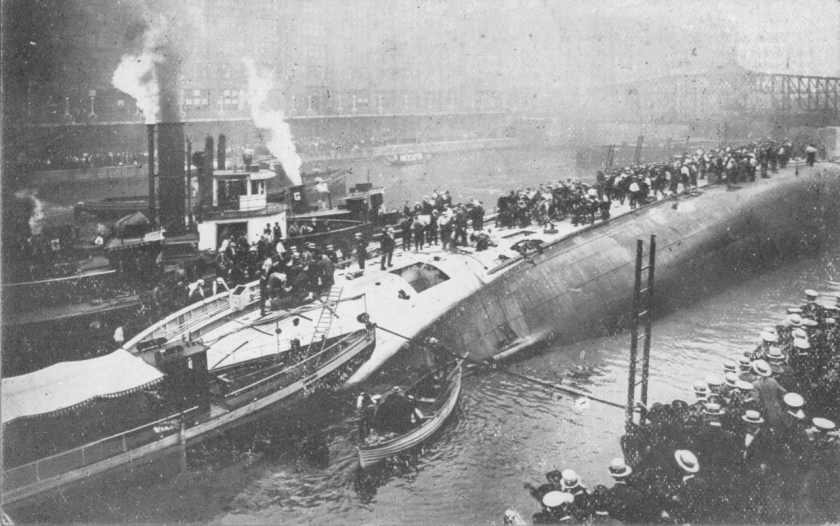
1280px-Eastland_Postcard_-_View_of_Eastland_taken_from_south_side_of_river_shortly_after_accident

Last week, we started watching “The Long Road Home” on National Geographic Channel, which is about an ambush that took place in 2004 in Sadr, Iraq with casualties of 8 deaths and 64 wounded -the largest one-day toll since the Vietnam war.  Looking at my wife, I ask why don’t we remember this better because the only “Middle East” event that sticks in our mind is the “Black Hawk Down” story.  And in the same way, we all know about the Titanic sinking with over 1,500 deaths in 1912, but who knows the tragic story of the ship SS Eastland?  When on July 24, 1915 the SS Eastland was moored in Chicago on the Chicago River, taking passengers from Western Electric for a company outing.  The ship was loaded with 2,572 passengers; it became top heavy, then turned on its side in 20 feet of water while still moored, and 844 passengers died in a matter of minutes.  Yet, I would bet that a vast majority of us have never heard this story, which brings us to the point of this “Trail Tip”; in that we miss the “Other Stories” going around us because the hype and drama given to specific events.  So, as we enter this Holiday Season, it’s worth our effort to pay attention to the other stories taking place around us.

In hiking, all the news in the Colorado Springs area right now is about the reopening of the Manitou Incline and people are posting daily about their exploits of climbing it.  And so, the other stories about different trails get lost in the background of the noise of the Incline.  Trails around Jones Park, Mt. Rosa, and the various Pipe Line trails all have a story of their own about the rich history of the Pikes Peak area.  Yet, how many us ever take the time to explore them?

In our personal life, we get caught up in Face Book, Twitter feeds, and other social media outlets to hear about the stories of those around us.  Not realizing that many of the best unknown stories may be right next door to us.  Our neighbors across the street moved here from Alaska.  There he was an airplane mechanic and bush pilot.  And for the past few years, he would go to Alaska during the summer to spend weeks at a time out on fishing boats.  I bet he has the stories to tell, but have I asked him out for breakfast or lunch to get him to tell me his stories and experiences that I will never do in person?  Have I talked in depth to another neighbor that is active duty and teaches at the Air Force Academy?  What are the nuggets of wisdom, I could gleam from him?

And then there is the story of William Crawford, who was a janitor at the Air Force Academy.  As one cadet later wrote, “Bill didn’t move very quickly and, in fact, you could say he even shuffled a bit, as if he suffered from some sort of injury.  His gray hair and wrinkled face made him appear ancient to a group of young cadets.  And his crooked smile, well, it looked a little funny.  Face it, Bill was an old man working in a young person’s world.  What did he have to offer us on a personal level?”  And that all changed when another cadet in 1976 reading about WWII, realized that this “janitor” was a Medal of Honor recipient.  A person barely given notice by 4,000 cadets on a daily basis, was in fact, awarded the highest military medal in America.  Who are the “janitors” in our lives that we pass by every day?  What stories am I missing out on because I don’t take the time to get to know them.

In our work life, we get caught up in the stories and admiration of CEOs and other executives that have made it big.  We try to learn from them, but there is no real connection there.  We focus on them and miss the success of those around us.  We have close friends that have developed very successful real estate practices in Colorado Springs and Denver.  Yet have I ever sat down with them and asked what are the five things that have made you successful?  Several other friends have their own IT companies.  Do I ever ask to hear their stories about how they balance work and personal life?

As we start the December Holiday Season with all the parties and get togethers, let’s cut past the noise and hype to make an effort to become intentional about wanting to hear the stories of those around us.  Since you may not have time to do it during event itself, ask for a follow-up breakfast, lunch, or coffee meeting.  It’s as easy as saying “I’d like to hear more; can we meet next week and continue this conversation”.  Inviting people around us to tell us their stories is a great way to get to know someone better and create lasting friendships.

More information about William Crawford can be found at:  http://www.homeofheroes.com/profiles/profiles_crawford_10lessons.html

Cultivating the Spirit of Thanksgiving

happy thanksgiving

“Thanksgiving Day, is a public holiday celebrated on the fourth Thursday of November in the United States. It originated as a harvest festival traced back to the Pilgrims in 1621. Thanksgiving has been celebrated nationally on and off since 1789, after Congress requested a proclamation by George Washington.  It has been celebrated as a federal holiday every year since 1863, when, during the American Civil War, President Abraham Lincoln proclaimed a national day of “Thanksgiving and Praise to our beneficent Father who dwelleth in the Heavens,” to be celebrated on the last Thursday in November.” – source: Wikipedia

But yet, if we were honest, many of us would say we aren’t feeling very “thankful” right now as we look back over the last year.  Unemployment, loss of close family pets, struggles with children, unexpected bills, cancelation of planned events/trips, etc.; can all weight heavy on us and make us want to disregard this holiday completely.  So how do we get out of this pool of misery and CULTIVATE the Spirit of Thanksgiving?

In Brene Brown’s book, The Gifts of Imperfection, we get a few ideas. “…every person I interviewed who described living a joyful life or who described themselves as joyful, actively practiced gratitude and attributed their joyfulness to their gratitude practice…. Happiness is tied to circumstances and joyfulness is tied to spirit and gratitude… I’m so inspired by the daily doses of joy that happens in those ordinary moments, like walking my kids home from school, jumping on the trampoline, and sharing family meals.  Acknowledging that those moments are really what life is all about has changed my outlook on work, family, and success.”

It’s changing our “Thanksgiving Focus” from our circumstances to what we have in the moments.

In hiking, our Thanksgiving Focus should be on the hikes/walks/runs we have recently done.  It’s not about the missed hikes/trips I didn’t get to this year, injuries, etc., but rather the hikes I have done and “new” trails I have been on.  Or as Stewart Greene has said “the best hike I’ve ever done is the last one I’ve completed.”

In our personal life, we tend to focus on the gaps; the place between what want/think our lives should be verses the reality of where we are today.  When we do that, we see the disappointments, put our focus there, and lose any spirit of thanksgiving.  We can change that around by focusing on the moments in the present and remember the good past memories we have created.  For me it becomes being thankful for the time I did have at Cognizant Technology Solutions, the memories of all the hikes I did with my dog, and each success I do have with my children.

In our work life; it could be unemployment, being in a job we don’t like, a missed promotion, a lost contract.  Yet, if we look, we can find those thankful moments.  For me, being laid off for over five months has giving me the opportunity to take days to help parents move, help my daughter/grandson drive to Nashville, and attend extended family weddings.  My professional social media presence with LinkedIn and www.alandersen.co has greatly improved with the extra time I could spend on it.  Yes, I’m still working daily to find a new job and dealing with the disappointments of rejection emails, but I can cultivate this attitude of gratitude for the time I was able to spend in these different areas.

I think Thanksgiving with “Black Friday” has become a distorted holiday.  At one end of the spectrum, we want to sit back with family and be thankful for all we do have.  But then the advertising bombardment hits us from every angle and tells us that who we are isn’t enough, so end the Thanksgiving Day family events early and get out at 6 pm on Thanksgiving to shop or wake everyone up at 5 am, to get those “door busters” specials.  We have all gone through disappointments, pain, and losses this year; and it easy to focus on them.  So, I would encourage you this Thanksgiving to take that extra effort to intentionally cultivate the spirit of gratitude for those moments you do have in your hiking, personal, and work life.  Trust me, I know it’s not easy, as I’m walking through these life events myself right now, but thinking about and being “Thankful” for the hikes, moments with family, and extra time from being unemployed is making this Thanksgiving so much more for me.

Wisdom from a two year old Golden Retriever… a trail tip

IMG_7787 (1)

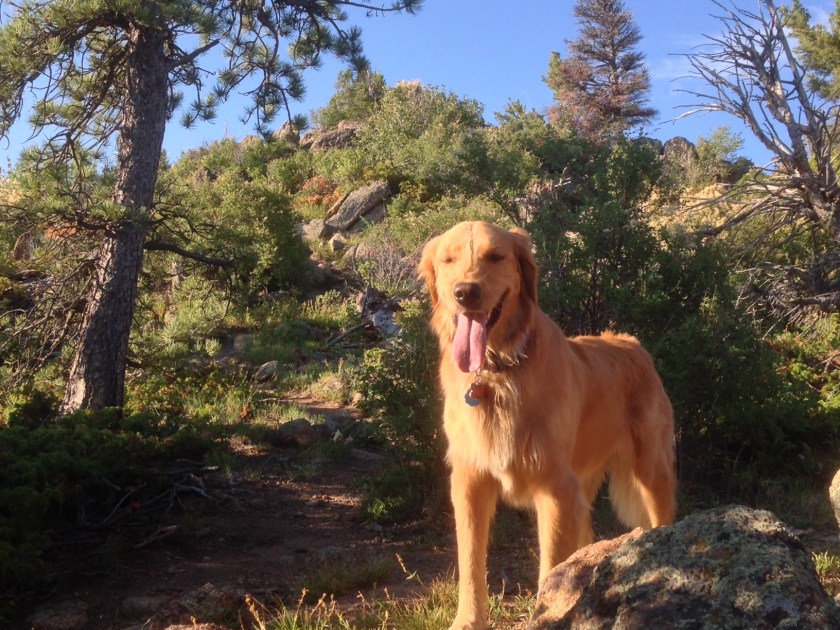
The life of our Golden Retriever, Ava was cut short after only two years because of a large rapidly growing Sarcoma cancer tumor. But in those two short years, she taught us much about hiking, personal, and work life.

Ava was a hiker and would hike with anyone, anytime.  I’d lay out my clothes the night before an early morning hike, Ava would then see it, sleep on it, and not let me out the door without taking me her.  Out on the trails, she knew where to go, was always leading us, and then stopping once in a while; where she would turn around, look at us, and say with her eyes.  “What’s holding you up, we got a trail to hike, and views to see.”

She would adjust her pace to the slowest person in the group, so we would stay together, and at the same time, she would venture ahead, turn around and challenge us to move faster.  And while she knew the trails, she would sometimes go off on a new path, saying “hey, this looks new and interesting, let’s try it.”  All things we need to be doing when we are out hiking.

Ava taught us how to build personal community.  Ava lived on a street with dog friends next door and across the street.  So, every day when she went out in the morning, she would do her business, then go see if friends Lambo, Elvis, or Truman were out.  If not, she went around to the back of their houses and go inside looking for them.  Once we found her playing with her friend, we would end up talking to our neighbors for at least another 20 minutes.  Ava got us to spend more time with our neighbors and create community like nothing else ever before in our lives.

Creating personal neighborhood community requires intentionality.  So often we think that neighbors should come to us.  With the neighborhood dogs having physical or electronic fences, Ava knew she had to reach out to them, so she was intentional to go see them every day, even if it was only for a few minutes.  And we need to do the same.

Ava was always challenging us, checking on us, and knew if we were “getting it or not”.  Lessons we need to know in our work life.  While out in the back yard or hiking, Ava was always exploring or chasing: deer, rabbits, or squirrels.  We could hear her but not always see her.  But if we tripped or fell, she would be at our side in a split second, putting her nose in our face and pawing us to make sure we could move.  At work, we need to be doing the same.  Exploring and moving ahead, but keeping an eye on those around us as well.  Does someone need help with something they don’t understand?  Are we sensitive to a personal life problem that may be affecting a co-worker performance? Do they need to take time off from work? Do we know how to offer some extra support?

Ava’s passing reminds us; that life is full of unexpected events, that we need to cherish the time we have with others, and that there are teaching moments / trail tips to be learned from the encounters we have along the trail of life.