Taking time to hear their stories, how we honor our Veterans on Veterans Day… a trail tip The third of three trail tips on Veterans Day

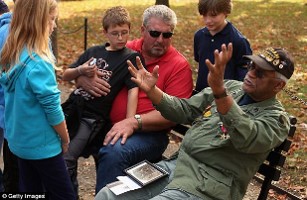
veteran telling story

Veterans Day is about honoring our living veterans and taking time to hear their stories.  So we need to begin with understanding who are our veterans today and where they served.  While numbers change daily, here is a general view of the number of veterans from 2016

  • There are 23.3 million living veterans, 9.3 million are over the age of 65, 1.6 million are under the age of 35, and 1.6 million are women.
  • Veterans that have served during the major wars include: 1.5 million veterans served since 9/11, 2.3 million veterans served during the Gulf War, 8.7 million veterans served during the Vietnam War era, 5.7 million veterans served during the Korean War and 16.1 million veterans served during World War II.
  • 6 million veterans served in peacetime.
  • Right now there are about 558,000 WWII living veterans.  And over 300 are passing away each day.

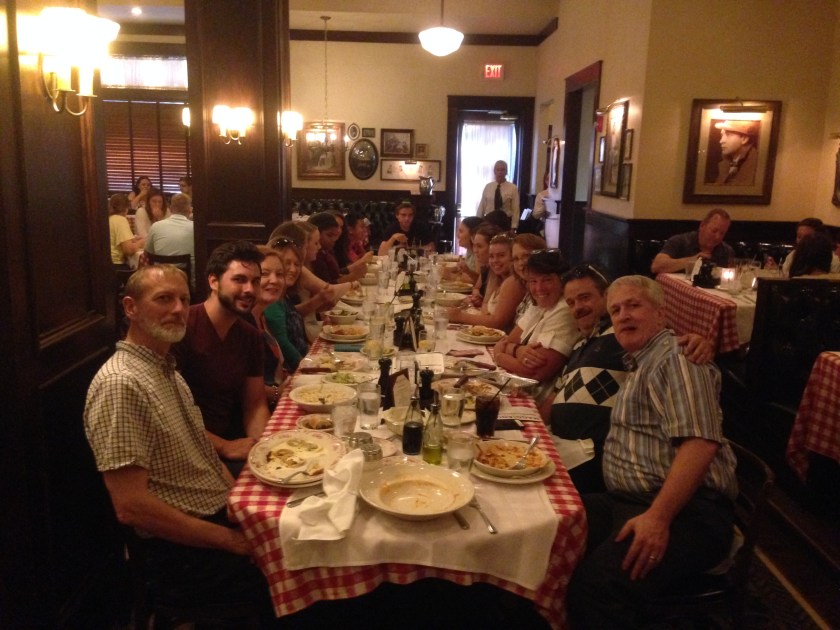
If you ever meet a WWII veteran, stop whatever you are doing and take them out for meal and bring your family.   They have been called the GI generation.  The greatest generation ever born as they lived through the Depression and WWII.  They have stories to tell

Which is the trail tip we can learn here; everyone has a story to tell.  We can engage and hear the stories of others by asking questions.  Questions that may seem a little upfront to some people, but you will be surprised by the responses you get as people start to open up and share their stories.  When meeting someone for the first time, we tend to go the route of asking questions like: “What do you do for work?, Where do you live?, Married? Kids?, How is the weather?”  And you get answers that are more fact based and bland.  So I challenge you to try a new approach with questions like: “Tell me your story?, What have been your biggest challenges this past year?, What have been your biggest successes this past year?. What excites you?, What drives you?, What challenges are you facing now?, How can I help you?

These are all questions that cut across our hiking, personal, and work life.  And while asking the right questions are important, it’s just as important to know the right environment to ask the questions.  At a dinner table event with 10 people, you are not likely to get a lot of openness from other people.  However one on one during a walk or a hike, people tend to be much more open because there is time for moments of looking at the surroundings while reflecting on responses to give.

Veterans Day on November 11th is a reminder that we need to honor our veterans/active duty military personnel and take time to hear their stories; be it on Veterans Day or any other day of the year.  And the process to start this is very easy to do.  When you are out and see someone in their uniform, here is a dialog guide; Start by thanking them for their service to our country., Ask them where they have served?, What they are doing now?, What is one of the lessons being in the military has taught them?, and dig deeper if you have time.  I know people who have done this and while hesitate at first, they were surprise how easy it was to do and the strong positive response they got from the person

I close this trail tip with a BIG “THANK YOU for your service to all the veterans” that may be reading this tip.

The Lessons on Relationships from Veterans Day.. a trail tip The second of three trail tips on Veterans Day

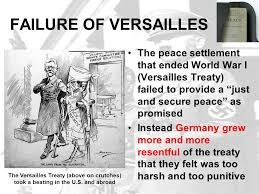
treaty

Understanding Veterans Day and it genesis from WWI is an exploration of relationships; from which we can learn several lessons

Understand the reasons behind the decisions people make.  The United States didn’t enter WWI until 1917 as there was a large peace movement taking place in America.  I personally believe that one of the drivers for this was because as late as 1910, about nine percent of the American population had been born in Germany or was of German parentage, as 2.3 Million Germans immigrated between 1881 to 1910.  Many Americans didn’t want to be in the War because they had immediate family in Germany.  I think of my grandfather, Samuel Schakat who came to America in 1907 from Germany at the age of 14.  So in 1914 when the war broke out, he would be been 21 and thinking if we go to war, he could end up fighting against family members and friends still in Germany.  So when someone doesn’t want to go on a certain hike, do personal activities or things at work; take time to meet with them one on one to understand the deep reason(s) behind their decisions

Know the cost of your alliances, friendships, and business partnerships.  WWI started as a dispute between two countries (Austria-Hungary and Serbia) over the assassination of Archduke Franz Ferdinand and his wife.  It grew to a war with 15 countries and over 16 million deaths because of all the alliances that were made.  In your hiking, do you know where the line is for when you will turn back from a hike while your friends want to keep going?  How far will you take friendships in your personal life?  Do you know when you will say NO to activities they want to do?  What lines have you drawn at work for things you may be asked to do?

Push for closure in everything you do.  The Armistice on November 11th, 1918, was only the cease fire.  The war itself didn’t end until the Treaty of Versailles was signed on June 28th, 1919 formally ending World War 1.  This compares to the Korean War, where an armistice was signed in 1953, but no peace treaty was ever signed.  Thus the problems we are still seeing with North Korea 64 years after the armistice was signed because one could say we are technically still at war with them.  What things do you need to bring to closure in your life?  Are there hiking trails, projects, training, etc., that you need to finish, so you can quit wasting time thinking about them

Be gracious in your victories.  The Treaty of Versailles placed a heavy burden on Germany to repay other countries for the cost of WWI.  This caused resentment and national pride to rise in Germany, setting the stage for Adolf Hitler and the beginning of WWII; verses the Marshall Plan after WWII, which helped rebuild Germany.  How do you respond to others in your victories?  Do you have a prideful attitude or are you gracious and humble in your successes

Be nice to your relatives.  The Kings of England, Germany and Russia were all cousins; being grandsons of Britain’s Queen Victoria. [Queen Victoria was called the “Grandmother of Europe as many of her children and grandchildren married into the royal families of most of Europe.]  So you could say that WWI was a family feud that got out of control.  Have there been events in your hiking, personal, and work life that have strained relationships around you?  What has been the physical, emotional, and financial cost of damaged relationships?  What will you do to start the healing process?


Understanding Veterans Day… a trail tip The first of three trail tips on Veterans Day

happy-veterans-day-thank-you

Veterans Day is only about two weeks from now, but how many of us have yet to give it any thought and think about: why we have it, the significance of it, what we should be doing “differently” on Veterans Day, and what can we learn from it

To understand Veterans Day, we need to look at it in the overall context of WWI (initially called the Great War) which was the largest war that the USA had fought in since the Civil War and it was the first world wide military conflict.  It was started when the Archduke Franz Ferdinand, heir to the throne of the Austria-Hungary was visiting Serbia and was assassinated by a Serbian Nationalist on June 28, 1914.  Austria-Hungary demanded that Serbia wipe out the terrorist cells in Serbia, but Serbia refused. So Austria-Hungary invaded Serbia to take out the terrorist groups. [Sounds a lot like what is happening in the world today.]  While it started as a small conflict; because of the Alliances and joint defense agreements, it quickly became a world wide conflict with the “Central Powers” of Austria-Hungary, Germany, Turkey, and Bulgaria fighting against the “Allies” of Serbia, Russia, France, British Empire, Japan, Italy, Romania, United States, Greece and China.  Note that the United Stated didn’t enter the war until 1917 -but more on that in the next trail tip.

Veterans Day was originally called Armistice Day, marking the armistice signed between the Allies of WWI and Germany for the cessation of hostilities on the Western Front.  The fighting was stopped on the: 11th Month, 11th Day, and 11th Hour [of 1918].  The concept for Armistice Day was to make it a celebration (of the end of the fighting) observed with parades, public meetings and a brief suspension of business at 11 AM.   Not unique to the United States, it is also observed in Canada, England, New Zealand, France and other countries.  Before or after WWII, the name was changed to Veterans Day in the USA and Remembrance Day in some countries.  The difference being that outside of the USA, it specifically for honoring those killed in action, while In the USA, it is set aside to thank and honor all who served  honorably  in the military in wartime or peacetime, living or dead.

Did you know?

  1. The Uniform Holiday bill in 1968 was passed to make Presidents’ Day, Memorial Day, Columbus Day, and Veterans Day; all three day weekends, which made Veterans Day fall on October 25th in 1971 and created a big mess.  It was then changed back to November 11th in 1975.
  2. Daylight Saving Time was started in WWI to provide more evening working hours and save fuel.
  3. The Influenza Flu Pandemic spread from soldiers return home from the war and between 1918 through the end of 1920, an estimated 50 million people were killed by this flu outbreak with 500 million people (one third of the world) being infected by it. There were 675,000 Americans that died  because of this flu verses 53,513 soldiers killed in action.  And 25% of the USA population had this flu.  Other countries were hit hard as well, for example, India lost about 17M or 5% of population of it’s population at that time.

A trail tip that comes from understanding Veterans Day, is the awareness that we become richer people when we have a better understanding and appreciation of events around us.  In hiking there are events like the Leadville Trail 100 mile race and the Pikes Peak Marathon.  Do we ever stop to find out how these races were started and what was going through the minds of the organizers when they started them?  In our personal life, do we ever stop to reflect on the meaning and history of other Holidays: Labor Day, Presidents’ Day, Martin Luther King Day, Columbus Day; all important holidays that many of us pass by without giving much thought to them.  In our “politically correct” world; these Holidays need to be examined in the mindset of the people at the time they were started, so we truly understand their significance at that starting moment.  In our work life, there may be special days marking milestones in the company we work for or they have a rich history that we know little or nothing about.  Getting answers to these questions will provide more color and life to our world and make us the better for it.

The Frustration of the Gap…. a trail tip

IMG_3916

Stress, Anger, Disappointment, Depression, Resentment, Tension, Frustration; all words most of us have carried or may even be carrying right now.  And for many of us, we are carrying them because of the Gaps in our lives.  That gap between where we had hoped our lives would be and where it is right now.  And until we verbalize where our lives are right now, we will not be able to take the actions to narrow the gap with steps based on what we can control verses cannot control.  The reality is we cannot change the things we cannot control.

In hiking the gap can be between what we want our hiking to be with: speed, distances, times out per week, specific hikes, mountain peaks, etc.; goals and bucket list items that we have set before us.  Then there is the reality of where we are today in each of these areas; with the frustration or _______ that comes from not being able to get to those goals.  It is key to understand and focus on what we can verses cannot control.   For example; in hiking, we cannot control: the weather, effect of age, other people hiking with us, day light hours, etc.  But we can control: the priority we place on hiking, dressing properly for the weather, reducing the chance for injury (having proper shoes), picking “plan B” hikes, etc.  I used to run marathons at an 8:30 minute mile pace and half marathons at an 8:15 minute mile pace.  Now I’m happy to be trail running at a 13 minute mile pace.  I’ve accepted that age has slowed me down, but I’m not letting age stop me from getting out hiking 3 times per week.

In our personal life, the gap is often centered around relationships and how we thought our kids would turn out.  We have this ideal vision of family and friend relationships, along with having perfect kids -at least that’s what we see on Face Book.  Then we look at our lives and may see that: family relationships are broken, neighbors are lousy, kids are failing in school, etc. Here we must realize that we cannot: fix other people, decide life events for our children, make them study harder, etc.  However, we can decide: how we will react to other, the tone of our voice, the effort we put into the relationship, and our intentions.

In our work life, many of us have goals about being in the perfect job, having the “right salary”, staying employed, retiring early, etc.  Then the gap starts to widen.  We don’t get the promotion, annual raises become minuscular, our ideas get shot down, or we get laid off.  And we wake up wondering how we every got into this situation.  The shock, anger, and resentment can flood in; if we are not careful. Here we need to realize that a lot of things are out of our control, so we need to stay away from them and focus on what we can control.  And the first one is our attitude; it’s about choosing how I’m going to respond; am I burning bridges and flaming others?  Or do I make that extra effort to give a positive response.  Am I willing to make the effort to: get new training, improve my LinkedIn profile, expand my network, and stay focused on finding that new job?  All things that I’m personally in the middle of right now.

We all have these gaps in our lives across the areas of hiking, personal, and work.  Understanding these gaps start with owning and verbalizing [to a close friend] the reality of where we are and where we thought we would be.  Then it becomes a matter of focusing on the things we can control and letting go of what we cannot control; with making an action plan for these items I can control with accountability to other people.  By focusing on the right things; the ones we can control, we will start to see a reduction in the: Stress, Anger, Disappointment, Depression, Resentment, Tension, and Frustration; that we carry around with us.

I would like to thank Bill Eich and the team at http://roadtripdads.com/ for providing the inspiration for this Trail Tip.


Are your Windows of Opportunity open or close…. a trail tip

window opportunity

A Window of Opportunity is the time when an opportunity is available for a short time, then the window closes and it is no longer obtainable.  These windows may exist on an annual basis or they may only happen maybe once or twice in a life time.  The questions that arise are thus: Do you know if you are in a window of opportunity to do something in your life at this moment?  Do you know when windows around you will open or close?  Do you know if that window will happen again?  Am I staying informed about the windows that may exist around me?

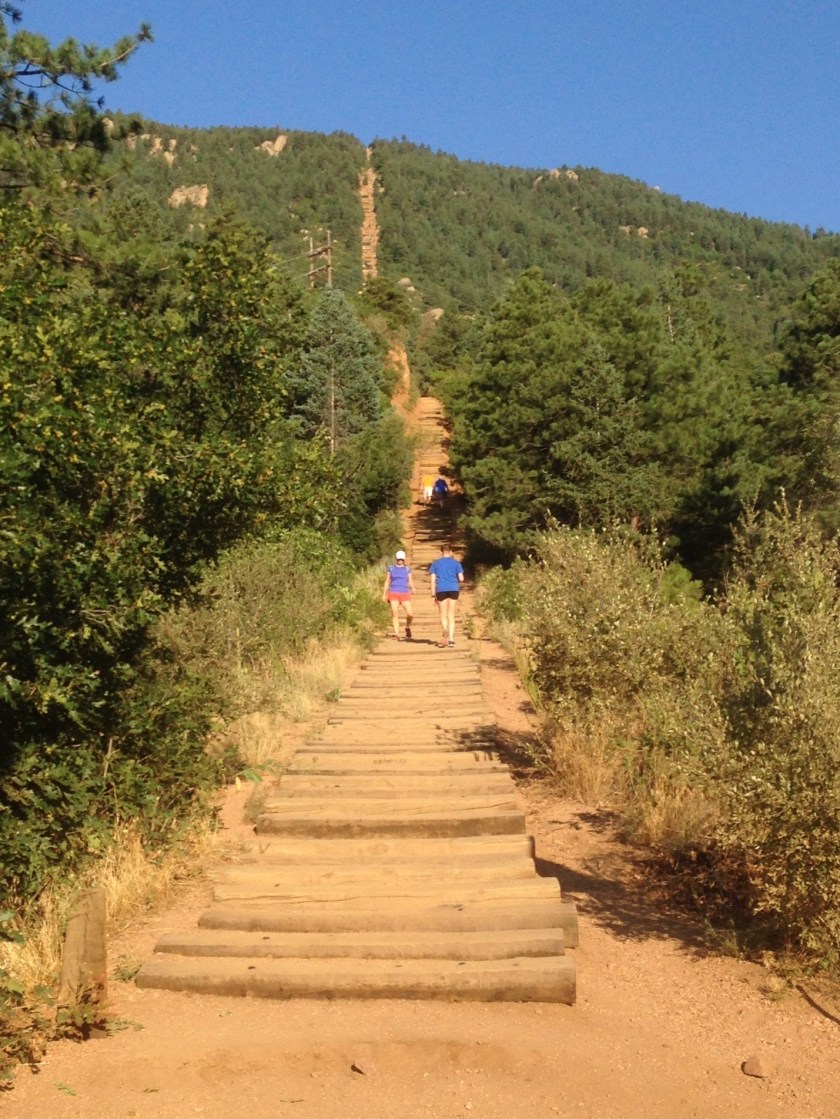
In hiking; weather and trail construction are a major cause for the Windows of Opportunity that may exist around us. This is especially true for those who want to hike or drive to the top of 14’ers (mountain peaks above 14,000 feet) in Colorado.  Recently my daughter was out visiting and decided in September to drive to the top of Mt. Evans, only to find the road above 12,000 feet was only open from Memorial Day to Labor Day.  Then there is the snow, as many peaks start to be covered with snow in late September.   My plans this year to hike the Grand Canyon Rim 2 Rim got delayed to late October and then we found the entrance to the North Rim may not be open after October 15th, so the trip is now being delayed until next year.  Locally the iconic Manitou Incline closed for repairs August 19 till mid-December.  Yet there were many hikers showing up in late August, not having any idea it was closed.  They didn’t know that window had closed.

In our personal life, I think of Windows of Opportunities that exist with people or events.  We often brush them off, thinking there will always be another time.  This is especially true with words and healing that need to take place with those around us.  How often have we thought; I’ll talk to them next time I see them and make things right.  Only to realize that was the last time we ever see them alive.  We often discount the words we speak, until we realize it’s the last words someone may ever hear from us. Or the relationship may get hurt so bad, they never speak to us again.  I have three children still at home and I often take the time with them for granted.  Yet; day by day, year by year, my window of opportunity to impact their lives is ever closing.

With events in our personal life, I think of the recent Total Eclipse that took place across America.  A once in a life time Window of Opportunity event that I took as not being that significant, rationalizing that I’ll still see a 90% eclipse from my house.  Only to realize that there is a huge difference between 90% and 100%; and that we should have driven the 300 miles to see it.

In our work life there are a number of Windows of Opportunities that come and go.  The problem is that we don’t see them as opportunities.  I have been laid off for almost four months now, am totally engaged in finding a new job, and am not looking at the other opportunities that may exist during this window of being laid off.  Should I be taking the family on a road trip see a new part of the country? Should I be dedicating time for new training such as the PMP or other Certifications?  Should I be taking a part-time job to see if there is another career field I should explore?  All hard questions I need to be asking and answering…

What are the Windows of Opportunity that are existing in your life right now?  Do you know when they are going to close?  What are going to do today to begin to seize the openings in those windows and take advantage of them?  And what are the Windows of Opportunity that are going to be opening for you in the next 3, 6, and 12 months?  Will you be prepared to take advantage of them?

Embracing the Switchbacks…. a trail tip

switchback1

Switchbacks: something that can cause a detour on our way to our goal; because when we set our eyes on a goal, we want to make a straight line for it and get there as soon as we can.  But once we start on the path, we too often encounter switchbacks that can seem to move us backwards or take us to places where we can’t even see the goal anymore.

With the new goal I got this past summer to find a job when I was laid off; I wanted it fast, so I set my eyes on the goal and headed straight for it.  Then came the switchbacks… All wrapped up in this word called “Time”, because I started spending a lot of time waiting for: the response to the application, the first interview, the second interview, and a decision.  And since mentally you can only apply for so many jobs each day, I needed to use and look at this time on the switchbacks in a positive way in my hiking, personal, and professional life.

In hiking, the extra time is being used to explore new trails and start hiking with/leading group hikes with the Facebook Monument Hiking Group.  Over the summer, this hiking community has grown and become stronger as we found ways to help each other stay safer on the trails.  I’ve also come to realize (more than ever) the mental and physical therapy that comes from trail hiking.

In my personal life, time became an opportunity for a long weekend away with my wife and to be able to help drive my daughter and two-month-old grandson back to Nashville.  And the drive itself from Colorado Springs to Nashville had its own switchback as her car broke down in the middle of Kansas.  We ended up renting a U-Haul truck and car trailer for the last 700 miles of the trip.    Not part of my initial plan to get my daughter back home, but a switchback experience (broken car, 100 degrees, middle of Kansas, two-month-old grandson) that will be remembered with lessons to help on future journeys.

In my “work” life, the time on the switchback is being used to hone my resume, improve my LinkedIn profile, do on-line classes and take my networking to the next level.  I have and continue to learn lessons during this journey that I know will be helpful to others as well.

The time on switchbacks can be hard and we have to resist the urge to not keep moving.  There are days where I applied for 5 jobs and then get 10 rejections from previous places I applied for.  Yet, I knew the next day, I need get up and start applying again.  Sometimes on switchbacks, we can no longer see the goal or we get to a part of the trail where it’s pretty level; so we want to stay there.  This happens to me with hiking, as I think I could be out hiking every day and working on hiking the 1,313 peaks above 12,000 feet in Colorado.  But that doesn’t get me to my initial goal, so I need to keep moving.  And then in my personal life, there is a tendency to be consumed with house projects, trips, and other activities that prevent me from staying focused on the initial goal.

It’s easy to lose focus on initial goal and get comfortable or just give up as we traverse these switchbacks.  How are you spending your time on the switchbacks in your journey?  Who are you talking to about them and who is walking along side of you?  I end this trail tip with a personal thanks to Brad Argue for the inspiration for this tip.  A close friend who has journeyed many switchbacks with me.

Who is in Your Constellation…. a trail tip

You are here

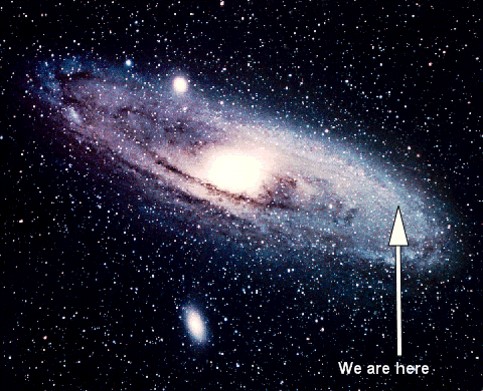
With the focus last month (August) on the total eclipse, let’s continue to look toward the sky and spend some time looking at our Constellation as the stars provide us analogies that can be applied to the types of people we need in our lives as we go on our journeys in Hiking, Personal, and Work life.  Because while the Big Dipper is always there, year-round; other Stars, Comets, Planets, Moons come and go over time.  And to understanding them, we need to look at them in context of:

Seasons/Time of Life: With the earth being close to the edge of the Milky Way, we see into the Milky Way during the summer with a whole swath of stars.  And friends may vary by the season of life we are going through.  I know in hiking, there will be more friends ready for a hike in the summer verses winter.

Time of night: People on the east coast and west coast can look at the moon at the same time, but they will have different perspectives and see it in different positions.  And in the same way, friends in our lives can be looking at us at the same time and get different perspectives of something we are going through because of where they are in our lives.

Comet Contacts: Most of us will only see Halley’s Comet once in our life time.  And we need to be ready when it’s coming.  We also meet people we may only see once in our life time and we need to be ready with questions to ask at those moments.  In hiking, I think of people I may meet who have hiked Mt. Everest or Kilimanjaro.  Do I know what I would like to ask them?  In our personal lives, I think of WWII veterans.  They experienced a time in our history that I’ll never go through.  What would I want to learn from them?  In Work life, there may be CEOs, Inventors, etc., who I may meet by chance.  Do I know the types of questions I want to ask and learn from them?

Star/Planet alignments:  At times, multiple stars/planets will form alignments in the sky that make them easy to see.  We also need to watch for those alignments when there may be several people speaking into our lives about things we need to be doing or changing in our lives.

Pull of Planets:  In Fundy Bay, Nova Scotia, the tide moves in and out twice a day changing the water level by almost 50 feet.  So, if you are in a boat or hiking on the shore, you need to anticipate and be ready for the tide change or you will be left in places you don’t want to be.  And when people are speaking into your life, you need to be ready to move.  I think of hikers being above tree line when a lightning storm is coming in or in your work life, when you can start to see changes, but don’t move quickly enough.

Distractions: Often we can’t see stars clearly because of light noise or not taking enough time to let our eyes adjust to the environment.  Distractions like: multitasking, being in a hurry, and clutter; can prevent us from “seeing” the complete message that people are trying to impart into our lives.

Seeing our History: When we look at stars, we are seeing light from stars that can be 1000’s of years old.  To understand why we do certain things or act in certain ways, we may need to look back at our own history to see events from our childhood to better understand why we do what we do.

The people in our lives are like the stars we see; they all have different roles and come into our lives at different times.  Take some time this week to understand the roles and identify who may be filling that specific star position in your life.  Who is going to: Challenge you, Connect you to others, Sponsor you, Coach you, Be your Confidant, Be your Ally, Be an Expert for you, and Encourage you in your Family life. And once that is done, begin to think about what type of star role you play in the lives of others.

Touching the future…. a trail tip

IMG_8026

I’ve been told that holding a grandchild is like no other experience and now I understand why.   A week ago, I held my two-month-old grandson for the first time and realized I was touching the future.  Because in 30 to 40 years I’m going to die and this grandson will be at my funeral; [hopefully] saying nice things about me and moving into a future that is beyond me.

We also touch the future by what we create.  In the book “The Gifts of Imperfection by Brene Brown, she states: “The only unique contribution that we will ever make in this world will be born of our creativity.  If we want to make meaning, we need to make art.  Cook, write, draw, doodle, paint, scrapbook, take pictures, collage, knit, rebuild an engine, sculpt, dance, decorate, act, sing – it doesn’t matter.  As long as we’re creating, we’re cultivating meaning.” And with our art, we touch the future, because these things will transcend time and live beyond us.

In hiking, we touch the future by what we share about what we have learned from hiking different trails.  I think of Fred Barr who defined and built the trail up the east side of Pikes Peak almost a hundred years ago. Every time I hike Barr Trail -along with the hundreds of thousands other hikers- Fred is reaching out beyond the grave to touch the future.  And this also applies to all the other explores who set the trails on all the 14’ers and 13’ers in Colorado.  Today, we have “14ers.com” and “The Manitou Incline, Everything’s Better on the Incline” as examples of Face Book pages, where we can touch the future as we share our stories and pictures from hiking that will touch others and help them as they hike more safely and “discover” new trails.

In our personal life, we can touch the future by the: stories, writings, and other forms of art we leave for the next generation.  At my funeral, I can image my grandson will be able to read this trail tip from the book “Trail Tips – Inspiration for your journeys on the Trail, Personal, Work Life”, by Al Andersen. Like touching my grandson and writing this book, I’m touching the future because of the imprint I am able to leave on others.

In our work life, it’s often more than things we create.  I think of all the videos I’ve seen on buildings that have been imploded to make room for “bigger and better” buildings (or even parking garages).  Countless hours/weeks/months spent making sacrifices and with nothing to show for it years later.  Hence, I think it’s more the: words we speak, culture we cultivate, and written words; that will touch others and their future.  It’s taking the time to: instruct, mentor, lead, challenge, and guide those around us in our work environments.  Imparting our knowledge, so others can have a better future.  My son-in-law told me the story that while working at the Water Treatment Plant in Chicago, his co-worker and him had to pull up records from the 1920’s and they were surprised to find that the co-worker’s grandfather was the author of the diagram.  So here is an engineer documenting the placement of water pipes almost 100 years ago, that will be read by his grandson 90 years later.

At one time or another, most of us have all thought about immortality; what is would be like to live forever.  Movies, TV shows, books have all explored this in this in different ways.  Holding my grandson for the first time, brought home the reality that we can all “touch the future” by: holding our children/grandchildren, the words/stories we say, the writings we leave, and the example we live.  Or as Rich Mullins wrote in his song “Boy Like Me/Man Like You”

Did they tell You stories
’bout the saints of old?
Stories about their faith?
They say stories like that make a boy grow bold
Stories like that make a man walk straight

When a Trail Closes… a trail tip

inclineMt HerrmanPikes Peak from HermanMt Herman wind sockrope route

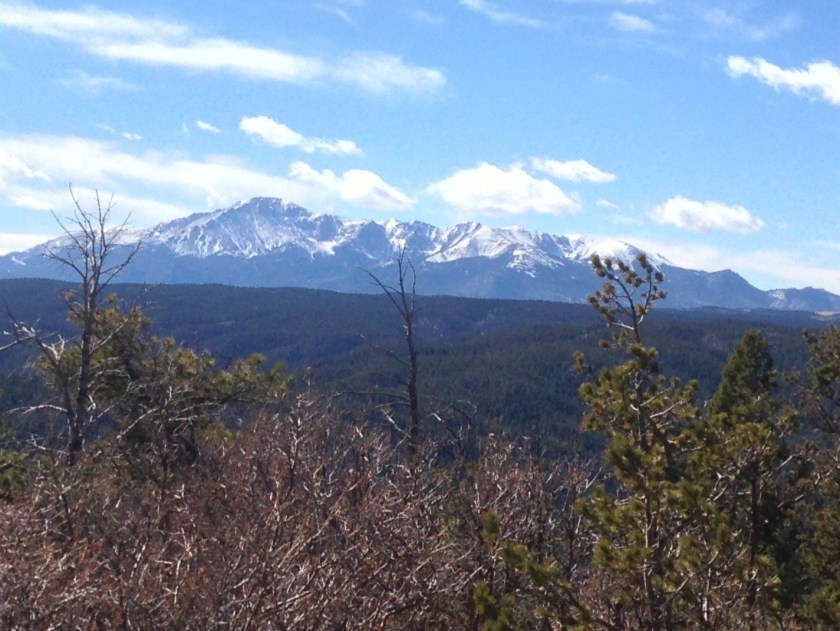
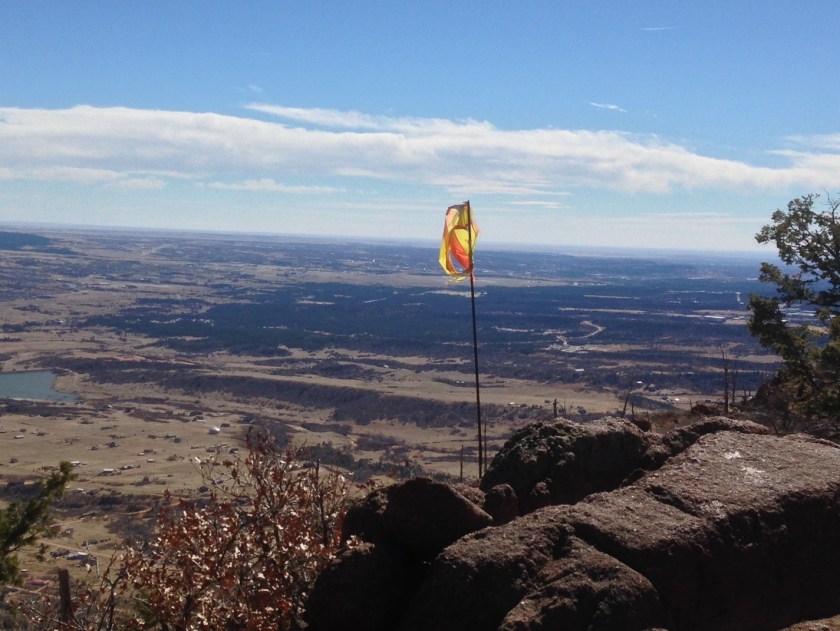
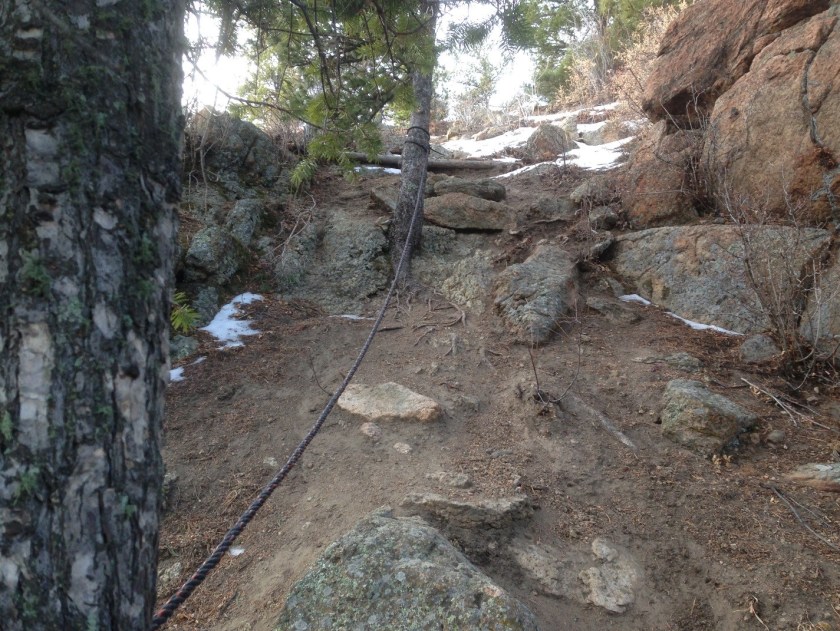
We all have our favorite trails.  And one of favorites in the Colorado Springs area is the iconic Manitou Incline; climbing 2,000 feet (6,600 to 8,600) in .9 miles.  So when it closed for four months last year, everyone (myself included) were in withdraw as we had no idea where to find another trail that would give us the same type of heart pounding intense workout.  And let’s face it we all hate change; we are comfortable doing the regular trails we hike month over month.  Yet we know change often opens up new trail opportunities and areas for growth.  Many of them “right under our noses.”  It took a while, but two months after the incline closed we “discovered” the trail on the east side of Mount Herman, which is a 9,100 elevation foothill mountain that I see every time I leave my house.  But I never noticed the trail because I was comfortable with my Manitou Incline.  While the Incline did help prepare me for the Mount Herman trail, it still required me to still learn new climbing skills and techniques as the route is steeper than the Incline in many sections.  It has become my new favorite trail and oh the views…

In our work/personal life, most of us have faced trails being “closed” which can consist of a job loss, death of a parent, accident, or other major life changing event. These force us into a change we didn’t expect and don’t want to accept; because we don’t like change!  Yet – like in hiking – change can be rewarding when we accept the reality of what it can offer us.  In my work life; the biggest change was the layoff from Alcatel-Lucent (Nokia), accepting a position at Cognizant, and moving to Monument, CO.  This changed opened up the opportunity for me to develop a Mentoring Program in Cognizant, become an avid hiker, and start these “Trail Tips”.  All new skills I would not have learned if the Alcatel-Lucent trail had not closed on me.  On the personal side, having my mom pass away, put me in the position of being the “elder” of the family tree with my remaining brother and sister.  This caused me to take our relationships more serious and be intentional about staying in touch and seeing each other.  We are now closer than we have ever been before.

The closing of a trail can: cause us to seek out new opportunities that we would have never considered, give us the chance to learn new skills, and challenge us to look at the direction of our life from a different perspective.  What trails have closed in your life recently?  Are you still in denial about their closure; hoping they will reopen or have you embraced the change with all the possibilities that are now open to you?

Show me your friends and I’ll show you your future…. a trail tip

Dirt Friends“My success is not because of who I am, but because of whom I come to know”

My last three trail tips have focused on the impact of a broken leg accident that happened to me four years ago.  I’ve touched on: Getting Prepared, Recovery, and The Cost of Being in a Hurry.  And now I’ll finish out this series by touching on the importance of having a network of friends who you can rely on in time of trouble.   And I’m not taking about the 1000 friends you may have on Face Book or the 500 contacts you have on LinkedIn.  I’m talking about the network of friends that you do real life with; it’s your: Dirt Friends, New Friends, and Weak Link Friends. 

Dirt Friends are the ones that have been around forever with me and like me they are “as old as dirt”.  I can say a simple phrase to them and it will invoke a memory from 20 years ago. They have walked through the good times, hard times, dry times and flourishing times and have “stood the test of time.”

New Friends are the more recent ones; which in my case are the ones I’ve gotten to know since moving to Colorado in 2010.  I’m starting to do life with them; so we engage in activities and during those times, share our pasts and discuss future hopes and dreams.

Weak Link Friends are more like acquaintances or people you know that operate in different worlds/social structures.  During a time of recovery, “we can rely on them to give us access to opportunities and worlds to we don’t belong,” The Tipping Point, by Malcolm Gladwell.  My neighbor who is a retired orthopedic doctor is an example of a Weak Link Friend.  After my accident, he went through vivid details on how they put the titanium rod in my tibia and offered other tips for recovery.

All of these friends helped me in different ways during my recovery: being there to visit, finishing projects for me, giving me words of encouragement, setting up a new home office, sending me cards etc. And the key here was having these friends before the accident happened.  You can’t go into a major life event and say “how do I get some friends to help me through this time.”

Now being on the other side of the accident, I have a different perspective and focus on friendships.  Hence the two quotes I started with.  Because they don’t just apply to what I have received, but they also apply to what I offer to my friends.

“Show me your friends and I’ll show you your future.” A quote from Senior Pastor Brady Boyd, New Life Church.  The friends I have and how they challenge, encourage, and keep me on track has been key to getting me to where I am today: be it in my hiking, personal, or professional life.  And I need to be the same to them.  Am I the friend that will challenge, encourage, and help keep them on the track to where they want to go?

“My success is not because of who I am, but because of whom I come to know.” A quote from Sherlock Holmes, Elementary TV show.  I am more successful with my hiking, personal growth, and professional life because of what my friends have taught me in these areas.  And am I the friend who is willing to invest in others and help them be more successful?

Friendships are improved and taken to the next level in our hiking, personal life, and professional life when I intentionally think and plan my encounters with them.  Do my friends leave a visit with me, thinking “that was a waste of time” or are they thinking “wow that was an encouraging, productivity, strengthening time together?”  I know it’s a cliché, but we really do need to be the type of a friend that we want others to be to us.