Cross Training – take 2… a trail tip

IMG_3203Cross Training:  the action or practice of engaging in two or more sports or types of exercise in order to improve fitness or performance in one’s main sport.

We all hear about the benefits of cross training, but I haven’t embraced it -because I’m a hiker and that’s what I did all the time- until now…  Between weekday work/getting kids to school and heavy snow fall in front range mountains my hiking options have become a lot more limited, as I don’t call Post Hole Hiking much fun.  And in previous years, my tendency would be to cut back on hiking and take weeks off at a time.  So often when we hit roadblocks or obstacles, we want the easy route and just quit without exploring and being open to new options or going into our past to resurrect old ones.  This also applies to our personal and work life, but let’s start with hiking…

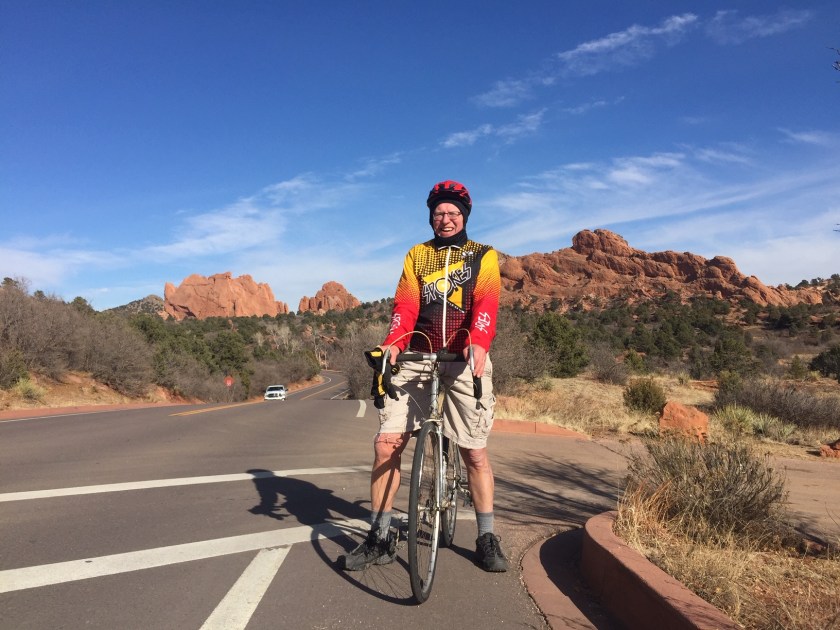
In hiking, I’ve become a hiker since moving to Colorado, not a runner or a biker, but those are things that have been in my past.  So, as I was looking for ways to get in good cardo exercise during the week, I reached into my past to bring those dormant types of exercise to life; just in a different way.  I’m starting to run (more like trod) a 5.5-mile course once a week.  Granted, I’m never going to be able to run at my pace from 30 years ago, but I’m still going to be able to get out there.  And I’ve also picked up cycling again (on the road bike I bought in 1973), as I can take a lunch hour to get in a 14-mile ride out and back to through Garden of the Gods park in under an hour.  My weekends are still used for hiking, but it may require me to even adjust that with taking the extra time to drive down to do the incline.  The whole point here is that with two plus feet of snow in the front range mountains, you still have options for getting out to exercise, you just need to think of it as “What kinds of cross training are available to me?”

In our personal life, we also have routines and goals that get stuck because of the roadblocks or conditions on our path.  My goal has been to write these trail tips once a week, but if you are reading them on a regular basis, you know I’m not hitting that goal.  Here it’s more of “cross training” my mind to know I can write at different times or on different days and explore other topics.  In other areas, it could be reading, sewing, home remodeling, etc., that you have a passion for that seems to be stuck.  Cross training in these areas could become taking a class on them, reading a book, or a video series.  All which can help you improve your performance, when not being able to do the main thing.

In work, it could be the current job you are in right now.  I’ve been in positions where it’s not my calling, passion, or making best use of my talents, yet I’m there for a season in my life.  Here we need to realize a few things.  1. We do have skills/muscles we can apply to be successful in these roles.  2. We do have things we can learn in these roles that will apply to our main passions and calling.  It’s looking past the roadblocks and obstacles to see how to create a path for success.

Cross training: it’s the exercise of different muscles and skills that take us on different routes in life, with the purpose of helping improve our main passions and goals.  Where have you hit those roadblocks and obstacles that make you want to quit?  What cross training activities can you pick up to keep you moving forward?  Who are you going to do these cross-training activities with to help keep you accountable?
 

Funeral Reminders…. A trail tip

img_2877

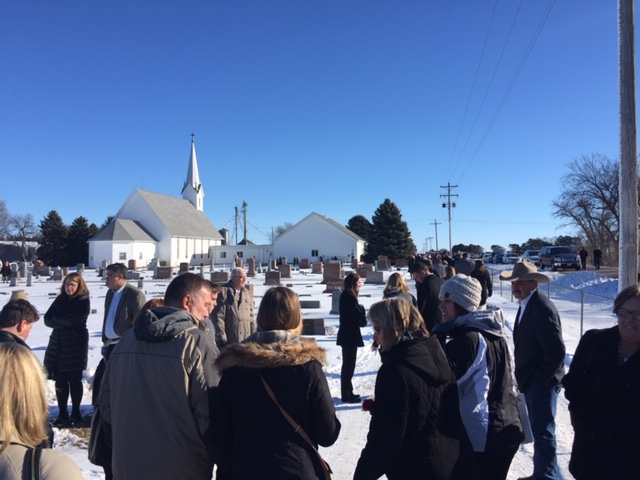
Funerals.  Not exactly something that comes up on a daily basis in conversations or as an ice breaker with others.  I’ve yet to be in a conversation that started with any of these statements: “Have you attended any good funerals lately”, “Are you planning to attend any funerals this year”, “What’s the best/worst funeral you have ever attended”, “Did you learn anything from attending a recent funeral”.  And yet funerals are a part of our journey through life.  They are a sobering reminder of our mortality.  This hit home with me last month (December 2018) as there were funerals that happened in my hiking, personal, and work life.

In hiking, while I didn’t personally know anyone who died while out hiking, there were tragic stories in the news about individuals who have gone missing -now presumed dead- while hiking in the area. These become reminders as we are out hiking.  If you are hiking alone:  stay on well-marked trails, leave your trip itinerary with others, plan/pack for inclement weather, know your limitations, assess the risks, and take actions accordingly.  A few years ago I was hiking with a group to the top of Mt. Elbert (highest 14’er in Colorado), I fell behind and was about a half mile from the summit, when a lightning storm came in.  It became a decision of ether pushing to the summit or getting below tree line as quickly as possible.  My ego wanted to push on, but fortunately common sense prevailed and I went low.  Having lived and hiked in Colorado for some time now, hearing about tragedies on the mountains, serves as a remind to pause and reflect on what common sense I need to take into account before going and while on any hike.

In my personal life, I was impacted by the passing of a brother-in-law.  His funeral reminds me focus to on any “unfinished business” I need to address with those around me.  Do I need to make peace, ask for forgiveness, or right any wrongs with those around me?  And as I look at my own life; am I focused on the important things in my life, am I living a life with no regrets, am I living each day as a celebration of being alive?

In work, there was the passing of a co-worker’s parent and the unexpected passing of a co-worker who went out on medical leave; then was gone just a few weeks later.  When these things happen at work, it can become a delicate path to walk.  It’s that blurry line between “business” and “personal” life.    We spend about 2000 hours a year at work interacting with others, so by human nature, there becomes some personal connection.  For the passing of a co-worker’s relative, it can an acknowledgement of the loss with a one-on-one interaction saying a few words like: “I’m sorry to hear about your loss”.  For the co-worker who passed away, it was interesting to watch others pass by their cubical and pause for a moment or see groups of 3 to 5 people huddling together to reflect on the life of the person.  In both cases it comes down to the acknowledge of the loss of life and making the appropriate response.

Funerals remind us to: focus on what is important in life, admit our vulnerabilities, letting others know we acknowledge their loss/pain, and for us to come together as a community to comfort each other and remember the life of the one who passed away. It’s a time of mourning; but also a time to celebrate the life they have lived.  And for us to remember to celebrate the life we live on a daily basis in our hiking, personal, and work environments

How much does that nail hurt…. A trail tip

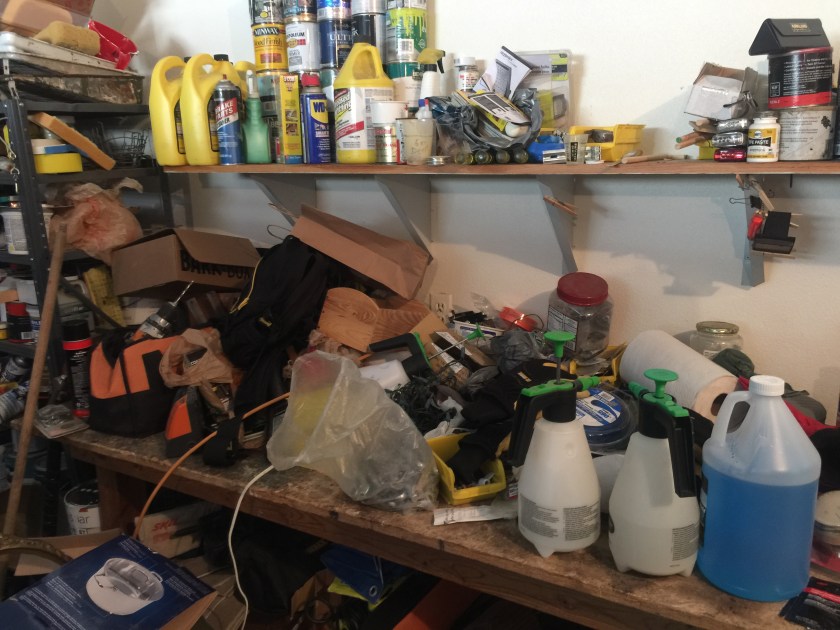
img_3212Right now social media is full of tips, resolutions, and blogs on how you can make changes as we start 2019. And I’m not an exception as I’ve pondered how am I going to start 2019 with making changes for the better in my life. My “Aha” moment came to me as I recently spent 15 minutes trying to find something on my work bench a few days ago; which reminded me of the dog sitting on the nail metaphor; where the dog spends the day howling on the porch because he is sitting on a nail, but it doesn’t hurt enough to get up and move. And thus, the question becomes: What nails are you sitting on that are causing you to howl and complain, but it doesn’t hurt quite enough to get you to move and doing something about it.
In hiking, we have a lot of weather nails during the winter. We don’t hike outside because it’s: too cold, snowy, and have less day light. Or it could be a job change that limits where we can hike during a given day. We howl and make up excuses not to hike; but then when the pants don’t fit, the scale number moves up, or we find ourselves being winded after 3 flights of stairs -the howling really starts. And that’s when we finally decide if we are going to get off the nail and get moving outside.
In my personal life, I’ve gotten comfortable sitting on the nails and have become blind/deaf to the howling I’m making. I yell and rant when it takes me 15 minutes to find something on my work bench, but then everything becomes OK as soon as I find it -until the next time that is. While we become blind/deaf to our own nails, at times we are quick to point out and judge others for the nails they are sitting on. Let’s be honest, how many times have you visited someone’s house and privately wondered “why don’t they fix/move/solve that ____?”.
At work, nails can hurt our productivity and can be around classes I know I need to take. While I know enough of Excel and Project to get my daily job done, there are times when I’ve spent way too much time looking for a work around for a function that exists, but I’ve always been “too busy” to take a class on that area. Or I get comfortable with the Project Management skills I have and don’t make the effort to learn and refresh the skills I have.
What are the nails you are still sitting on from 2018? What are you howling about? Now is a great time to start 2019 with some successes by getting off those nails. Granted some nails are easier to take care of; i.e., cleaning off and keeping your work bench free of clutter; while others are going to take a lot longer to take care of. So start with the quick fixes in your life, which will make some pain go away faster and build your confidence; then go after the ones that will take more time. Your family and those around you will become very grateful as they will no longer have to hear your howling about not being able to fit in your pants, find that hammer, or know how to work that Excel Pivot Table…

What’s your next step…. A trail tip

IMG_1989

It’s the one in front of you.  But yet so often we find ourselves dwelling in the past; with its failures or the future; with its fears.  Dr. Caroline Leaf, in her book, “Think Learn Succeed” writes: “We need to learn to savor the pleasure of the now and not just marinate in the misery of the past or imagine the grass will be greener in the future [but are never willing to step into it].  When we choose to truly tune in to the now -to see, listen, feel, move, taste, and inhale the present, using all our senses to soak up the minute beauty of the moment- we enhance our thinking and thereby enhance our ability to learn and succeed in life.”

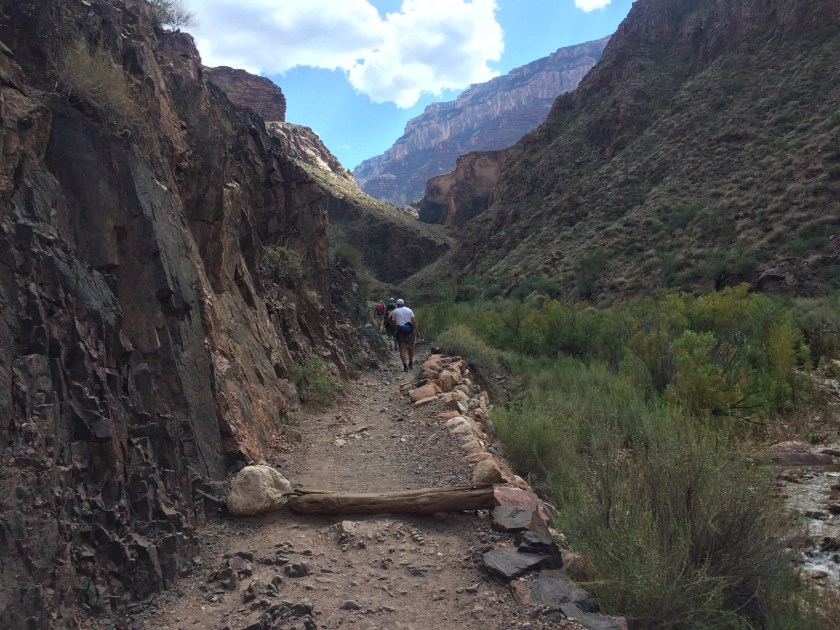
Thinking about this quote in context of hiking; the applicability of it; hits home in the longer hikes I’ve done over the past year, especially with my Grand Canyon Rim 2 Rim hike. It’s starts with a nice 14 mile trail that drops 5800 feet. Getting to the bottom, you start to see the top of the south rim 9 mile away with its 4800 feet of gain. And there is no other magic carpet to get you there. At this point, I was only thinking about getting to the top and not taking in the beauty of the moment. Looking back now, I wasn’t savoring the pleasure of the moment, as I did do on the way down, but not at all on the way up. So many moments I missed because of my sole focus on getting out of the canyon. And it was the same for other longer hikes I did over the year; spending more time checking out my time instead of checking in with my surroundings. How I want to get back to “being in the moment” instead of just “doing the moment” with my hikes.

In our personal life, we also have those mountains that look too dauting to climb. For me it’s a house remodeling project that has become a mountain that I’m afraid to start climbing.  Do I simply restore a water damaged office and laundry room back to its’ original condition or do I use this opportunity to create something much greater by knocking out some load bearing walls with a kitchen expansion and laundry room remodeling?  The latter giving me the opportunity to “enhance my thinking and thereby enhance my ability to learn” [with also giving my sons practical home remodeling skills].

At work, the mountains are everywhere and so often we don’t “tune in to the now -to see, listen, feel, move, taste, and inhale the present”.  Rather it becomes all about getting the “next thing done”, as we hurry to finish the present task.  It needs to become a daily/hourly focus of staying present and “soaking up the minute beauty of the moment.”

How many of us have found ourselves waking up at 3 in the morning thinking about those mountains staring us in the face?  Our minds are filled with the stress, fear, and anxiety of not knowing if we are going to be able to successful or what will happen if we fail.  It’s like that baseball player coming to bat in the bottom of the ninth inning; down by one run with a team member on 2nd base.  We can have that fear of never winning the game or we can step into the moment, inhale all that life has to give us and win the game in the moment.  It all starts with savoring the pleasure of the moment and taking the next steps one step at a time.  What moments are you going to savor and soak up today?

Creating Community…. A trail tip

IMG_1331

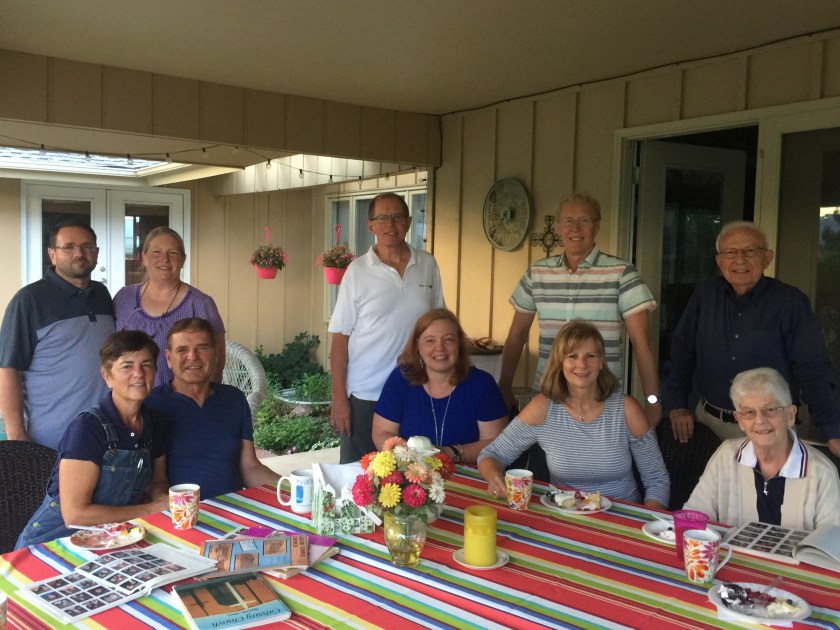
Community.  It’s something that is getting discovered all over again.  Face Book, Meet-up, and other social media outlets are all now pushing community as a way to get back to adding the more personal aspects of how do we life together.  Yet, I think we all struggle with what does community really look like and how do we actually create community and more importantly, LASTING community (the picture here is community that started 35 years ago in a young couple’s class).  My word picture for community is one of having your hands touch at the finger tips with the five points of contacts (activities).  Each one of the contact points being one of the touch points within a given community; so, if one or even two points (activities) are no longer connected, the other touch points still keep the community together.  And within these activities, there needs to be the: intentionality, commitment, availability, confidentiality, openness, etc.

Hiking is a form of community that draws us together. 14ers.com, The Manitou Incline Everything’s Better on the Incline, and other Face Book sites allow us to become part of communities where we can connect.  But within these sites, it can become easy to let others do all the work; with us just gleaming the information, but not doing any of the initiation needed to connect and create community.  I know at times, I don’t post or invite others to hike with me because I think “It’s a hassle to hike with others that may be faster or slower than me.”  In those times, I need to remind myself of what Pastor Boyd said: “You may go faster by yourself, but you will go further with others.”  Thus reminding me that it’s not about how fast I’m going, but the community I’m creating by hiking with others.  And like the five points of contact with finger tips; it’s a variety of hiking distances with others; which for me this past year was everything from local 4-mile short hikes to Balanced Rock to a 3-day road trip to hike 27 miles across the Grand Canyon.

In my personal life, community can take place with my neighbors, associations, and those on the outer perimeter in my life.  Having become a “dog” family, I’ve found that our dog has gotten us to interact with our neighbors faster than anything else, because he is always getting out and wanting to play with the other dogs that live around us. Thus, getting us to go find him and interact with others.   Birthday parties, summer BBQs, playing “Hand and Foot” are just some ways we can do life together.  Within each of our community groups, it’s important to have a variety of activities that keep us connected.  In one case, a community for us started as five couples getting together for a meal and discussion twice a month.  Additional touch points then came to life as the guys started a monthly movie night and the gals would get together for lunch.

At work, community comes with the one-on-one interactions and finding common areas of interest.  I’ve been in several “team” meetings, where we have exchanged pleasantries, but with no real connections taking place.  However, when I moved those interactions to a one-on-one lunch discussion or a hike/walk; a whole new world opened up as questions are asked to start conversations.  And I really think it’s the asking of questions that cracks open the door for community to start taking place as we show genuine interest in others.  I remember at different times, where I started with simple questions like: “I noticed you haven’t been at work lately?” or “I see you went from a supervisory role to a contributor role, how did that make you feel?”  While both are more personal type questions; when asked in the context of being one-on-one with intentionality, the openness is there a majority of the time.  In both cases, the responses were very lengthy; and at the end, both people basically said “Wow, I’ve never shared that with anyone at work, but then, you are the first one to ever ask that question.”

Community: we all want it, but so often we don’t know how to start creating it.  I’m reminded of when we had a Russian translator visiting us here in America and after a few weeks with him being here, I asked him, “What do you like and dislike about America so far?”  His response was: “I like it when people ask me how are you doing? But I don’t like it when I start to take 5 minutes to tell them and they are already walking away.”  Let’s become intentional about taking the time to listen to the responses from others and build on that with follow-up questions.  Community; it can start with simply being available and just asking one question at a time.

Using your pipes…. A trail tip

IMG_0807 2

Recently my wife and I had the opportunity to attend a Steven Curtis Chapman Solo Concert.  There he talked about growing up with an older brother who was also into music and as Steven admitted “he has much better Pipes (singing voice) then I do.  And in an attempt to be better (more like his brother), he focused on trying to imitate his brother’s singing style, resulting in the harder he tried, the less success he had.  During that time, he was taken aside by influencers in his life, who told him that he needs to play to his strengths, which centered around his song writing skills and playing those songs from his heart.  Now at the age of 56, he is still writing, singing, and performing to his strengths having written 302 songs and releasing 24 albums.  http://stevencurtischapman.com/

Which raises the questions of, “Am I playing to my strengths in my hiking, personal, and work life?  Or do I know what my strengths are?”  In case you don’t here are a few ways to find out your strengths. One is to get the book “StrengthsFinders 2.0” which will take you through an assessment to get to your top 5 strengths and then gives examples on how to build on them.  For me, my strengths showed up as: Maximizer, Winning Others Over (Woo), Communication, Positivity, and Includer.  Another way is to ask your close friends: “Hey if you were attending my funeral day, what would you say about me?”

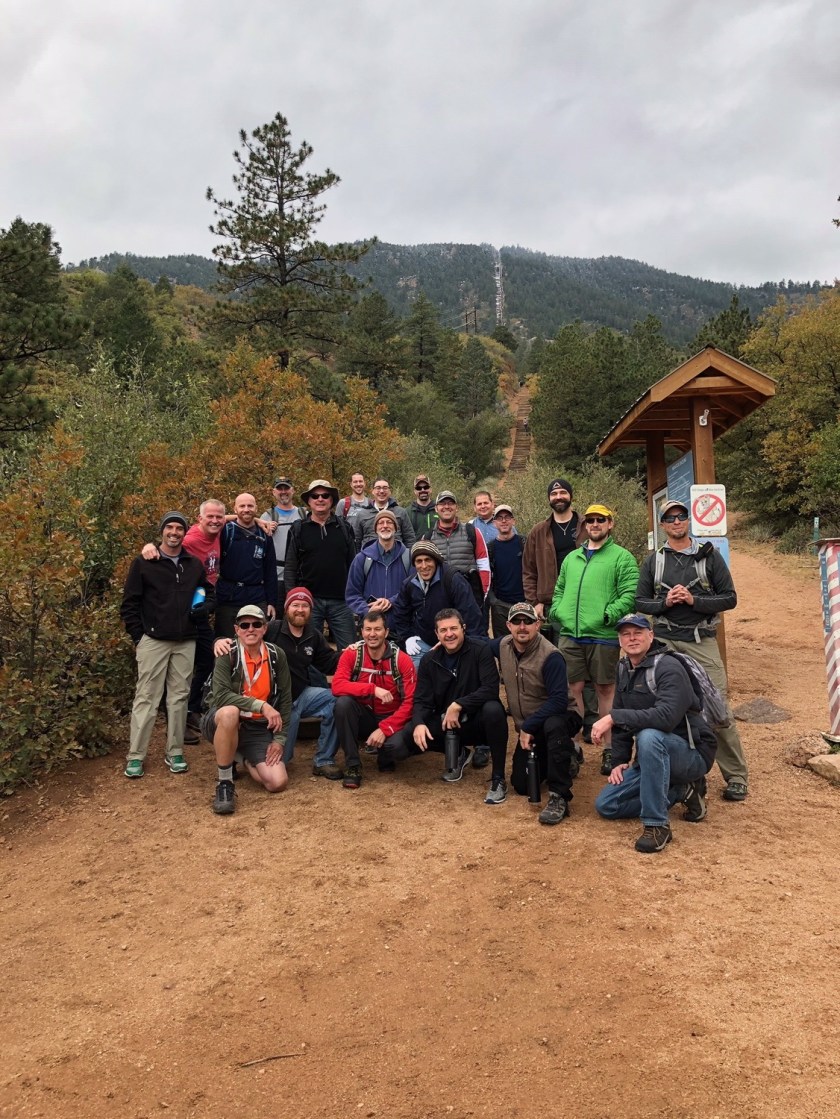
In hiking, because of social media; i.e. Face Book, it’s easy to get caught up in trying to imitate others and chase after their achievements; 14ers.com, The Manitou Incline Everything’s Better on the Incline, and other Face Book sites all allow us to post our hiking exploits.  I’m not saying it’s wrong to post them and admire others, but we need to beware and check ourselves to make sure we are not chasing after hikes that don’t play to our strengths.  As an example, my hiking strengths are centered around maximizing my hiking routine and health by getting out 3 times per week with a goal of 15 miles and 4,000 feet elevation gain total.  And with that; including others who want to get to know about these local trails aka, taking 21 guys up the incline.  While I admire, and like to read about everyone who wants to bag all the 14ers, that is not on my radar.

In my personal life, Face Book can also become a place where we can chase after the lives of others.  And I think it becomes harder as we get older and start hitting those milestone decade birthdays.  We start to compare ourselves to our peers on Face Book and can go down paths that are not healthy for us.  I believe God calls us to “run the race that is set before us” with the strengths we have been; which gives us what we need to accept the challenges/adversities to grow to the next level.

At work, the spotlight shines on our strengths and weakness; especially during the dreaded performance review; where we are often given great details on what we need to improve on, aka; our weaknesses.  Yet in reality, it’s our strengths we need to focus on and exploit.  Focusing on our weaknesses (the potential strengths of others) will only get us to “average” at best; but focusing on our strengths, can excel us to new heights we never thought possible. 

Getting back to story of Steven Curtis Chapman; it was the influencers and mentors in his life who were able to help him realize his strengths and be able to exploit them.  Instead of waiting for those people to come into our lives, we need to be proactive and actively seek out others who can give us feedback on our strengths.  As we start to close out this year, take some time to ask a few friends in your hiking, personal, and work circles; “What do you think I should be doing to build on my strengths in these different areas of my life as we move into 2019?”

Emotional Memory…. A trail tip

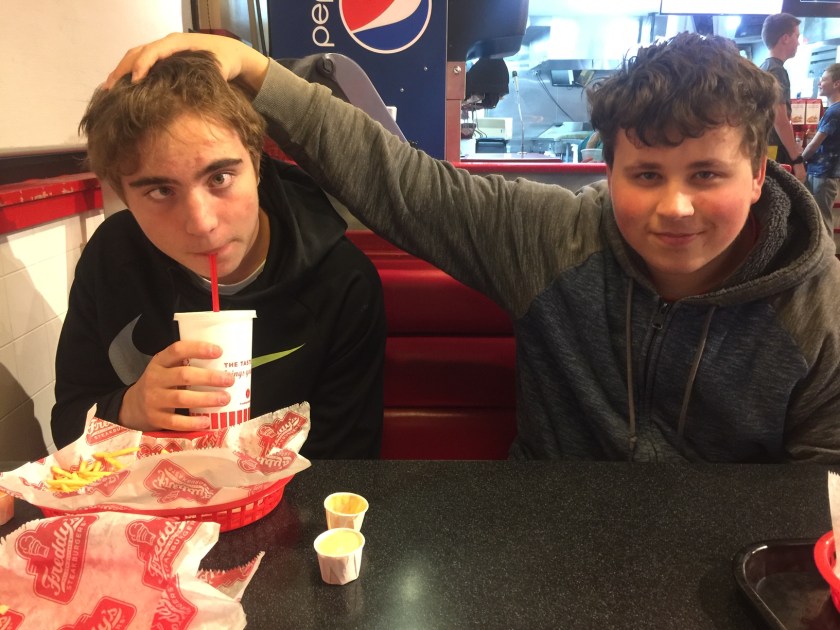
emotional memory boysRecently I attended a day long Mental Health seminar, where in one breakout session “emotional memory” was discussed in relationship to trauma brain.  It’s when we connect strong emotions to memories, which cause them to stay with us and be able to recall.  And the emotions don’t distinguish between good or bad events.  It’s why we can remember great details on specific events in our life, for me examples include: my wedding on 7/3/82, what I was doing on 9/11 (but not on 10/11 or 12/11), the evening I broke my leg, going to Russia in July/August 2004 for our adoption, etc.  It’s why some events are hard to talk about in our lives because of all the “emotions” we have attached to them.  As I pondered this whole idea of emotional memories, it got me thinking about the emotional memories I’m attaching to my hiking, personal, and work life; along with how I can better manage them in a positive way.

In hiking there are a number of “different events” that can create and trigger emotional memories.  On the negative side; it can be dogs that attack you, people leaving trash, disrespect of trails, tragic events (Tim Watkins) etc.  Our decision with “what I can control” can determine how I move forward; past these negative created emotions.  Do I let them ruin my hikes or do I realize I cannot control the behavior of others out on a trail; so, I work to disregard them.  On the positive side of emotional memory, what I am doing to create positive emotional remembered hikes.  And it not like every hike will be an emotional remembered hike.  For me it’s those special ones that trigger emotions that cause the memories to flood in: hiking the Grand Canyon Rim 2 Rim, seeing the Captain Sydney Harrison crash site or more recently the B-17 crash site.

In my personal life, I’ve already mentioned some key emotional memories, so here I’m thinking about how can I affect the emotional memories with family members.  Recently my wife, Arlene was gone for five days to attend a wedding in North Carolina, leaving me home with my two sons.  Before she left, I got thinking about what kind of emotional memories do I want to create with my sons while she is gone; and how do I want my sons to remember times like these.  Will it be dad engaging with them or will it be dad with harshness, anger, etc. because they are not meeting my every request right away.  And what are the emotional memories I’m creating with my wife.  Do my words (and tone) create positive responses or negative ones which can create wounds hard to heal.

At work I have lots of positive emotional memories from when I often traveled and able to take Arlene with me. But then there was also the emotional memory of getting the phone call telling me I was getting laid off.  I’ve realized that many of my negative emotional memories are tied to difficult co-workers and managers.  Getting called into an office or assigned to work with a certain person can trigger a knot in my stomach (from a previous bad encounter); even though this could be a positive opportunity in the current situation.

It’s really a matter of choice; am I going to let those past negative emotional memories hold me back from experiencing new positive opportunities or do I allow myself to move forward.  Yes, we all have painful memories, but to what extent do I allow them to control my future.  It’s time for us to intentionally start planning and creating those positive memories.  What can we do in the next week, month, and year to create positive emotional memories in our hiking, personal, and work life.


Veterans Day

Veterans Day Summary

Veterans Day is a great story and an important Holiday in America.  I would encourage you to share this information with family, friends, and co-workers as we Honor our Veterans this weekend.

This information is taken from a presentation I’ve created and given on Veterans Day at work, schools, and Civil Air Patrol.  I hope you find it informative.

History – Origin

  • Originally Armistice Day: marks the armistice 11th: Month, Day, Hour in 1918
  • Holiday in other countries as well
  • Observed with parades and public meetings
  • Legal holiday in 1938
  • Name change: Veterans Day in the USA on May 26, 1954
  • Remembrance Day in other countries
  • Slide notes
    • To understand Veterans Day, we need to look at it in overall context of WWI
    • WWI was the largest war that the USA had fought in, since the Civil War and it was the first worldwide military conflict.
    • Originally called Armistice Days, it marks the armistice signed between the Allies of WWI and Germany for the cessation of hostilities on the Western Front.
    • Always observed on the 11th Day of the 11th Month (at 11th hour).
    • Celebrated in Canada, England, New Zealand, France and other countries
    • Concept for the celebration was for a day observed with parades and public meetings and a brief suspension of business at 11 AM.
    • Made a legal holiday in 1938 (20 years later).
    • Oct 19, 2018 · On May 26, 1954, the U.S. Congress passed, and Pres. Eisenhower signed, a bill expanding Armistice Day to be a day of recognition of all veterans of the U.S. armed forces rather … than only those served in WW I

Interesting Facts

  • Meaning is different in and outside of USA
  • Uniform Holiday Bill passed in 1968:
    • Three Day weekend
    • October 25, 1971
    • Created confusion
    • Changed back in 1975
  • Daylight Saving Time
  • Worldwide Influenza Pandemic of 1918 (1918 – 1920)

Slide notes

o   Outside of USA, it specifically for honoring those killed in action

o   In USA, set aside to thank and honor all who served honorably in the military in wartime or peacetime, living or dead.

o   Uniform Holiday bill in 1968 passed to make Washington’s BD, Memorial Day, Columbus Day, and Veterans Day; all three-day weekends.

  • Encourage travel, recreational, cultural activities, and encourage industrial/commercial production (spend money)
  • Changed Veterans Day to Oct 25, 1971 the first time
  • Created confusion
  • Changed back to original date in 1975.

o   Daylight Saving Time was started in WWI to provide more evening working hours and save fuel.

o   Approx. 50M to 100M people killed by the flu in 1918 – 1920

  • Influenza Pandemic killed 675,000 Americans verses 53,513 soldiers killed in action
  • In the USA, 100,000 died in October 1918.
  • India lost about 17M or 5% of population.

USA Veteran Population

  • 18.2 million living veterans (8% of adult population)
  • 9.2 million living veterans over the age of 65
  • 1.6 million living veterans under the age of 35
  • 1.6 million living veterans are women
  • 7.1 million veterans served the Gulf War Era (August 1990 to Present)
  • 8.7 million veterans served the Vietnam War
  • 5.7 million veterans served the Korean War
  • 16.1 million veterans served World War II
  • 4.7 million veterans served World War I
  • 497,777 living WW II veterans (over 300 passing each day)
    • If you ever meet a WWII veteran, take them out for meal and invite your family to attend.  So, everyone can hear their stories.  They have been called the GI generation.  The greatest generation ever born as they lived through the Depression and WWII.  They have stories to tell.
  • Last WW I veteran -Frank Buckles- passed in 2011 (age 110)

Colorado Springs for Veterans

  • Ranked Best Place out of 600 cites looked at for Veterans to live in 2019 by Military Times Reboot Camp,
  • 38,500 active duty, 109,000 Veterans, and 16,000 DOD workers live in the Pikes Peak Region
  • 5th Congressional has highest concentration of Veterans of any district in the country
  • Five Bases: Fort Carson, Peterson and Schriever Air Force Bases, Cheyenne Mountain Air Force Station, and the Air Force Academy
  • Veterans Day Parade is one of the largest in the Nation
  • Pikes Peak National Cemetery

Life Lessons

  • Push for complete closure in everything you do
    • An armistice is a cease fire, not a complete closure
    • North & South Korea signed an armistice in 1953 and there is still tension.  We are still officially at war with North Korea.
  • Don’t over react in declaring a victory
    • Penalties placed on Germany after WWI, set the stage for WWII. Verses the Marshall Plan after WWII to rebuild it.
  • Be nice to your relatives
    • Kings of England, Germany, & Russia were all first cousins
  • In simple terms, World War I was started when the Arch Duke of Austria-Hungary and his wife visited Serbia in 1914 and they were assassinated. Austria-Hungary could have sent in a SEAL team and taken out the assassins and associates. But instead they invaded Serbia, alliances kicked in and we ended up with a World War and 16 million deaths.
    • What is the cost of your alliances/friendships/business partnerships?  How far will you go?
    • How far will you go?
    • Where is the line in the sand?
    • When will you cross over that line?
  • Understand the reasons behind the reason
    • As late as 1910, about nine percent of the American population had been born in Germany or was of German parentage  2.3 Million Germans immigrated between 1881 to 1910.
    • Many Americans didn’t want to be in the War because they had immediate family in Germany.  My Grandfather came to America in 1907 from Germany (was 24 in 1917)
  • Are you prepared for what is next in your life – what have you over looked
    • “The world is full of obvious things, which no one by any chance has observed.  What you are you overlooking. Are there any patterns you are starting to see?
    • No one was ready for the flu breakout.
  • Everyone has a Story. Take time to learn the stories of the Veterans around you
    • What they went through
    • What are their life lessons?
    • “My success is not because of who I am, but because of who I’ve come to know”


The Cost of Anger…. A trail tip

Russland, Sturmgeschütz und Panzer III im Schnee

Let’s admit it; we all get angry and most of us have an anger problem to one degree or another.  And while we self-analyze to see what is causing the anger; how often do we look at what our “anger is costing us” as a way to get us to reduce our anger.  This idea hit home to me as I was reading “The Rise and Fall of the Third Reich”, by William L. Shirer.  In it, there is the story of Yugoslavia’s internal upheavals which changed their alliance from being with Germany to being against Germany.  This angered Hitler, which caused him to delay his invasion of Russia and spend April of 1941 invading and occupying Yugoslavia.  Hitler’s invasion of Russia thus began later in June of 1941, and not getting his army to the outskirts of Moscow until December of 1941 because of early snow in Russia.  Thus, giving time for the Russian army to regroup and push back the German attack.  William Shirer make the case that to some extent, Hitler loss of Russia was because of the cost of his anger toward Yugoslavia creating the delay of the invasion of Russia.  Which gets me to this Trail Tip of thinking about what my anger “costing me” when I let it get out of hand with my actions.

In Hiking, there are a lot things that can get me angry.  And we all experience them at some time: dog poop bags left on trails, trash discarded, people cutting across switchbacks, agreeing to hike with others who say they are in the same shape as you, but have a completely different mindset on what is a fast pace, etc.  In the past, I’ve tended to let this anger “cost and rob” me of the joy of the hike I’m on.  Now when I see one of these things that anger me; I’m starting to ask myself “Just because this person is a jerk leaving trash/poop bags on the trail; is it worth focusing on them and ruining the mindset of why I’m on this hike in the first place?” “Or isn’t getting to know this person more important than “saving the 15 minutes I would get by hiking faster and leaving them behind?”

In my personal life, my anger tends to be around other car drivers and (unfortunately) family members closest to me.  It’s amazing how often we hear stories of road rage and the deadly results that come from things as simple as just getting cut off in traffic by another person.  Here I’ve come to have the mindset that the “nut” behind the wheel is the loosest thing in the car (including mine), so let go of it.  In my home, I’ve found I can get angry over the simplest of things.  For example; last night I asked my son to wrap up the last two pieces of his pizza and put them into the refrigerator for another meal.  Five minutes later I saw him throw it away, which got me thinking about how I’m going to teach him a lesson; next time he wants some pizza, I’ll give him a few less pieces and say, look I’m just eating the pizza you were going to throw away…  Are the few dollars I lost on the pizza he tossed more important than the relationship I need to build with my son?  And this is just one of many examples of anger that gets played out in our home, where my self righteousness and pride become more important than the relationships around me.

At work, our anger often comes from: not getting the promotion, people not responding promptly to our requests, not getting the “choice” assignment, etc. Here we need to be very careful with what we do with this anger, as the cost of our anger is often the thing we were angry with in the first place; no promotion, not getting the special assignment or worse; termination.  For me I’ve found the best outlet and release of work anger is to develop confidential relationships with peers and managers, who I can use as a sounding board to express my frustrations.  I start most of these conversations with something like: “Can I meet with you for a few minutes to allow me to express my anger/frustration/etc. about _____? I’m not necessarily asking for a solution, but rather an understanding ear, who knows the work environment and situation I’m dealing with.”

Anger; we all have it at times and we can learn feel the signs when it’s getting out of control.  For me, it’s the raised voice and tension that I feel in my neck, shoulders, and back.  I’m trying to pay more attention to these signs and mentally ask myself; “What is this anger episode going to cost me if I act on it?”.  We can also intercept our anger by proactively thinking about what are the likely things that may make me angry this week and what are the least costly ways of addressing it.  And asking “What is this anger action going to cost me in the long run?”

Keeping It Fresh…. A trail tip

IMG_0785

Welcome to my 50th Trail Tip. A journey I started almost a year and a half ago. As I pondered ideas for this Trail Tip; the word and challenge I kept thinking about was how to keep it fresh, which in turn helps keep it consistent. Keeping our hiking, personal, and work life fresh; creates consistency and allows for growth and new insight.
In hiking, there are a number of ways to help keep the hikes fresh and new. Start by moving out of your comfort zone to look for new trails and wonder how they are connected when viewing them from overlooks. Another way I’ve found is to mix up the standard trails by combining a few of them together and create a new route. Then there is the sharing of your trail knowledge with others and seeing the excitement as others see a new trail for the first time. I recently did this by combining the routes of “Sundance Loop” and “Ice Cave Cliffs” into an 8-mile hike with 2300 feet of gain. It was refreshing to see the wonder on the faces of the two people I took with me as it was completely new to one person, half new to the other person, and even I saw it in a new way. I often get asked “How do I know the trails so well by where we live?” My response is, “When you hike these trails 3 times a week or about 120 times a year, you can create a very vivid map picture in your mind.” Any yet, with always finding new trails and guiding others, the hiking stays fresh.
In our personal life, we can keep things fresh by being intentional about wanting to learn new things and create new habits. Since the beginning of year, I’ve started committing to reading for about an hour each day by giving up TV time. With a mixture of fiction and non-fiction, I’m finding my mind is much more engaging and fresh as I see the world that fills my mind from the book I’m reading at the time. Writing these Trail Tips, has also helped to keep my mind fresh, because as soon as one is done, I need to start thinking about what to write next and that thought becomes a mediation for about a week as I put together the thoughts to put on paper.
At work, it can be easy to lose the freshness of the daily grind. Having a servants’ heart and being willing to help others is one way to keep things fresh. When we have the opportunity to invest in others, we grow ourselves as we discover new insights when we share information we already know. Then there is the learning we gain as we take on new projects, use new tools, and work with different people. It’s having the attitude of wanting to be a consistent learner; that will help keep our minds fresh for years to come.
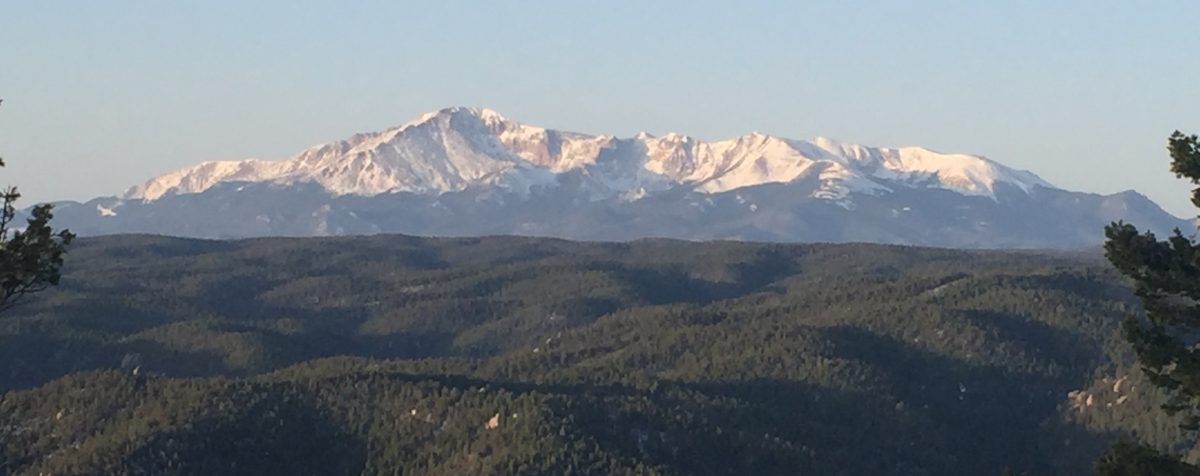
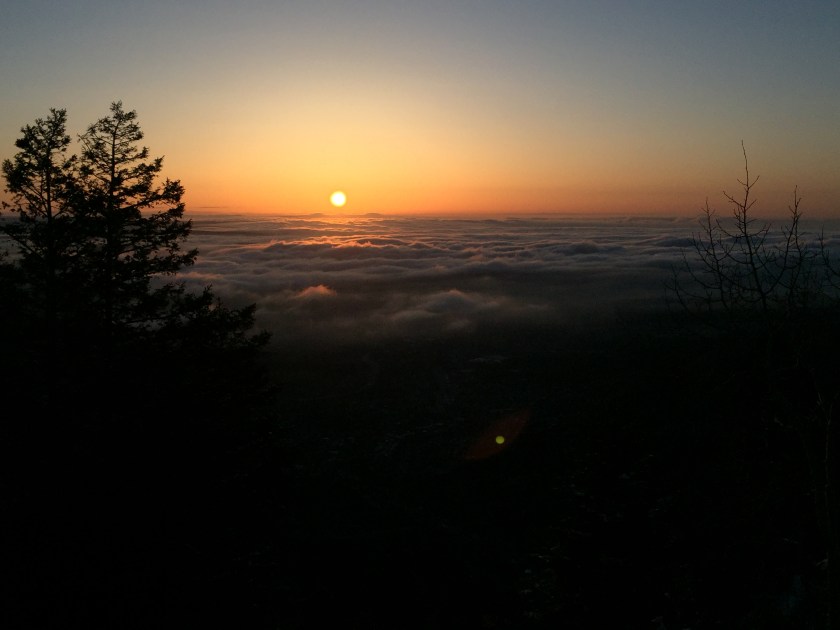
Keeping It Fresh can be a weekly/daily/hourly challenge as we go through the routines in our hiking, personal, and work lives. And it is also one of the most important things to do to keep us healthy. My goal is to keep hiking into my 90’s, start taking piano lessons again in my 60’s, publish these Trail Tips in a book in a few years, and have a 50-year wedding anniversary down the road. But none of these things will happen if I’m not keeping them fresh. Just like the picture in this post has a new day beginning above the clouds; what new beginning are you doing and going to do to keep the areas of your life fresh and alive.