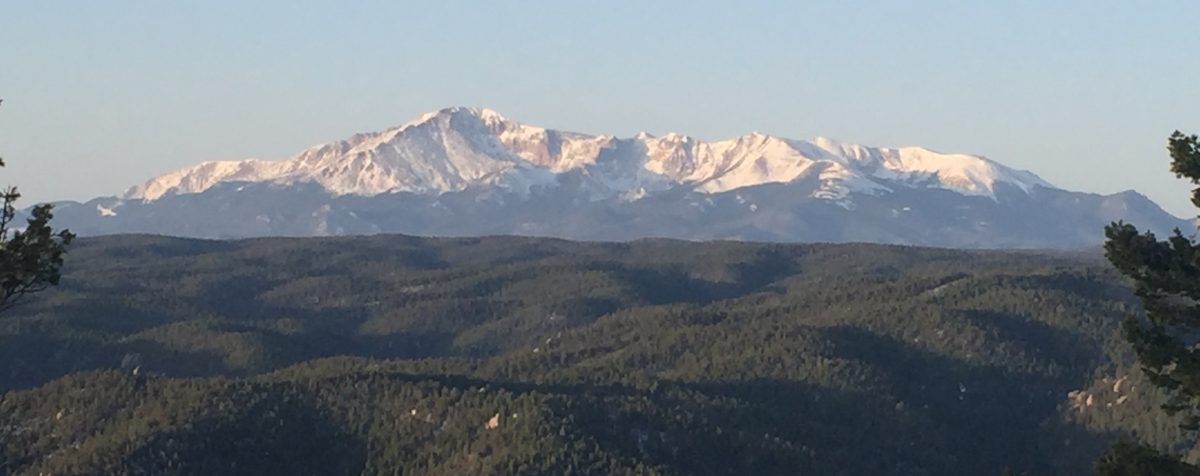
Since I started working in an office in downtown Colorado Springs, I’ve had to adjust my weekly hiking routine and look for trails close to the office. One of those areas is Bear Creek Park, and asking a “seasoned” hiker in the office what they knew about the: distances, elevation gain, loops to do, and how much time does it take to do them, etc.; he responded: “I don’t know any of these answers, because now I don’t wear a watch, carry a map, have a GPS, or even know where I’m going till I hit the trail: cause I’m now running for the joy and pleasure I get from getting out.” My response was “no, really, I need to know these answers” and I got the same response from him; which after I thought about it for a few minutes, got me asking myself, when was the last time I hiked without an electronic measuring device. And I didn’t have an answer….
In hiking, while I say I’m out there for the enjoyment of it, I’m ALWAYS tracking my time, distance, elevation, route, and looking at my phone app to track my pace. I can’t remember a time when I just went for a hike for the pure JOY of it; leaving all my tracking devices at home. As I’ve been processing this idea, I thought, maybe I could try it for a month, (no that’s too long, cause I’m tracking year over year), how about a week, (no that would mess up my monthly goals), could I do it for a single hike (well maybe). But not on the incline, cause there’s never a joy in doing the incline (that only comes when you reach the top). This reflection has made me realize, that even though I say I’m out for the pleasure of it, I am tied to my performance tracking.
In my personal life, my “numbers” are: how many friends do I have on Facebook, how many likes did I get with my last Trail Tip, did you see all 100 of the pictures I posted from my last trip? Look at all the wonderful projects I just finished on my house. And how much Joy and Pleasure am I getting from checking Facebook every 10 minutes? Plus, are all these friends on Facebook; really my friends? What have I done to connect with them on a more personal level? When was the last time I went out for breakfast, coffee, or lunch with any of them? Or even just called them to catch up on a phone call. Just like in ditching the electronics in hiking; on a personal level, I need to get back to the one-on-one personal contact and relationship building. As it’s been said; “We need to have more Face Time and less Face Book.”
In my work life, my “numbers” are how many contacts do I have on LinkedIn; how many views did I get on my last Trail Tip, how many people have viewed my profile in the last 90 days, how many new people have asked to connect with me? Yes, I know that LinkedIn is a very important part of business; but has it become just a “numbers” game to me? Have I made any effort to get to know my local LinkedIn contacts? When was the last time I ever had breakfast, coffee, or lunch with any of them? Or worse, maybe I’ve yet to meet them in person for the first time. Is my joy in the numbers or the actual relationships I need to nurture? As the title of the book from Keith Ferrazzi says “Never Eat Alone and other secrets to success, one relationship at a time”
It’s time to take a step back and look at all the numbers we are chasing and why we do the things we do. Have I (you) lost the joy and pleasure in what I’m doing? What will it take for me to go on a hike for the pure joy of it, without all the measuring devices I carry with me? Who do I need to reconnect with on a personal level over a meal or coffee? What will it take to break out of the “eat lunch at your office desk” mentality and make some new in person connections.
Appreciating History…. A trail tip
It’s been said there are three phases to interactions with those around us. We start in the PRESENT, go into the FUTURE, and learn/create a HISTORY as we do life together. And there is a lot to be learned about history when we consider our hiking, personal, and work lives. And knowing that History adds richness to our interactions and creates better connections.
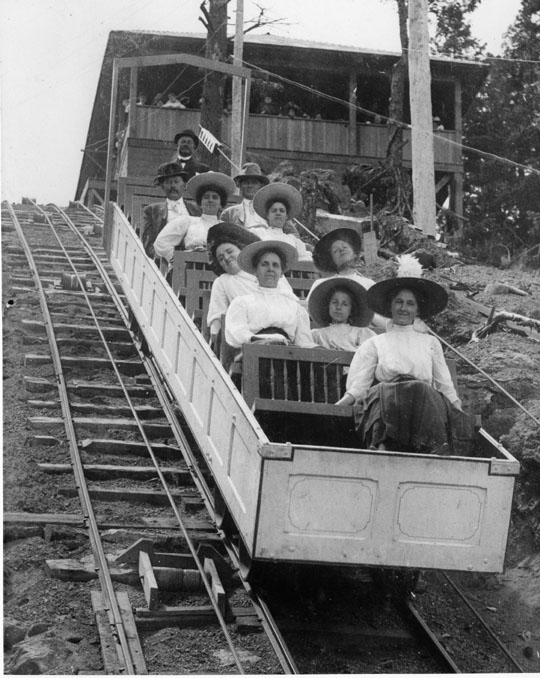
In hiking, I’m always seeking to find more information about the history and significance of the trails I hike. In the Monument/Palmer Lake area, the main mountains are: Herman, Raspberry, Chautauqua, and Sundance. Yet only on Raspberry will you find remains of small exploratory mining pits with trails names of Mule Trail and Ore bucket. And getting out on the Sidney Harrison Trail, you can find the remains of the Captain Sidney Harrison airplane crash site from 1952. At the top of the Manitou incline, you can see the concrete foundations of the station house from about 100 years ago. Completed in 1907 the Manitou Incline was a 1 mile cable tram built to support the construction of a hydroelectric plant and its water pipe line. It was then bought by private owners and became a tourist attraction. Closed in 1990 because of rock slide damage, over time it became the incline we have come to know and love today. Then there is Jones Park area (located above the Seven Bridges trail), it was a way station on one of the original trails to the top of Pikes Peak. This is just a few examples of some of the “history” that is right in our back yard; and once we know about it, it adds context and color to the hiking trails we do all the time. What is the history in your “back yard” you can learn about?
In my personal life, my family has been able to create a history and move into the future with friends we known since being in “young couples” classes at our church. Friendships that are still going strong after 35 years. Taking the time to ask others about interests, hobbies, and history creates connections for meaningful relationship and a healthier future. Or as our Pastor Brady Boyd has said “You may go faster by yourself, but you will go further with others.” Things can also serve as history to give us a glimpse into the past of those around us. In our front yard, we have a “lawn decoration”, which is a one row corn planter pulled by horses that my grandfather-in-law used 100 years ago to farm with. This has been used to start numerous conversation about how my wife grew up on a farm in central Nebraska.
In work, knowing the history of others gives a window to get to know each other better as well. I have worked; and work today with several people who have immigrated from other countries. Some have come on their own as adults, others came as teenagers with their families. And hearing their history, I reply with: “The only difference between us is about 100 years.” As both my grandparents came here from Denmark and Germany about 1905 through Ellis Island. The different being, it took months to let family back home know they made it, verses today where you could make a call or Skype the moment you landed here. This leads to greater mutual appreciation of our cultures and history, with the result being a more untied work force.
History, it’s out there in our friends, places we have seen, and things around us. I would encourage you to take some time this year -wherever you are- to learn some history about the trails, people, and things in your life. Knowing this history provides a better appreciate of everything around us and how we can better relate to the world we live in.
Putting the pieces together…. A trail tip
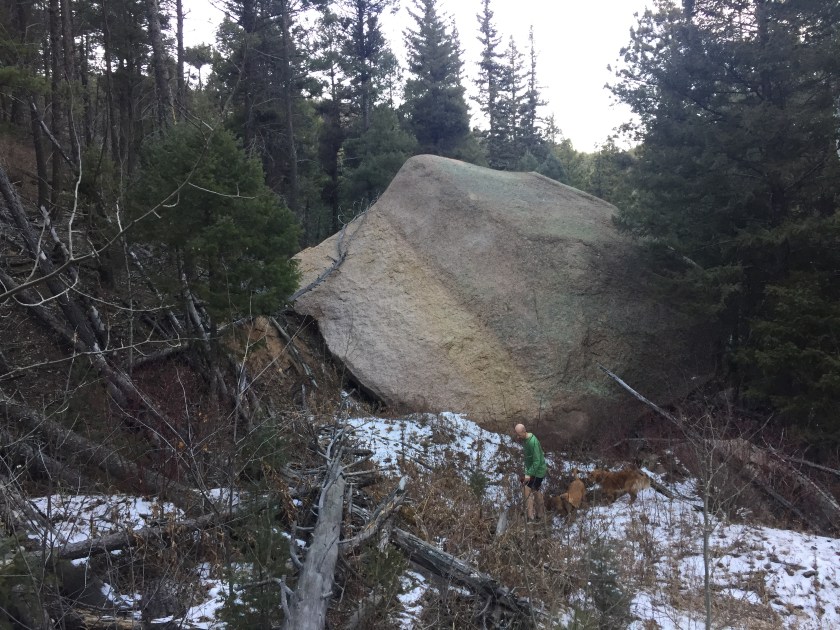


On a day in 2010 the residents in the Red Rocks area of Monument CO., were startled by a loud crashing sound that shook the ground in their neighborhood. Everyone heard and felt it. People looked west to Mt. Herman and Raspberry Mountain, expecting to see the smoke of large airplane that went down; but saw nothing. Calls were made to 911 and the police drove around the area, but couldn’t find anything. The local residents forgot about it over time and it became a distant memory until early 2018. That’s when the Ore Bucket trail opened-up on the west side of Raspberry Mountain and while hiking this trail with a friend who lives in the Red Rocks area, we came across a boulder the size of a two-story house that came down the mountain side and took out a long swath of trees. [Yes, it’s visible from Google Satellite Maps, see attached picture]. Staring at the boulder, the swath it took out, and where it landed, my friend realized that this is what they felt and heard eight years ago. This was the missing piece of the puzzle that put the story all together of what happened back then. And it got me wondering about what pieces of the puzzles am I missing from the areas in my hiking, personal, and work life.
In hiking, how many trails do you pass by that you don’t know where they go? It’s easy to get comfortable do the same trails all the time because they are predictable. I know, I do it all the time. At the Manitou incline there is a trail that starts right next to the incline; I see it but have never taken it. Then at the top of the incline, there are close by remains of build structures that I’ve never taken the time to explore and just beyond the incline is Rocky Mountain that I’ve never gone to the top of. All pieces of the local hiking area that I’ve never taken the time to explore and put together to create a more complete picture of what is available in the area. I think it’s my “busyness” that prevents me from taking time to slow down and explore new trails.
In our personal life, we say we want to know people, but do we really take the time to get to know them and the stories of their life? Or as Sherlock Holmes says in the TV show Elementary, “My success is not because of whom I am, but because of whom I’ve come to know.” What are the life lessons of others around me, that can help fill in parts of the puzzle in my life? My father and two of my uncles were World War II era veterans who have passed away. Oh, what I would give now to be able to sit down with them and hear their stories of that time frame. It reminds me that everyone’s life is a puzzle, full of pieces from their past, present and future. And to get to know a person and see their life clearly, we need to invest time with them to see more of the pieces of their lives and have a better overall view of who they are.
Work is a puzzle as well. There are written rules, un-written rules, organizational habits, personalities, backgrounds, a culture, a history, mentors; all pieces of the puzzle that show the overall picture of an organization. Do I take time to know how the pieces all fit together? Do I look for connections?
Puzzles are hard work. They require: attention to detail, time, thought and wonder; as we look to see how pieces fit together. We need to rekindle that approach to the puzzles in our lives; paying attention to the details of people and events around us, so we start to see the bigger and more complete picture of how things are interconnected with each other in our lives. What things are you wondering about? What are the missing pieces that would allow you to see the whole story? What actions are you going to take to fill in more of the puzzles in your life? We treat most of our lives as random, non-connected events. Yet in reality things are more connected than we can ever image. It’s time to start looking at events and things taking place in the context of how they are connected -like pieces of a puzzle. And when we do, we will start to see stories and our world in a whole new way.
Adjusting to a New Season in Life… a trail tip
I admit it. I don’t like change at times. I like the way things are and I’m comfortable in them [to an extent anyway]. But to grow, we need to enter in and embrace the new seasons that come our way. And thus, after working virtual office for the past 8 years, I’ve entered into a new growing season of working 8 to 5 in a corporate office. Thus, impacting my schedule across my hiking, personal, and work life. I think success in any new season starts with attacking the challenges and exploring the opportunities that will be presented to us. And just because things are now different, it doesn’t mean we stop doing things in our hiking, personal, and work life; it just means we need to CHANGE to adjust to them. It’s important to remember that while making these changes, we still align with our core beliefs, values, and guiding principles.
After we moved to Colorado in 2010, I was told that to stay in shape for hiking, you need to have a foundation of hiking 3 times a week getting in a total of 15 miles and 4000 feet elevation gain. This was “easier” to do while working from home without having the driving commute time and having schedule flexibility. But in an 8 to 5 set work schedule, how would I adjust? It started with looking at the opportunities presented in the office I’m now working in; where I found they have shower facilities, are only a few miles from the Manitou Incline and Section 16 trail, and is very close to the Santa Fe trail. So, my adjustment will become hiking at 5:30 am or doing some daily shorter hikes (3 miles) over lunch hour on Santa Fe.
In my personal part of life, it becomes looking at how to make adjustments around the 8 to 5 work schedule and still fit in the family commitments. It’s looking at the opportunities and seeing where to make those changes. In the mornings, I’m now leaving a little earlier so I can take my son to school. And if there are evening events to go to, I’m finding that I’m meeting my family there instead of thinking I need to drive home and then backtrack with them. This new season is making me look at where my time is being spent as well and what is important. I’m finding I’m already watching less TV during the weekdays and “projects” are becoming a lot more prioritized with me starting to say NO to more things.
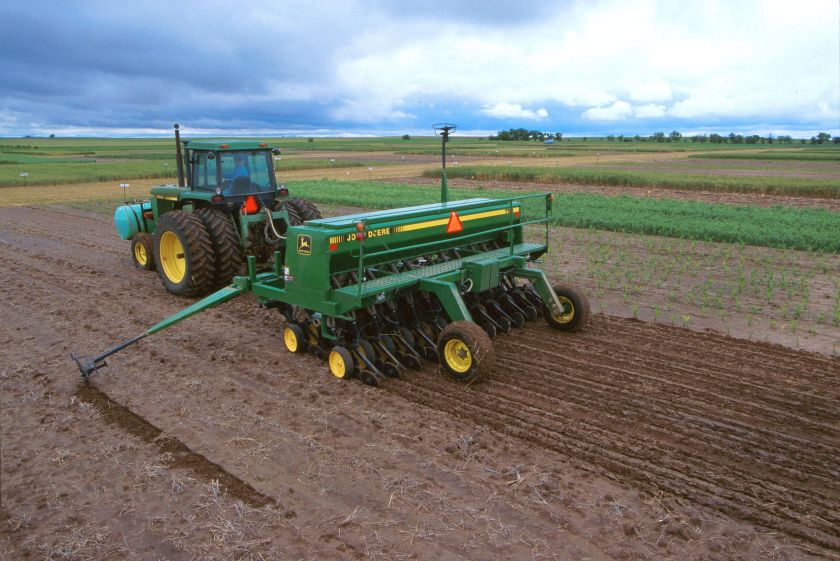
In work the challenges are all over the place with new: people, processes, cultures, and systems to learn. And it can be hard at times; just like a farmer during the planting season. The ground (my habits) must be broken up so the seed (new work ideas) can be planted. Crops are rotated with different ones being planted in the same ground area each year. This prevents the ground from becoming stagnant because different crops affect the soil in their own way. Just like different ideas keep us fresh. Another key to success in work with a new season is to also get to know the people and asking them to be a mentor for you. There can be things to learn from them in both their work life and related outside professional interest, which you will only find out if you ask questions. Here I found that a co-worker is involved with a local chapter of the Project Management Institute and is going to be a coach to me as I work on my Project Management Profession certification.
Where are you in your current season of life or are you stating to move into a different season? If you are in a current season and starting to get burned out, do you need to make some adjustments by “rotating the crops” or making other changes. If you are moving to a new season, do you know the challenges and opportunities that you will be facing in it? In either scenario, what changes do you need to be making in your hiking, personal, and work life; so, you not only live in the season, but thrive and grow in it as well. Or as Timothy Ferriss says in his book, the 4-Hour Workweek, “Ninety-nine percent of the people in the world are convinced they are incapable of achieving great things, so they aim for the mediocre.” I challenge you (and myself) to become that “one-percent” in the season of life you are living in today.
What will be your Legacy… a trail tip
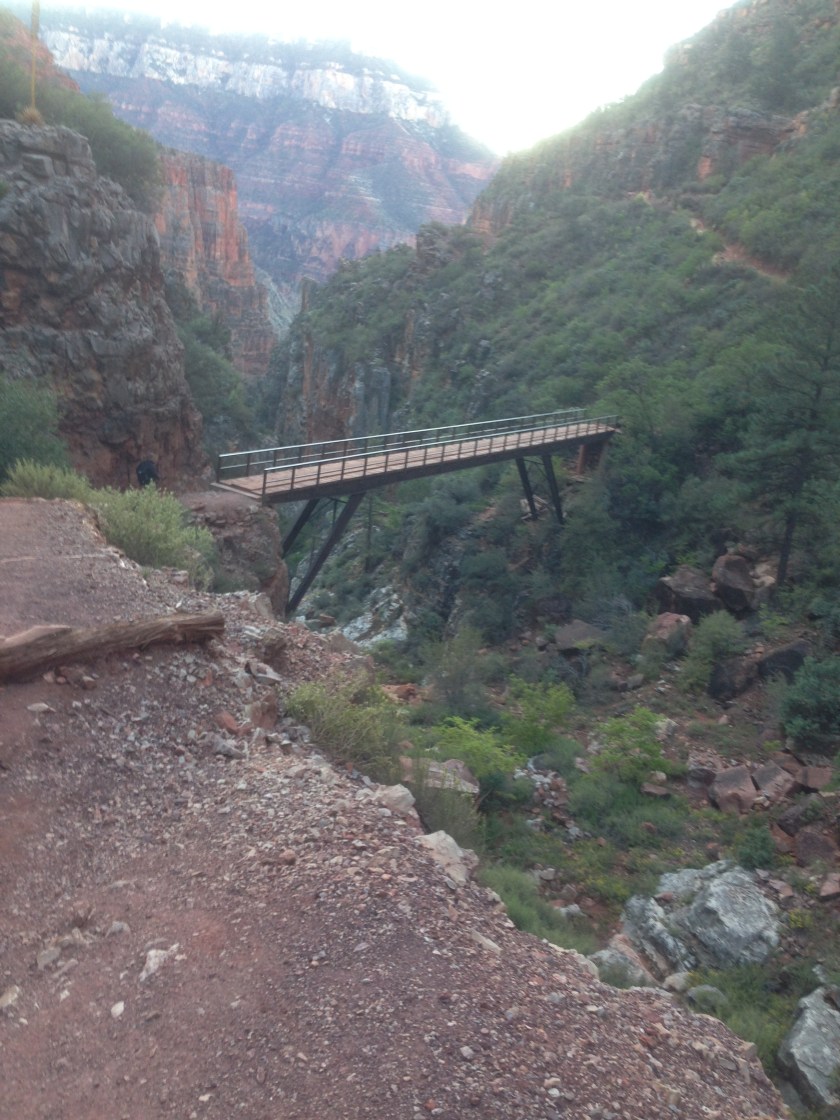
Legacy – The Merriam-Webster dictionary defines it as “something transmitted by or received from an ancestor or predecessor or from the past.” It’s how we want to be remembered.
In 2016 I had the opportunity to hike the Grand Canyon from Rim to Rim in one day. As I descended into the North Kaibab canyon trial, crossed over the Colorado River and up the South Kaibab trail; legacy shouted out to me; filling my mind the entire time with thoughts about what it must have been like for the people who did all this work. Bridges that were built, buildings erected, trails laid out, campgrounds created; with many of them now being there for almost 100 years. Their work has passed the test of time and remain there for people to use every day. Going down the North Kaibab trail, there were several bridges built and once in a while, there would be a newer bridge; which we found out later were rebuilt because flooding had taken out the original bridge. So, while “structures” we see may get damaged or destroyed over time, the foundation of the legacy remains and can be rebuilt.
Thus, what is the legacy I’m going to leave my kids and grandkids. What lessons and memories am I passing on to them. How will I be remembered by them and others? And just as some of the bridges on North Kaibab trail have been damaged and repaired; we can do things now to repair relationships and other things that will affect our legacy. What do I need to start changing today?
In hiking we create a legacy with the knowledge of trails we pass onto others and how we respect the trails. Do I take time to greet people I see out hiking? Do I offer advice or show people new trails? Do I stay on the trails and avoid cutting across switchbacks? [We are out there for exercise; so why would I cut across a switchback to save distance in the first place?]
In our personal life, as we get older we begin to see the legacy we are passing onto immediate and extended family members. What habits are my kids picking up from me? Are people responding to me in the negative ways that I have initially responded to them. This has really hit home with me as my first grandchild was born six months ago. What will I be passing onto my grandchildren that will impact generations beyond my grave? What impressions am I making with my neighbors and those around me in my community?
In business, there is also a legacy that we are creating. Having recently been unemployed for 7+ months, I’m now asking myself what did I learn going through this journey and how am I going to pass these lessons onto others? In preparing myself to start a new role I’m starting soon, I’m already thinking about the impression and legacy I’ll be creating and leaving others?
I recently heard about the story of the father who named his son “Odd”. “Odd” never liked his name or knew why his dad named him “Odd”. Yet out of respect for his father “Odd” kept his name, but grew to resent it more and more as he grew older. “Odd” went through life, having a career, getting married, having kids, and growing old. As part of his will, he stated that he didn’t want his name “Odd” put on his tombstone, because he didn’t want to be remember by his name. So “Odd” passed away and a very nice granite tombstone was placed on his grave with just the date “Odd” was born and died. No indication of his name “Odd” anywhere. Yet as time went on, people would come to the cemetery, pass his tombstone, only see the dates and say “That’s ___”.
We will leave a legacy with our hiking, personal, and work lives. The question is what is the legacy you want to leave and are you on the path to create the legacy you want to be remembered by?
What dreams want to come alive in you … a trail tip

Have you ever noticed that when we dream, it’s never full of text on a paper describing something? Rather dreams are as real as the reality we live in daily: full of life, color, vivid, and bursting with energy; like a picture worth 10,000 words. They seem so real at the time and then they fade from our life. Yet they are still back there, waiting and wanting to come to life. And that is how a lot of the dreams are that we hope to achieve. They seem so real in the moment, like we can almost reach out and touch them. Then life hits with all the concerns and we lose track of them as we get into our daily grind.
A key to moving toward living our dreams is to keep ourselves aware of them and not let them fade from our memory. My friend, Ken Radtke is a dreamer. He starts each year by painting a picture of the dreams he wants to achieve and live. Sometime it’s more a collage of pictures verse hand drawn. But in both cases, he puts them on a 9 by 11, or 11 by 18 piece of paper and hangs them in his home office. Something he sees everyday that reminds him of the dreams he is pursuing.
In other cases, it can be a dream you see everyday when you are outside. Which for me is my hiking dreams calling to me as I drive down the front range from Monument to Colorado Springs and see the peaks/mountains/trails of: Sundance, Cap Rock, Chautauqua, Raspberry, Herman, Blodgett, Bottomless Pit, Rosa, and others. And my dreams aren’t the same as other people have because everyone else on I-25 is seeing these same mountains, but not in the way I’m seeing them. So keep in mind that your dreams are your dreams. You may become a part of helping someone else fulfill their dream, but it’s still their dream. Seek to live out the dream(s) that you have in your heart, mind and soul.
We need to keep our dreams alive as some of them may take years to achieve. For me it was hiking the Grand Canyon Rim to Rim. I first saw the Grand Canyon from the South Rim in 1981 when doing a bicycle ride from the Grand Canyons to Salt Lake City with Russ Brown. I remember staring across that vast chasm, wondering what it would be like to hike across it. The dream faded from reality as time went on with the responsibilities of “life” taking over. Occasionally the dream would come back as we did family vacation visits to the Grand Canyon and over time and it really began to have roots when I realized the Grand Canyon is only a one-day drive from our home. So I went from staring across the Grand Canyon in 1981, to hiking it from the north rim to the south rim in one day in 2016 with Ovi Truta and Erik Lane. Almost 35 years later to the day I first saw the canyon.
What are the dream(s), that have been dormant in your life that you need to starting making plans for this year or in the next few years? And don’t limit the size of your dreams. As Mark Batterson says in the title of his book “Chase the Lion: If your dream doesn’t scare you, it’s too small.” What dreams do you have in your hiking, personal, and professional life that you need to re-awaken? It’s time to start dreaming with your eyes wide open and vividly see where your dreams want to take you. Or as the words say in the song “Come Alive” from recent hit musical “The Greatest Showman”:
And you’re more than you could ever be
Cause you’re dreaming with your eyes wide open
And you know you can’t go back again
to the world that you were livin’ in
Cause you’re dreaming with your eyes wide open
So Come alive
Start coming alive and dare to live the dreams in your life. You will never go back, once you start living them.
Dreaming BIG in 2018 (aka Back to the Grand Canyon) … a trail tip
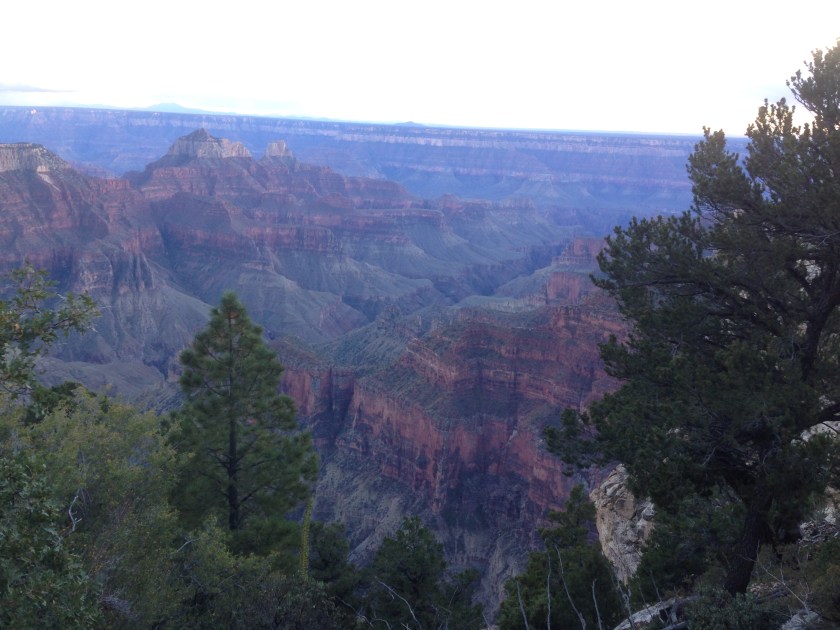
As we set goals for a New Year (aka 2018), we often think we have to have several different goals. And in doing that, we tend to get discouraged because it’s hard to keep them prioritized and so we vacillate between them and in the end, most of them never get achieved at all. I propose a different approach would be to look at setting one BIG Goal/Dream that can transcend many different areas and can become a foundational goal that easily allows for many other goals can be built on it through the year.
In my case for 2018, it going to be “Hiking the Grand Canyon Rim 2 Rim (R2R) in one day in late September.” A simply stated goal that will have a ripple effect on many different areas in my life including: Sleep, Health, Weight Loss, Meditation, Focus. And here are some examples of how this goal can affect these different areas.
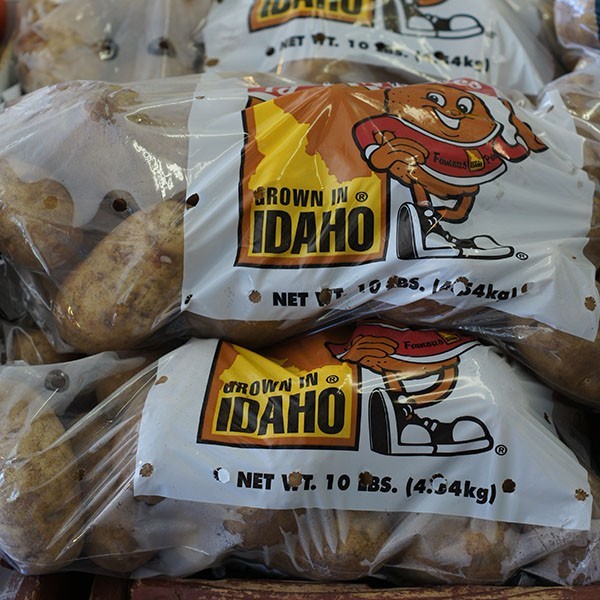
Sleep – doing a hike like this with the longer training hikes, will require me to sleep more each night. Health – I’ll get in better overall health as I become more fit with my training hikes. Weight Loss. I’m going to take two ten-pound bags of potatoes and put them next to my hiking gear with the sign that says. “Al, do you really want to carry this extra weight 9.6 miles and up 4,500 feet out of the Grand Canyon.” [If that isn’t a visual reminder, I don’t know what is.] Meditation – I’ll be the first person to tell you I like to do hikes with others, but nothing clears your head like going out by yourself for a 6 to 8 mile hike with about 2,000 feet elevation gain. Focus – when you have that one main goal for the year, it becomes easier to stay focused on it. And a main goal like this also can cut across your Hiking, Personal, and Professional life.
With hiking, there are going to be longer (20+ miles in 10 to 12 hour) training hikes that will need to be done over the summer. It will be a great way to explore the Ring the Peak and other trails around Pikes Peak and provide the opportunity for others to do these hikes with me, even if they are not doing the R2R hike.
In our personal life, a goal like this will have a lasting impact on your overall health. Sleep, Weight Loss, Mediation; Eating better; all important things that come from having this one BIG goal, but not something we need to think about as separate goals. They become an automatic part of the larger goal.
There is also the impact to our professional life. It’s developing the discipline that comes with having BIG Goals and staying focused on them during the course of the year. And as you succeed in that goal, it gives you the confidence to take on major goals at work.
What can be that one Big Goal/Dream you have for 2018? It doesn’t have to be doing the Grand Canyon R2R in one day, but it can still be BIG!!! Think about and visualize what it will be like in 10 to 12 months as you look back at 2018 and say: “Wow, I did it, I got ______ done and it impacted my life in these _____ specific ways.” What is that ONE THING above EVERTHING else you want to do in 2018? Have you put it on paper? Have you shared it with others? Do you have a time frame to get it done? What resources do you need to accomplish it? Who is going to help you do it? Are you willing to share it in response to this post?
About those New Year Resolutions … a trail tip
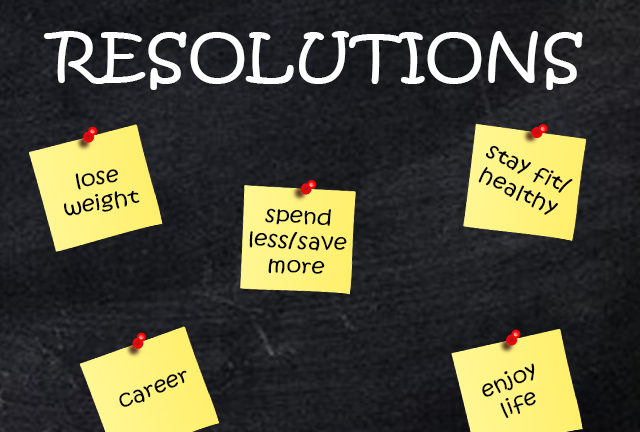
Here we go again. A new year and a new resolve to keep those New Year Resolutions (new habits) that most of us will give up on by the middle of the month. As I’ve written about in my last two Trail Tips, we need to begin our understanding of our habits by understanding the science of them; which Charles Duhigg, explains it in his book, “The Power of Habit – Why we do what we do in life and business”. Charles defines a habit as a Loop: When I see a CUE, I will do a ROUTINE, In order to get a REWARD. The QUE and REWARD become intertwined and creates a sense of anticipation and Craving: “I see this, I want this REWARD”. I propose that the key to making headway for lasting New Year Resolutions is thus to focus on the QUE that kicks off the automatic habit, knowing ahead of time when you may expect that QUE, and having a new ROUTINE prepared to implement.
Exercise (aka hiking, running, walking) is always a big New Year Resolution area. “But it’s cold and dark outside at 6 am, so I’d rather go back to bed”. Here is how we can create a new QUE for our hiking. Start by looking at the rolling 10-day weather forecast. Note the best days out of that block and mark the time for each day you will go hiking. Then for each of those days, lay out your gear the night before. Thus, starting to mentally have that Craving in your mind for the reward of the hike. This is where having a hiking buddy is key to get you out. Knowing that a CUE can be someone is going to be waiting to hike with you, provides that extra motivation go also get you into the ROUTINE (action of hiking). It’s worth noting that when we still had our Golden Retriever, Ava; she would see the hiking clothes laid out and then sleep on them because that was her CUE that good times are about to happen with a hike the next morning. If you wait to get your gear ready the day of your hike, you are much more likely to not have that CUE ready to trigger your hike for the day.
Eating (aka our personal life) is that next New Year Resolution area. Drinking Dr. Pepper and eating Rocky Road ice cream are the resolves I’ve been trying to change for the past several years. Again, changes here need to start with the CUEs. For Dr. Pepper, I know the CUEs of where every convenience store is and how much they charge for a XL refill. I can’t avoid driving past them, but I can anticipate them and have a new ROUTINE ready. Leave the house with a full water bottle and start a new ROUTINE by drinking from it every time I go past one of those convenience stores. It’s 9 pm, I’ve made it another day, I see the TV so the CUE is triggered and I’m looking for that ice cream for my reward. I can change that by having a book out to read, so that becomes my CUE. I might have to go extreme here and put duct tape around the ice cream and have the book sitting on top of it in the freezer.
Personal Growth (Our professional life), is where we want to make those changes with learning new skills, hobbies, and other creative areas (arts, music, writing, etc.) This is where time comes in, because it takes time to do these things. And what is the thing that is sucking so much of our time. For me, I know it’s my “smart phone”, which I think is making me dumber by the day because of all the time I spend on it. Put the phone in another room and have it on silence, so you don’t have the CUE of seeing or hearing it. And as mentioned above, put out the books you are reading around the house to trigger the routine of reading whenever you see them.
“All our life, so far it as it has definite form, is but a mass of habits – practical, emotional, and intellectual – systematically organized for our weal or woe, and bearing us irresistibly toward our destiny, whatever the latter be.” William James, 1892. What do you want your legacy and destiny to be in 2018? What are the habits you are going to change in 2018 to get you there?
Reading the habits of others … a trail tip

The last Trail Tip discussed the bad habits we have picked up in 2017 and how to change them. The flip side of this is reading the habits of those around us. As a leader, parent, friend, spouse, co-worker, manager; it’s important to have a baseline of the habits of those around us, so we know how and when to offer support to them. Because a change in a habit is often tied to a change in a life event taking place. Which is why retail stores have those customer loyalty cards that they want you to swipe every time you make a purchase, because they are creating a baseline of your buying habits and looking for changes. And what do you think is the “Holy Grail” of life event changes they want to know about you??? It is: are you pregnant? Because your purchasing patterns change -like nothing else- when you are pregnant and they want to capture your future purchases. And now that we have covered that tangent and gotten you completely paranoid about swiping your loyalty cards, let’s discuss how being able to read the habits of others can help in our hiking, personal, and work journeys.
In hiking, what are the habits of those you hike with? What is their baseline: How often are they getting out?, Has their hiking time changed?, Are they doing the same trails all the time?, What are their hiking goals? Once you know these things, watch for changes. Has something changed where they are only doing very select trails, going at different times, or not going at all? These changes can be a way of crying out for help, without saying anything. I know that I have been very prideful at times with not wanting to ask for help.
In our personal life, it’s recognizing the daily routines (habits) of those around us and watching for changes. How many have we asked ourselves questions like: I haven’t seen ____ in church lately? I wonder why we haven’t gotten a Christmas card from ____ for the past two years? You know, I haven’t gotten a catch-up phone call from ____ in the past two months, I wonder if they are OK? I see Al outside more often during the week, I wonder if he got laid off? We all ask ourselves these questions, but do we do anything with them? Do we do any follow-up to check on them?
In our professional life, the habit baseline can be how & when people respond to emails, voice mails, etc. When do they come into work? Are they usually early or late for meetings? Do they ever miss meetings completely? Do they seem more withdrawn or distracted? Being aware of these changes is the first step in looking for overall habit changes in your colleagues and the events behind those changes.
Keep in mind, that we need to earn the right to be asking questions about changes to a person’s life and we need to being doing it with the right motives. Plus, we need to know the environment in which to ask them. Be it asking questions about changes in their hiking, personal, or work life; you never want to asking them questions in a group setting. It needs to be done one-on-one in a safe environment. And surprise, surprise, I’ve found that most people open up to me when we are outside for a walk, hike, or a run. There is something about being outside that allows for comfortable moments of silence, verses being at a restaurant where you are looking at each other and having those awkward moments of silence.
But why, why bother with all of this? I would state the answer is COMMUNITY. Malcolm Gladwell in his book, Outliers, starts with “The Roseto Mystery, a community where people were dying of old age [and nothing else]… [where] the values of the world we inhabit and the people we surround ourselves with have a profound effect on who we are.” And how long we will live. Thus, engaging in your community and the people around you will have a greater impact on your health than any of the conventional wisdom things they say you should doing to have a long life. So give your friends permission to talk to you when they see changes in your own habits, which in turn will see them giving you permission to ask about changes in their habits.
What Bad Habits Did You Pick Up in 2017 (and how to change them) … a trail tip

“Life is mass of Habits” William Johnson wrote in 1892 and 40% of our actions/decisions are habits – Duke University study from 2006. Most of us don’t realize we are doing them, know how to change them, or know how to create new ones. And this is because; like me, I had no idea of the science behind them. Charles Duhigg, explains it in his book, “The Power of Habit – Why we do what we do in life and business”. Charles defines a habit as a Loop: When I see a CUE, I will do a ROUTINE, In order to get a REWARD. The QUE and REWARD become intertwined and creates a sense of anticipation and Craving: “I see this, I want this REWARD”. Examples include: seeing a Starbucks (cue) and wanting a coffee (reward) or smelling Cinnamon Buns at the airport and wanting to eat one (reward). And the problem is that our brains can’t tell the difference between good and bad habits, so they happen without our permission. We do them without thinking. Charles Duhigg make the case that in order to change a habit, we need to keep the cue and reward (craving), but change the routine to still feed the craving. So, let’s look at the some “bad” habits, we may have picked this past year.
In hiking, we get into the habit of doing the same route all the time. We see the trail head, know the reward of doing it, then start the routine of the same trail. This can be changed by intentionally changing the routine by determining to never do the same trail two days in a row. The reward is still the same, but the routine changes. Then there is the habit of not hiking in the winter because we see the cue of cold and darkness, so we want the reward of staying warm, thus the routine is to roll over, pull up the covers, and go back to bed. We can change this by acknowledging there is a reward of being warm after the hike starts along with the euphoria (reward) that comes from getting out and doing it.
In our personal life, habits of checking our phone every five minutes, snacking too much, staying up to watch the late news, buying stuff we don’t need; are “bad” habits I struggle with at times. I think many of these “rewards” are related to the problem of FOMO – Fear Of Missing Out. Black Friday store ads for “Door Busters”, TV shows with “stay tuned for previews of next week”; news programs that say “coming up next…”, all are specifically designed to feed a craving (reward) and get us to do something -even if it’s bad for us. Thus. I often end up watching useless news for 45 minutes and losing that sleep time. And I do it without even thinking about it.
In our professional life, it can be that afternoon slump. We start to yawn (cue), desire a sugar fix to wake us up (reward), so we go for the candy bar(s) or soda (routine). But we can get that same reward by going for a brisk five-minute walk. The cue and reward stay the same, but we change the routine to get the same outcome. Checking email every ten minutes can also be a “bad” habit we can get into. It’s that same FOMO or thinking we have to be available immediately to everyone that drives us to want this reward/craving. And in this process, we lose valuable productivity because we have to spend time rewinding to get back into the mindset of what we were working on. Think about watching the season finale of your favorite TV show, but you accept interruptions every few minutes, so you keep rewinding the DVR to get back into the mindset of where you were in the program. And so an hour-long show takes you about two hours to actually watch.
We all have allowed habits to creep into our lives this past year that we would like to change going into 2018. It starts with: Identifying the options for changing the ROUTINES, Experimenting with REWARDS to identify the craving, Isolating and identifying the CUE (a location, time, emotional state, after another action, etc.), and Having a plan to implement when you see that next CUE.
 Al Andersen