Times verse Time

time

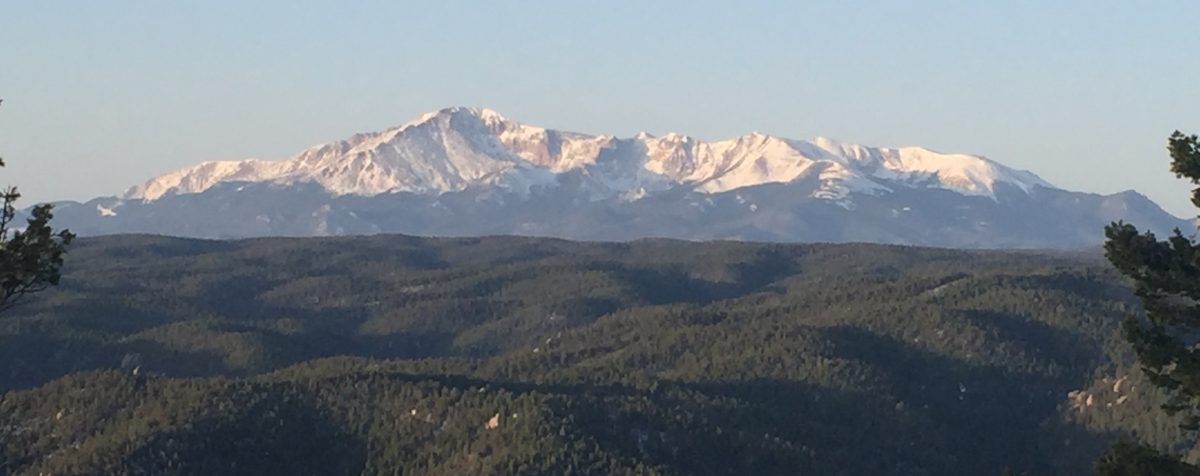
Lately I’ve been being consistent with my trail running hikes of 4 to 6 miles in Pike National Forest, which is close by. Given the limited time available, I’m always focusing on my “Times”; how do I reduce my time on each run, etc. This often means ignoring others while I’m out running and not stopping to help people who seem lost, etc. It’s sort of like work. We have all this “stuff” to get done each day, so we focus on our “to-do” list and don’t take time for those around us, who can use our help. And in today’s age, most of those help requests come via email or phone calls.

However, the last few times I’ve been out trail running, I’m thinking more about my “Time” out there. Am I using that time: to stop and help others, to slow down my pace and run along-side of those on the same journey, to take in the beauty of an overlook, to notice the changing of the colors, to be still and let my inner spirit talk to me about things I need to change in my life.

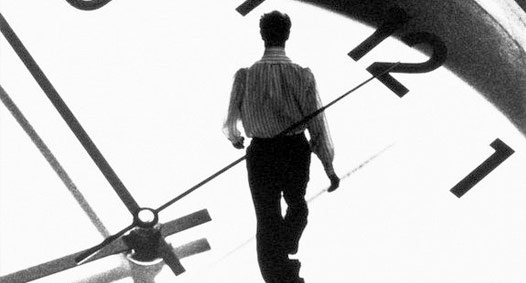
There will always the opportunity to try to improve your “Times”, but each opportunity to make use of your “Time” is unique and only happens once. So how are you making use of your “Time” today as you run the race set before you?

Finding joy in the present

Finding Joy 1Today (8/19/16) the Manitou Colorado Inclines closes until December for repairs. This is an iconic hike done by hundreds of people each day. http://www.visitcos.com/manitou-incline-near-colorado-springs-colorado

As this closing approached, my buddy Brad and I decided to hike it one last time a day earlier to try to set Personal Records. Brad (14 years younger) waited for me at the top as his time came in under 38 minutes and I arrived at 49:04.4; with us both setting new Personal Records.

Throughout the rest of that day, I kept looking at my time from the hike knowing that only 4.4 seconds faster and I would have been under 49 minutes. This got me thinking about all the Olympians who train full time for years and lose races/medals by 100th of seconds, which gets me to the point of realizing that everyday has a present, a future, and a past; all there to enjoy in the moments of the journey.

While I might have saved a few seconds by not taking the picture of the sunrise, I would have missed the beauty of a sunrise starting a new day; reminding me that there is joy to be found in the moments during our days. Be it working in an office, getting a pounding heart rate on the incline, taking kids to school, etc: there is joy to be found in the present of each day.

Heading back up the trail, I press on to the future with the high calling of the top and run the race before me (figuratively speaking because no one really runs up the incline). Here I need to run the race set before me.  Not Brad’s or any of the other 100s of people who do the incline each day.  I need to focus on getting to the top with the God given strengths and skills given me.  I’m not to get caught up comparing myself to others who do the incline faster or slower than me.  That why they call it a Personal Best!

And once to the top at the end of the climb (day), we need to stop to reflect on the past – the trail we just ran – taking in the beauty of the day, rejoicing and celebrating, in the strength we have been given to complete the task at hand. This is where I know I fail the most as I’m always looking at the next thing that needs to be done.

As your day draws to an end, I encourage you to pause and: reflect on the joys of the present, the future with what lies ahead tomorrow, and celebrate the journey of the day that is now in the past.

Having Courage and Giving Hope

Meriam-Webster defines courage as: “mental or moral strength to venture, persevere, and withstand danger, fear, or difficulty”. However, I like the definition from Malcolm Gladwell in his book David and Goliath: Underdogs, Misfits, and the Art of Battling Giants. “Courage is not something that you already have that makes you brave when the tough times start. Courage is what you earn when you’ve been through the tough times and you discover they aren’t so tough after all.” And having earned courage; it allows you to give hope to others that are in those same types of situations you have faced. In my life there are two courage learning times that stand out.

On August 15th, 2013 I was on a ladder cutting a tree branch with a chain saw. The branch falls on the ladder, I jump, my leg gets caught in the bottom rung; and I’m lying on the ground with my right tibia and fibula broken in several places. In that moment, I had anything but courage. I was crying and looking at a leg turned sideways; thinking I’ll never walk or hike again without a cane. It became a journey of relying on others for everything and having a sense of complete helplessness. I couldn’t drive for six weeks, needed help walking anywhere in the house, and when a storm hit at 3 am with over flowing gutters and water seeping into the house, Arlene and the kids had to take care of it while I could do nothing. And yet, there was a recovery that grew stronger over time. The bones healed with the titanium rod forever in my leg, strength came back, six months later I did the Manitou Incline, and three years later I hiked the Grand Canyon Rim 2 Rim in one day.

A few years before that on September 9th, 2009 I got the call and was told that after 29 years at Bell Labs/AT&T/Alcatel-Lucent, I was being laid off as part of a force reduction. In this case, we were driving home from my uncle’s funeral and I’m taking this call while driving on the Interstate in Illinois. Again, anything but courage; I looked at Arlene and said “I just got laid off; I think you should drive the rest of the way home.” With two kids in college, three more at home, and having one income (which was now gone), I was a mental wreck. I remember staying up till midnight working on job applications, trying to go to sleep, and then being wide awake at 4 am, looping in my mind on all the next steps I needed to take. Then two months later, I was interviewing at Cognizant and starting to work in early December.

In both these life situations, I found that while hard at the moment; they aren’t life ending events and that there are lessons to be shared and hope to offer to others. With my leg break the hope offered is: it’s ok to rely on others, take time to read books, you will be healed, and will come back stronger than ever before. In the job loss, the hope offered is to see this as “once in a life time event – a gift”, so take a vacation on a beach for a month (I still regret I didn’t do this), know that you will land another position, and see this as an opportunity to do something different or move. In our case, a year after being laid off/getting a new job, we moved from Wheaton, IL. to Monument, CO. And just think; I’m only able to write these Trail Tips because I was initially laid off.

While your situations may be different, I know that we all go through these huge life events. We have the opportunity to gain courage through them, learn lessons, and offer hope to others. So use your new courage to give hope to those around you who think they will never get out their current situations.
 

Captain Sidney Harrison plane crash site

There are some trail names in Pike National Forest, where you just have to wonder how they came up with that name. Then there is this one. The “Sidney Harrison” trail, named after Sidney Harrison a WWII and Korea pilot veteran who crashed in a 1952 blinding snow storm. 

The plane is in amazing shape for being there 65 years. But sad to see the vandalism done over time. We spent about 10 minutes at the site taking pictures and thinking about what Sidney was experiencing during those last moments of his life as the plane was crashing. History in our back yard.

What is the condition of your shoes and tools? a trail tip


One of the most important tools for hiking is your shoes. And once you find the pair that fit great and are comfortable, we start using them all the time, but often never check for wear. At first glance they may look good for a long period of time.  But on closer inspection, we start to see the effects of the mileage on them.  Looking at the tread on the bottom (as in this example), we can see the obvious problems, as noted in the circled area.  However when comes to the cushioning and support, those problems may not be readily able to see.  Often cushioning problems begin to be “felt” with feeling pain in your knees or other parts of your legs after going for hikes.  My first reaction is thinking it’s my age or  longer hikes, so I might start to back down on distances.  With the pain still there after shorter hikes;  the light bulb comes on in my head and I realize, “Hey” I’ve been wearing these same shoes for 6 months and have over 400 miles on them.  And duh, it’s time for new shoes

At work, we also need to be aware of the wear on the tools we use every day. Like shoes, a main tool I use every day in working from home is my office chair.  After six years of sitting in the same chair, I’m starting to feel the support starting to give way in the back and on the edge of the seat, so maybe it’s new chair time.  My laptop is another tool I use every day and at times it starts to run slow and gets hung up with basic applications.  Out of frustration – after I can’t stand it anymore- I’ll call our company help desk, and get reminded that just because I have a 27 inch monitor I don’t need to keep 30+ windows open, or maybe I should delete temp files and do basic computer clean up once in a while.  That plus taking the time to shut everything down and do a computer reboot often solves the problems for me.

In both my shoes and office conditions, I know I get too busy to stop, be still, and take an assessment of condition of the tools I’m using every day. I forget that while working hard is important, working smart is even more important and having my tools in top working condition is a major part of working smarter and operating at peak performance levels.

Take time this week to evaluate the conditions of your tools, then put a monthly reminder in your calendar to take 15 – 30 minutes to check the conditions of your tools and fix or replace them as needed. You will be pleasantly surprised about how much your performance will improve by always operating with tools in top shape.